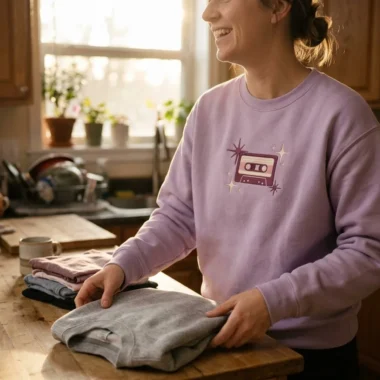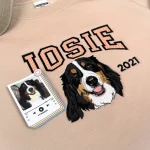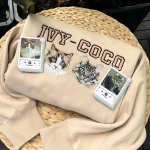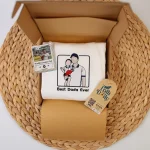
The worst moment isn’t unboxing a printed hoodie. It’s three washes later, when the graphic has a soft halo around it, the letters feel like stickers instead of part of the shirt, and you realize the shirt was never the problem — the laundry was. Most ruined merch isn’t ruined by wear. It’s ruined by heat, friction, detergent and time spent in the dryer. The good news: nearly all of that is controllable, and the fixes are boring in the best possible way.

- Read the sewn-in care label first — U.S. manufacturers and importers are required under the FTC Care Labeling Rule to provide regular care instructions for covered textile apparel, and the label overrides any generic advice you find online.
- Wait at least 24 hours before the first wash after applying a heat-transfer vinyl or iron-on design; the thermoadhesive layer needs that time to settle into the fabric.
- Turn printed garments inside out and wash cold with mild detergent — friction against other garments, zippers and buttons is a real cause of peeling, not folklore.
- Skip bleach, dry cleaning and liquid fabric softener, and never iron directly over a print; if you need to press it, go inside out or work around the design.
- If a properly cured DTG print fades badly in the wash, the problem may have happened before the shirt ever reached the laundry — poor curing looks a lot like bad laundering.
Start with the label, not the internet
Read the sewn-in care label before anything else, because it is the only instruction that legally and specifically applies to your garment. In the U.S., the Federal Trade Commission’s Care Labeling Rule (n.d.) requires manufacturers and importers to provide regular care instructions for covered textile wearing apparel and piece goods — so if the tag says cold wash and line dry, that’s the rule, not a suggestion.
Every rule in this article is a fallback for when the label is vague, faded, or missing — which happens more often than you’d think, especially on gift items that have already made a round trip through someone else’s laundry bag. Once a printed graphic has started to crack, you can’t un-damage it, but you can absolutely stop the next cycle from making it worse.
The other reason to start here: “wash cold” means different things to different printing technologies. A woven embroidered design on a fleece hoodie has almost no heat risk at all. A heat-transfer vinyl decal or a cured inkjet transfer is a completely different material sitting on top of the same garment. Same machine, same shirt, opposite outcomes.
A care label isn’t a suggestion the manufacturer made to protect their own liability. Under the FTC rule it’s a required, specific instruction for the garment you’re holding — which makes it more reliable than any blanket rule of thumb you’ve read, including this one.
The first 24 hours decide how long the print lasts
After you apply a heat-transfer vinyl or iron-on design, wait at least 24 hours before the garment goes near water. The thermoadhesive layer needs that time to crystallize and sink into the fabric fibers, and washing too soon raises the odds of peeling or cracking.
This is the step people skip, because the shirt looks done. It looks pressed, it looks crisp, and it’s genuinely tempting to wear it to work the same afternoon. But Siser (n.d.), a heat-transfer vinyl manufacturer, explains the mechanism: the adhesive isn’t just melted onto the surface, it has to bond with the garment, and rushing that process leaves you with a design sitting on top of the fabric rather than in it.
The practical routine that falls out of that guidance is simple. Cricut’s Color Pop Iron-On instructions (n.d.) spell it out for home decorators: allow 24 hours, then wash inside out on a cold delicate cycle, tumble dry low, and avoid bleach. That’s the whole system. Twenty-four hours of patience buys you years of durability.
Garments rub against each other during washing and drying — especially against zippers and buttons — and that friction can abrade the decoration or help it peel away from the fabric.— Siser
If you’re not pressing your own graphics, a quick timeline question usually explains any early failure. Wear it for two months, no washes, and it still looks perfect? The design was sound. It looked fine until the third wash and then started lifting? The bond was never fully set. That distinction matters, because the fix for the second problem is never a stronger detergent or a hotter dryer.
Inside out, cold, mild: the routine that does the actual work
Turn the garment inside out, wash it cold with mild detergent on a gentle cycle, and skip the softener. Cold water and mild detergent are the common safe baseline for printed merchandise, and inside-out washing protects the design from the friction that causes abrasion and peeling.
Siser’s HTV application instructions (n.d.) are specific: machine wash cold with mild detergent, dry on low or normal depending on the product, no dry cleaning, and liquid fabric softener is not recommended. That’s not over-caution — it’s the documented baseline for a decoration that is literally a layer of plastic film bonded to cotton.
The inside-out rule is the one people think is superstition. It isn’t. It’s the same friction principle, just repositioned. A zipper is a zipper whether it’s touching your print or someone else’s collar.
| Method | Heat-transfer vinyl / iron-on | Inkjet transfer | Machine-embroidered design |
|---|---|---|---|
| Machine wash | Cold, inside out, gentle cycle, mild detergent | Cold water only, inside out; wash separately the first time in case colors run | Normal cold cycle is fine |
| Wait before first wash | At least 24 hours | Follow the transfer's instructions; treat as a fresh decoration | None needed |
| Drying | Tumble dry low | Remove promptly when the cycle ends | Tumble dry low or hang dry |
| Detergent | Mild; no bleach, no liquid fabric softener, no dry cleaning | Mild; no bleach | Any standard detergent |
| Ironing | Never directly over the print; press inside out or around the design | Iron inside out — heat over the transfer can cause separation | Press the reverse; embroidery thread dislikes a hot iron face-down |
Which washing method for which decoration
Epson’s iron-on transfer guidance (n.d.) adds two details worth stealing even for other print types: wash the garment separately the first time because some colors can run, and take it out of the machine as soon as the cycle ends rather than leaving it sodden in the drum. Both apply to any garment where the design has a lot of surface pigment sitting near the top of the fabric.
Overloading the dryer. A crowded drum makes garments tumble against each other with more force, and it keeps the design in constant contact with other fabric. If your printed item comes out of the wash fine but looks tired after drying, space in the drum is often the fix.
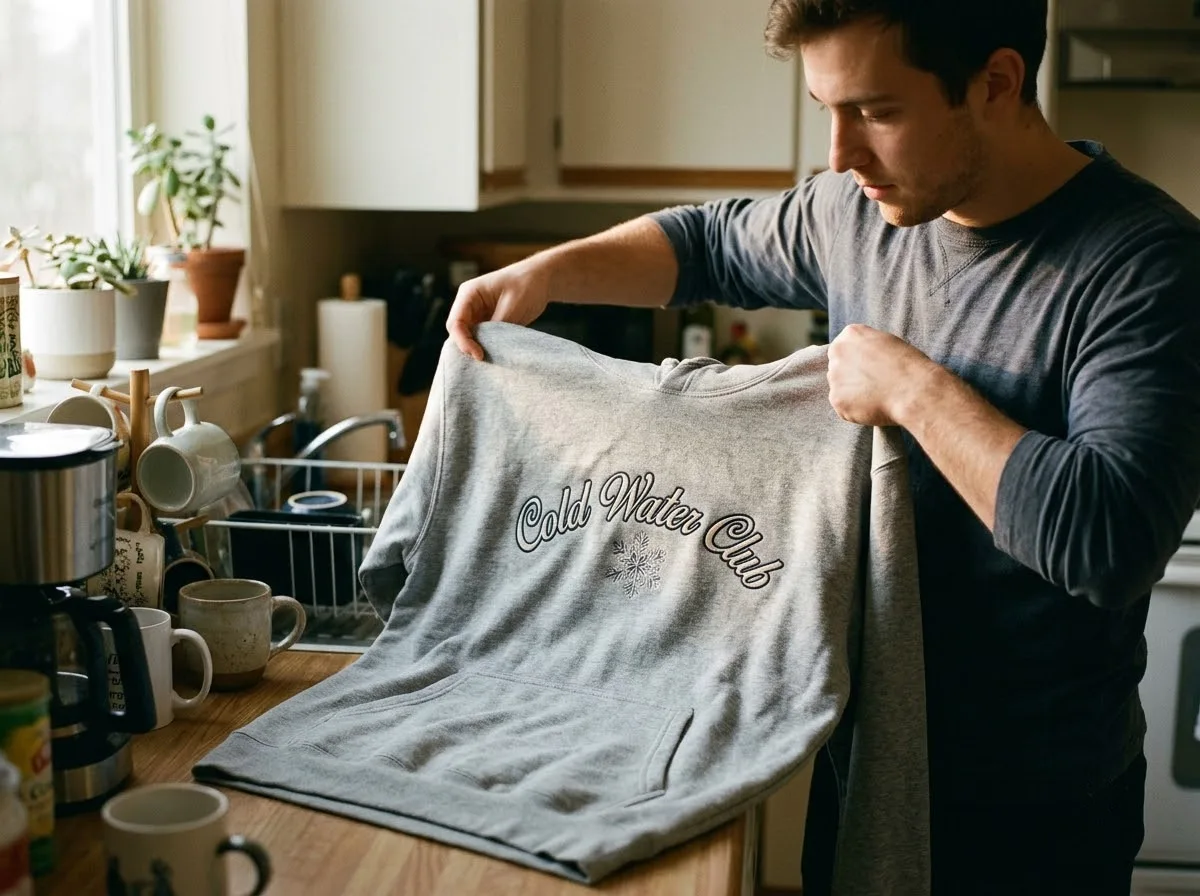
Drying is where most printed designs quietly give up
Tumble dry low, or hang the garment up instead. High heat is the fastest way to soften print film and lift an edge, and a garment left in a hot drum long after the cycle ends compounds the damage.
Heat does the damage that water only starts. This is the same warning that shows up across printing methods: Wikipedia’s inkjet transfer overview (n.d.) notes that heat from conventional washing, drying or ironing over a transfer can damage the transfer or cause separation. Air drying is slower but it keeps the design at ambient temperature for the entire cycle, and for a graphic you want to last, slower wins.
There is a second drying habit worth naming: drying printed garments inside out. It costs nothing, and it means the design spends the tumble pressed against the garment’s own interior rather than scraping the outside of another piece.
When the design is stitched, not printed
Machine-embroidered designs are thread, not film, so they tolerate normal washing far better than a heat-transfer vinyl or inkjet print — but they still dislike a hot iron pressed face-down and they still prefer a cold, gentle cycle.
This is worth saying plainly, because it’s the honest tradeoff between print types. Thread has no adhesive layer to crystallize and no transfer film to lift, so there’s no 24-hour waiting period and no risk of a graphic separating from the fabric. Raised satin stitching and fill stitches do have their own sensitivities — snagging, fuzzing from repeated abrasion against zippers, and distortion from high heat — so the care routine is calmer, not carefree.
It’s also the difference between a gift that gets worn once and a gift that gets worn for years. If you’re choosing between decoration types before you order, our breakdown of embroidered vs printed apparel goes into the durability question in more detail. If you’re still building a shortlist, start with our ouabh merch guide for the styles people actually buy and gift.
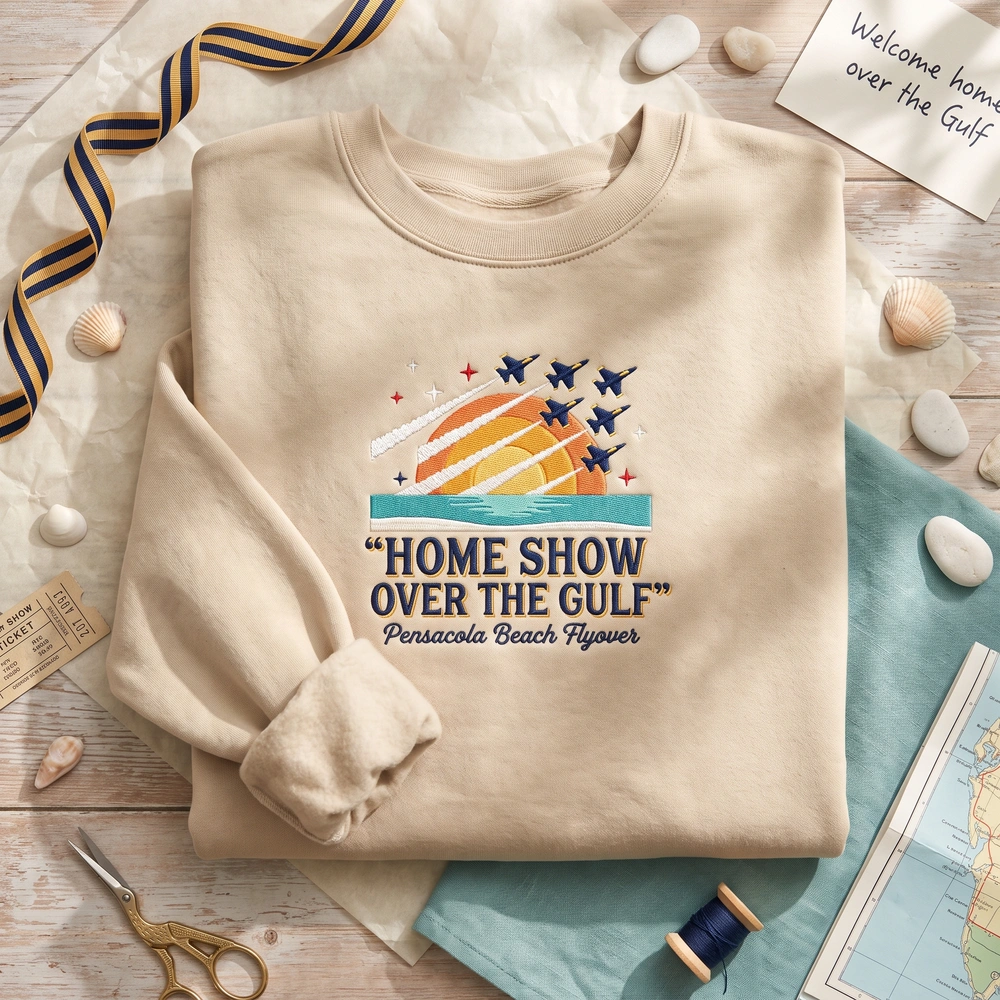
A flying-wing motif in raised satin stitch — cold wash, low tumble, and it keeps its shape for seasons.
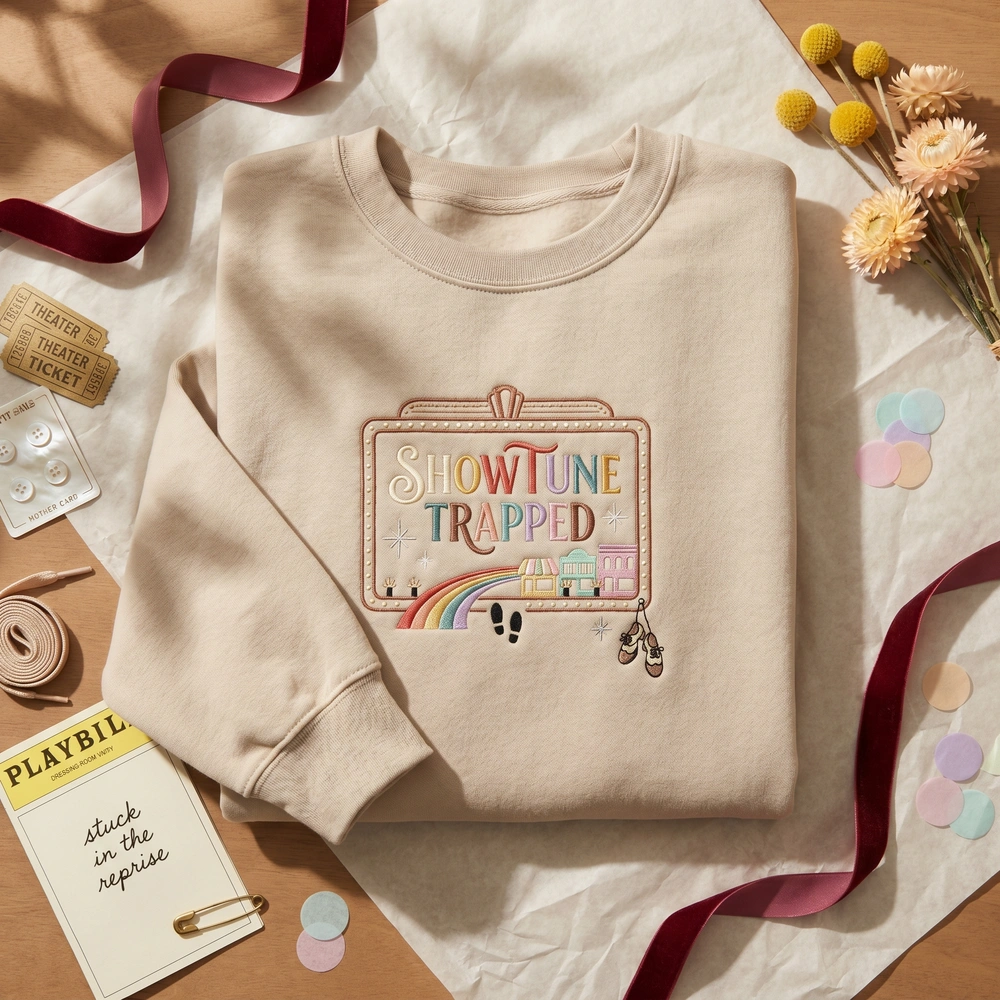
Thread lettering instead of print film, so there's nothing on the surface that a hot dryer can peel.
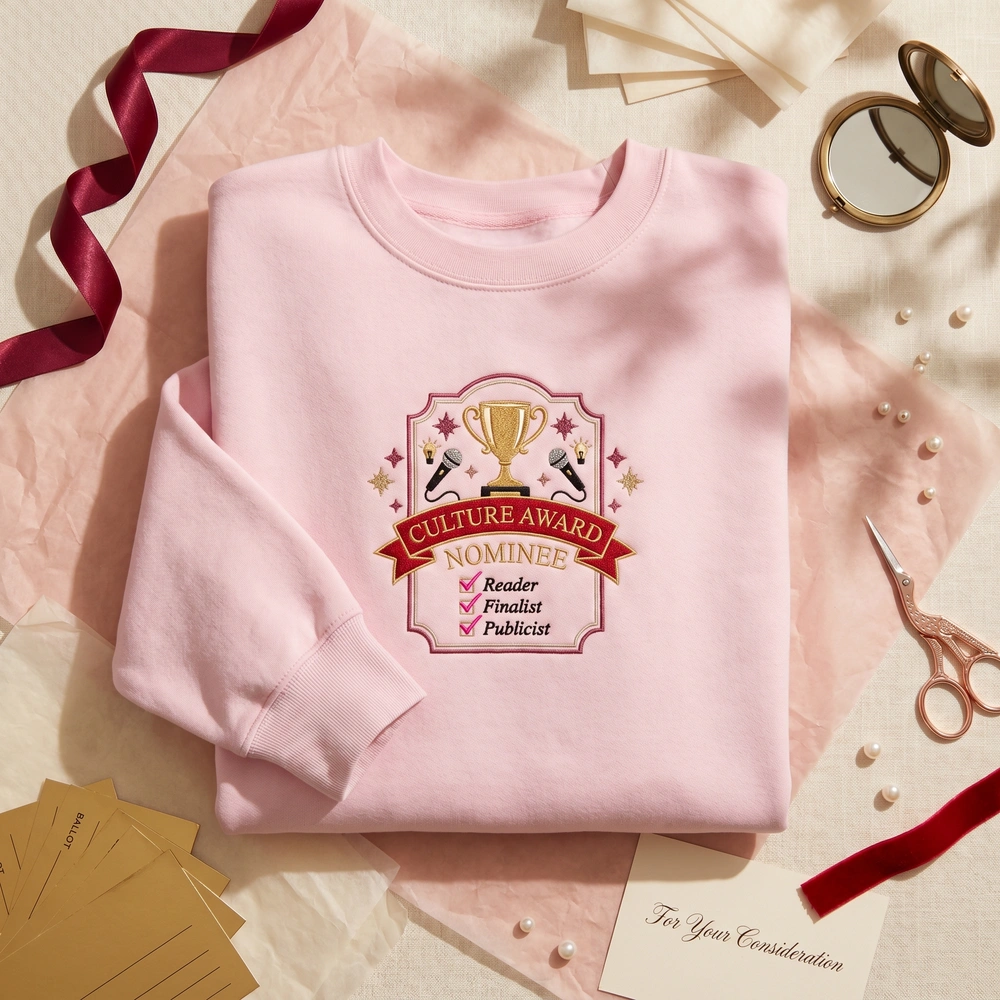
Camp-style chest crest with a hoodie-and-tee pairing that survives regular laundering without edge lift.
Our general rule for anything with thread on it: wash it cold with like colors, dry it low or hang it, and if you have to press it, press the inside of the garment so the heat reaches the back of the stitching rather than the finished face. For a piece like the Phoebe Bridgers Tour Phone Free Show embroidered sweatshirt, that’s the entire maintenance routine — no waiting period, no special detergent, no separate first wash.

Four things to stop doing immediately
Stop using bleach, stop dry cleaning, stop liquid fabric softener on printed items, and stop ironing directly over a design. Every one of those is a documented no in heat-transfer vinyl and inkjet transfer care guidance.
- No bleach, including bleach alternatives on prints — bleaching agents break down dyes and can discolor the design and the fabric under it.
- No liquid fabric softener — Siser’s instructions specifically advise against it, and residue coats the decoration rather than the garment.
- No dry cleaning — solvents and pressing equipment are not tested against print films or cured transfers.
- No ironing face-down over the design — iron the inside of the garment or press around the print instead.
- No high heat, ever — low tumble only, or hang dry. This is the rule people break with the best intentions.
- No first wash in a mixed load — if colors may run, give the garment its own cycle.
One more that isn’t on any label: don’t leave a printed shirt sitting in the machine for hours after the cycle ends, and don’t repeatedly re-wash a stained print without checking the stain first. Epson’s guidance (n.d.) specifically advises removing the item promptly when the cycle finishes, and that advice is good for any decorated garment.
If the print is already fading, the washing wasn't the culprit
Sometimes a print that peels or fades after a few washes was under-cured or poorly applied at production, not badly laundered — and a correctly cured DTG print should hold up comparably to a well-cured water-based screen print.
Brother DTG’s FAQ (n.d.) puts it directly: the washability of a properly cured GTXpro print should be similar to that of a properly cured water-based screen-printed shirt. If that’s not what you’re seeing, the failure happened before the garment ever met a washer — at curing or application.
That’s useful beyond troubleshooting. When you’re judging quality before you order, ask how the design was applied, not just how it looks in a photo. And if you want a fuller rundown on keeping one specific print type alive, our guide to washing and preserving printed graphic tees goes deeper on drying and storage between wears.
None of this is complicated. Cold water, inside out, mild detergent, low or no heat, nothing bleached, and a 24-hour pause if the design was freshly applied. Do that consistently and a good printed shirt survives far longer than most people expect — but do it wrong once, and no amount of careful washing afterward will bring a cracked graphic back.

Quick questions
How long should I wait before washing a new iron-on or heat transfer design?
At least 24 hours. Siser explains that the thermoadhesive layer needs time to crystallize and bond into the fabric fibers; washing sooner increases the risk of peeling and cracking. After the wait, wash inside out on cold and tumble dry low.
Do I really have to wash printed shirts inside out?
Yes. Garments rub against each other during washing and drying — especially against zippers and buttons — and that friction abrades a decoration or helps it peel away from the fabric. Inside-out washing puts the design against the garment's own interior instead.
Can I use the dryer on printed merchandise?
Yes, but on low. Tumble dry low is the standard recommendation for heat-transfer vinyl garments. Air drying is gentler still, and heat from conventional drying or ironing over a transfer can damage it or cause separation.
Is liquid fabric softener safe on printed shirts?
No. Siser's HTV instructions specify machine wash cold with mild detergent and recommend against liquid fabric softener. Residue and heat are the two things most likely to shorten the life of a decoration.
Are embroidered sweatshirts easier to wash than printed ones?
Generally yes, because there is no print film or adhesive layer to separate. Thread is stitched into the garment, so there's no 24-hour wait and no first-wash color-bleed risk. Cold water and low heat still protect the stitching.