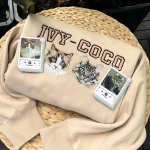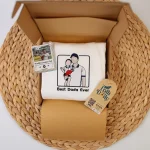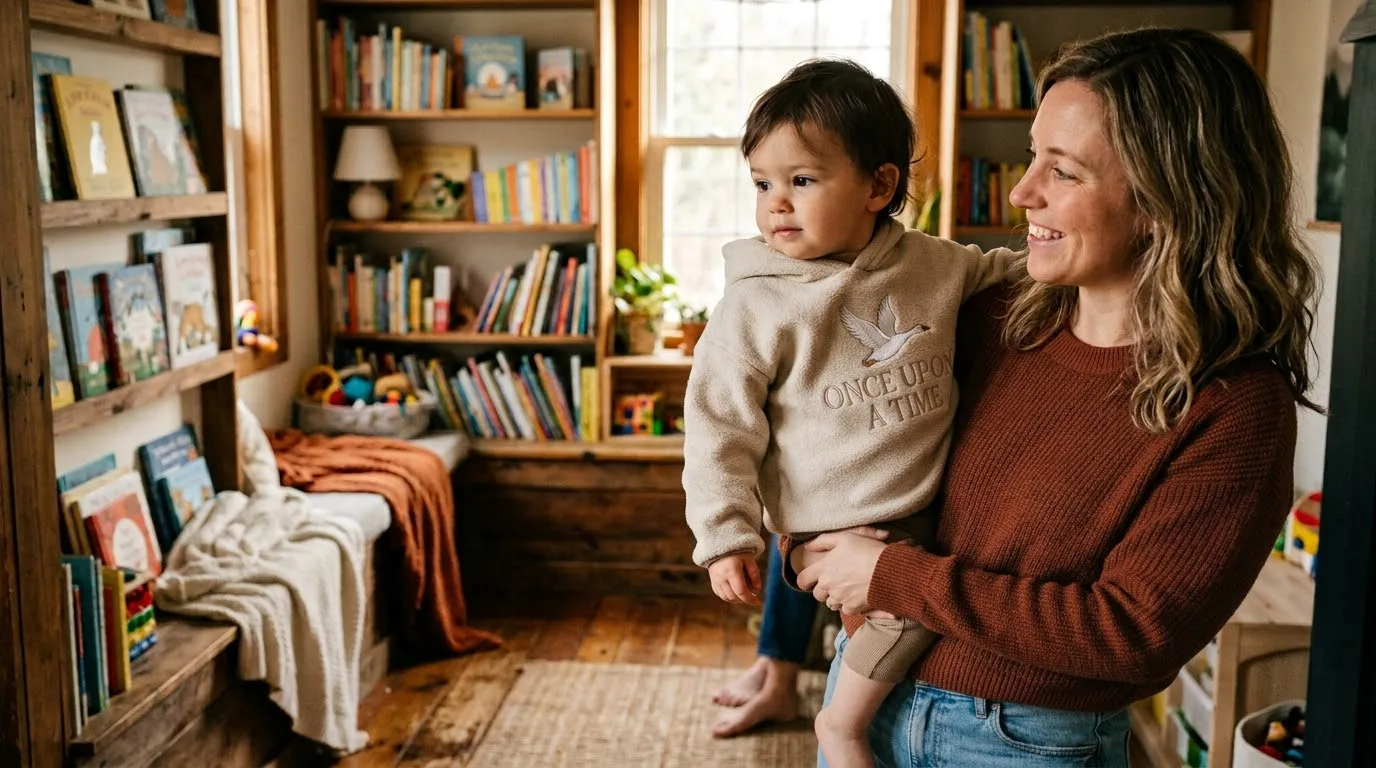
Here’s the scene that happens in my inbox every week: a parent sees a child’s favourite book character on a hoodie, falls for it, orders it, and three washes later the graphic is cracking and nobody can say who owns the artwork. That gap — between the picture on the screen and the provenance of the design — is the whole reason I’d write this. Licensed looks reassuring. But licensed only tells you someone paid for the rights. It tells you nothing about thread quality, sizing, or whether the design was stitched or printed.
So this is a buying brief, not a pep talk. We’ll cover what licensing actually claims, how to compare options honestly, and where embroidered pieces earn their price.
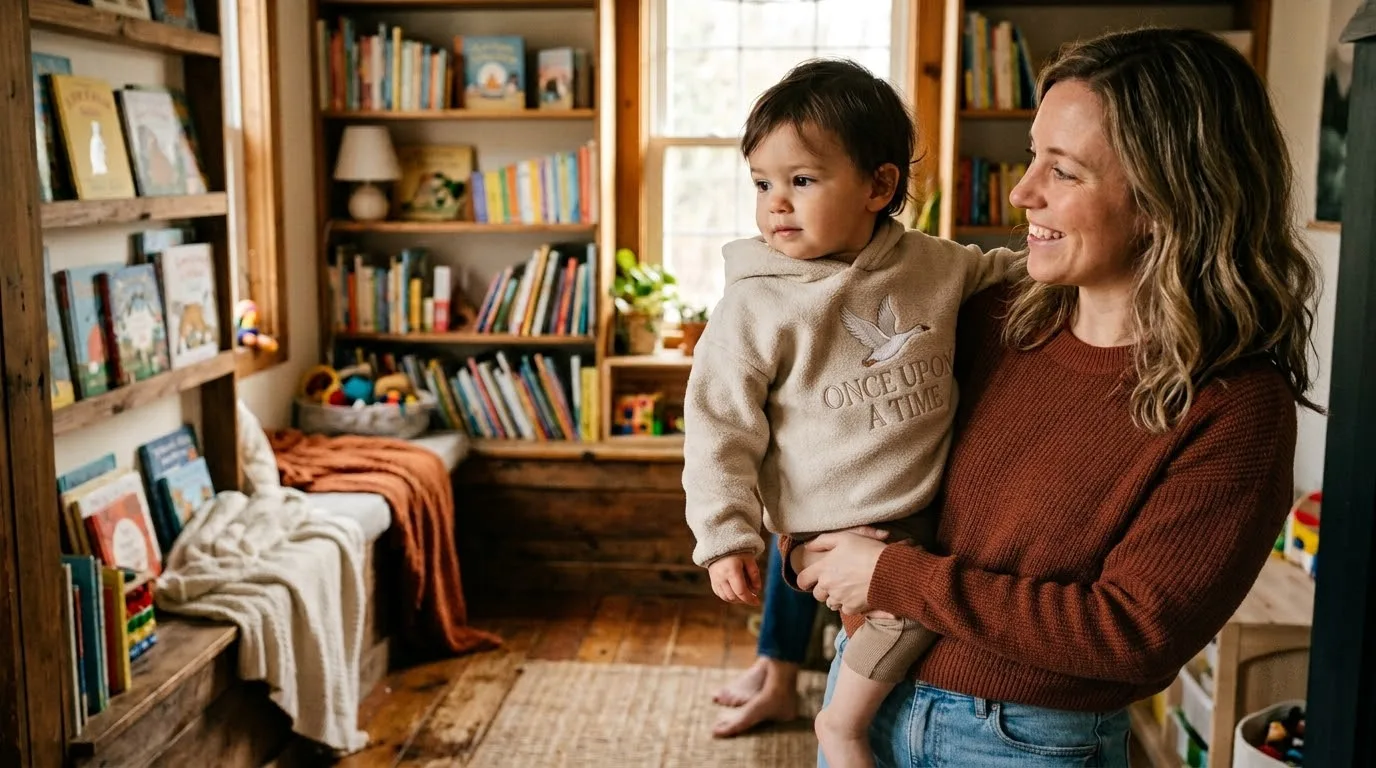
- "Licensed" describes rights, not quality — it says nothing about stitching, fabric weight, or how the design was applied.
- A machine-embroidered design sits on top of the fabric with raised texture; a printed graphic lies flat and cracks from the inside out over time.
- Public-domain folklore artwork and still-copyrighted modern picture-book art are legally and practically different categories of merch.
- Check the product page for garment specs — fabric weight, sizing, care instructions — before you commit, because those details decide whether the piece survives real life.
- If you're buying for an adult reader, character-adjacent and folklore designs hold up better as everyday wear than licensed children's characters do.
What "licensed" actually claims — and what it doesn't
A licensed design means a company obtained permission from the rights holder to reproduce specific artwork on merchandise. It says nothing about the garment itself: not the thread, not the fabric, not the stitching method, and not how long the piece will last.
This is the single most common misunderstanding in children’s book merchandise, and it is why two shirts with the identical illustration can cost $22 and $58 and be almost nothing alike.
The licensing mark answers one question: is this artwork cleared? It does not answer the questions you’re actually paying for. Two shirts can carry the same licensed illustration and still differ enormously in the ways that matter after the first season of wear.
So when a listing says “official” or “licensed,” what you’re reading is a legal clearance, not a quality grade. Keep those two things in separate drawers.
- Licensing answers: who owned the art and who paid to use it.
- Licensing does not answer: whether the graphic is machine-embroidered or printed, what the fabric weighs, how the sizing runs, or whether the colour will survive repeated washing.
- It also doesn’t tell you the licensing scope: artwork licensed for a tote bag is not automatically cleared for a garment, and clearance for one character doesn’t extend to a sequel’s cover design.
- And it isn’t a durability claim: a licensed print can crack just as fast as an unlicensed one. The rights holder isn’t responsible for your washing habits.
There’s a second category worth naming, because it’s where most of what people actually want lives. Public-domain folklore — nursery rhymes, fables, Mother Goose material — has no active rights holder, so designs drawn in that style carry no licensing requirement at all. That’s not a loophole; it’s why the category exists. If you’re shopping for something timeless rather than something character-accurate, that’s a genuinely different and often better-value shelf. Our mother goose shirt guide covers that angle in more depth if folklore art is what you’re after.
If a listing shows the artwork as a flat photograph against the fabric with no visible thread texture, it’s almost certainly printed. Ask for a close-up photo, or move on — the product page should be able to show you stitching if stitching is what you’re buying.
Before you order: seven things to check on the product page
Check seven things before you add to cart: application method, fabric weight, fit guidance, care instructions, sizing, artwork provenance, and return terms. If a page answers none of them, the page isn’t trying to be bought from.
I’ve been on the buying side of enough custom apparel to know that most disappointment traces back to a page that skipped the specifications. A garment can be exquisite to photograph and frustrating to wear. Here’s my pre-order checklist, in the order I run it.
- Application method. Look for “embroidered” with a thread texture, not “printed” or “DTG.” This is the whole ballgame on durability.
- Fabric weight. Fleece weight and cotton percentage decide whether it feels substantial or thin. If it’s unlisted, assume mid-weight, not heavyweight.
- Fit guidance. Embroidered and printed pieces run differently through the chest. Check whether the listing describes a relaxed or fitted cut — and whether there’s a size chart at all.
- Care instructions. Cold wash, hang or line dry, low heat. If the garment can’t survive cold wash and low heat, it isn’t built for a child.
- Artwork provenance. Is this the original cover illustration, a traced reproduction, or an original design inspired by the story? Be honest with yourself about which one you want.
- Design scale. A design that sits as one contained unit on the chest wears far better than scattered artwork across the whole garment.
- Returns. Custom items are often final sale. Know that before a size gamble becomes a permanent one.
One more thing, and it’s the one parents ask me most often: is machine embroidery the same as hand embroidery? It isn’t, and the difference is a feature, not a flaw. Machine embroidery is a digitised design stitched by an embroidery machine in a controlled stitch pattern — it gives you crisp lettering, even thread density, and repeatable colour across every run. Hand embroidery varies piece to piece by design. For a repeat purchase, a second size, or a matching family set, machine embroidery is the more reliable choice by a wide margin.
If you’re buying a custom embroidered piece for a child who grows fast, consider ordering the size they’ll wear now and one up. Embroidered bodies are far easier to live in through a growth spurt than a printed graphic that’s already cracking at the collar.
Side by side: printed, licensed embroidered, and original embroidered
Printed designs are cheapest and crack fastest. Licensed embroidered designs carry rights clearance but often cost more without adding much. Original embroidered designs — including folklore and bookish artwork — give you the best durability-to-price ratio for keepsake apparel.
| Option | Durability | Cost | Character accuracy | Best for |
|---|---|---|---|---|
| Printed (DTG or heat transfer) licensed design | Low — cracks, peels or fades inside a season of heavy washing | Lowest | Usually exact | Low-cost dress-up, single wear, photo shoots |
| Licensed embroidered design | High — thread won't crack, colour holds far longer | Highest | Usually exact | Fans who want the specific cover art and will pay for it |
| Original embroidered bookish design | High — same construction, different artwork | Mid | Interpretive rather than exact | Everyday wear, gifts, matching sets, growing kids |
| Public-domain folklore embroidery | High | Mid | N/A — the source art is free to draw | Halloween, nursery rhyme themes, timeless keepsakes |
How the three main categories compare for children's book apparel
The honest read on that table: if character accuracy is the whole point and the design will be worn a handful of times, printed licensed art is a defensible purchase. If the garment is going into regular rotation — and anything a child loves gets rotated — thread over ink is worth every dollar of the difference.
Original embroidered bookish designs sit in a category most shoppers don’t realise exists: they aren’t reproducing a cover, they’re drawing on thefeeling of a genre. That’s why they age better and why they make sense for adults who read but don’t identify as a single character.
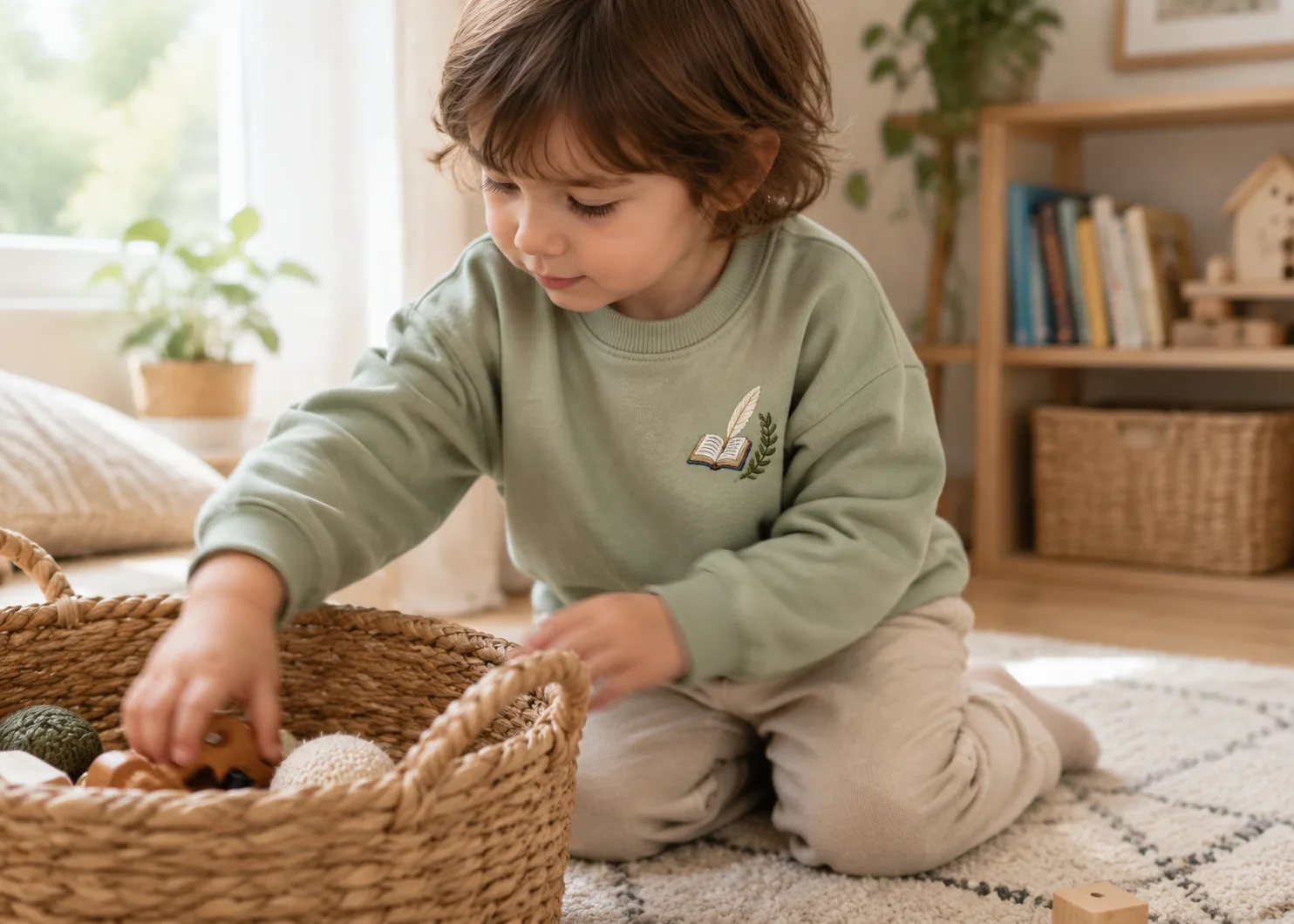
Picks worth considering if you want the embroidered route
If you want machine-embroidered bookish apparel, look for pieces with one contained chest design, a clear design concept, and a listed garment spec. These four are strong examples of how the category is done: a designed chest unit rather than an all-over print.
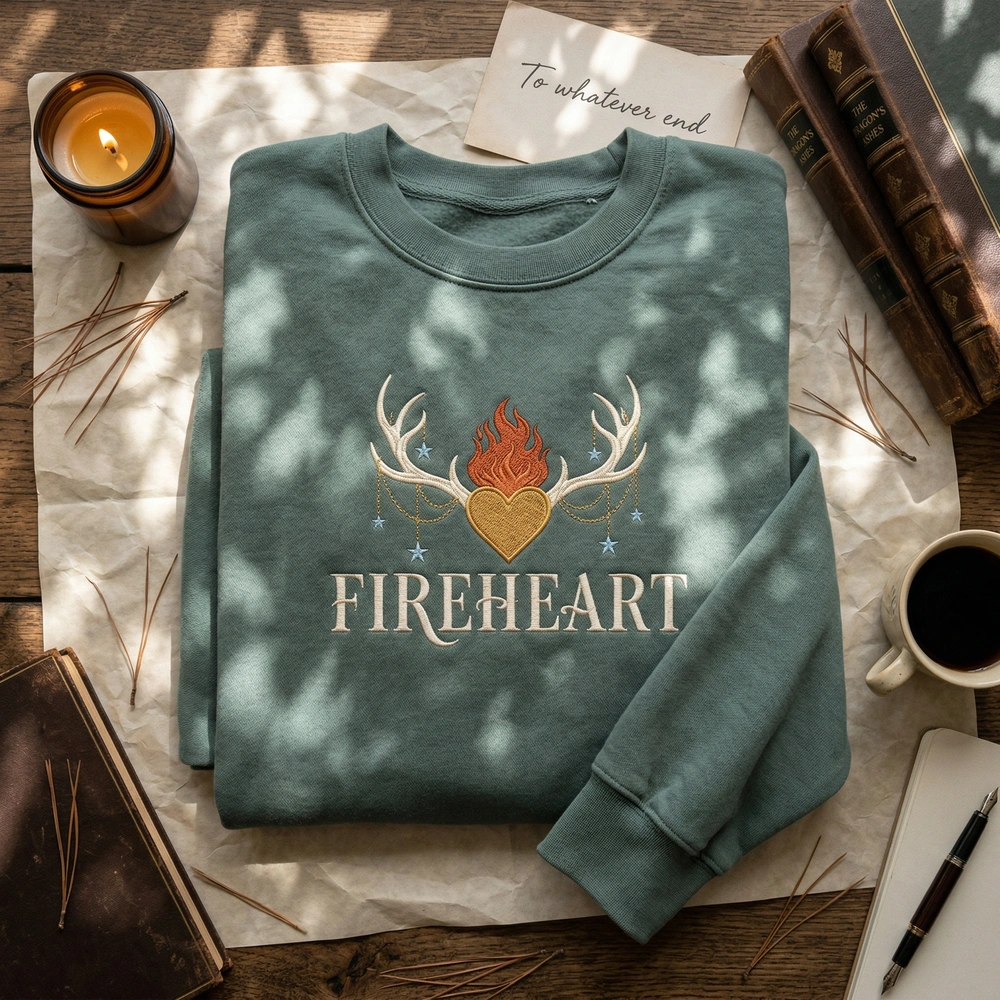
A symmetrical antler motif stitched as one chest unit — a good example of embroidery that reads clearly from across a room.
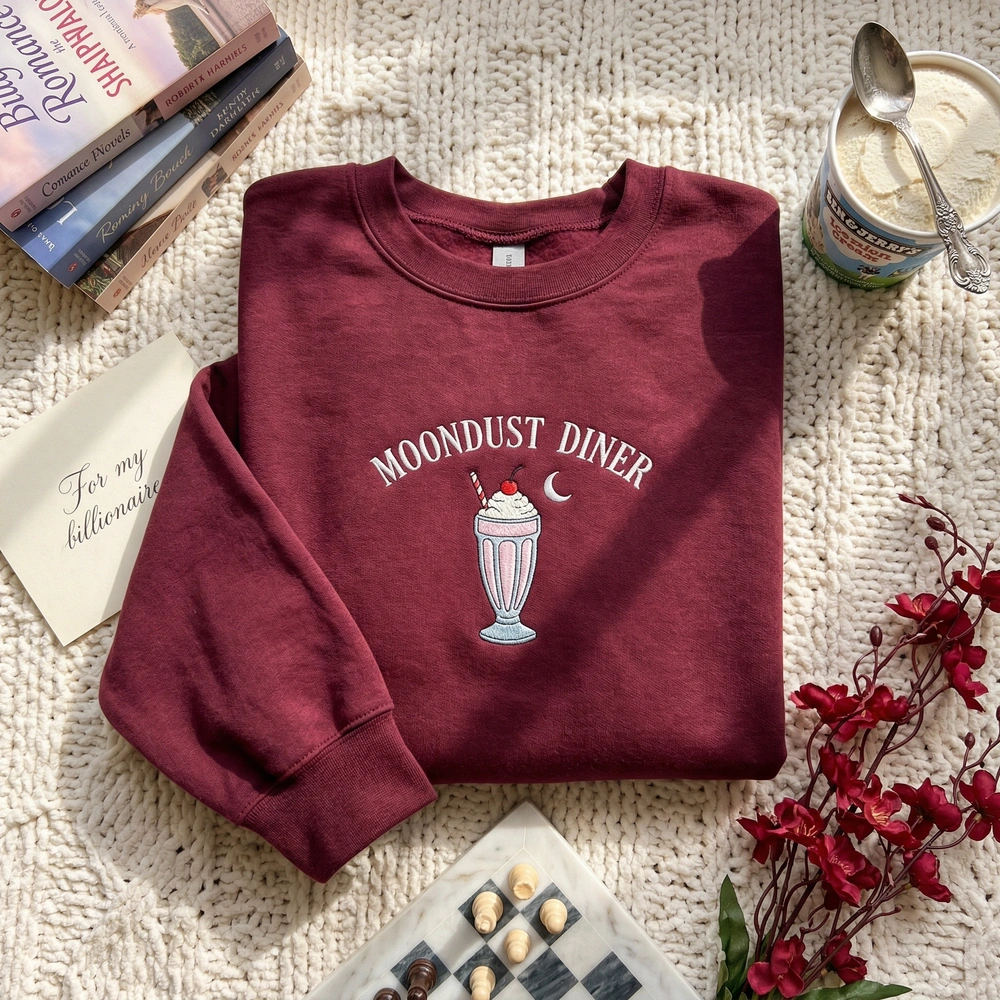
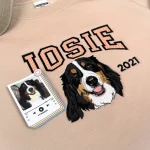
Diner-style lettering rendered in thread rather than ink, which is exactly where embroidery earns its keep.
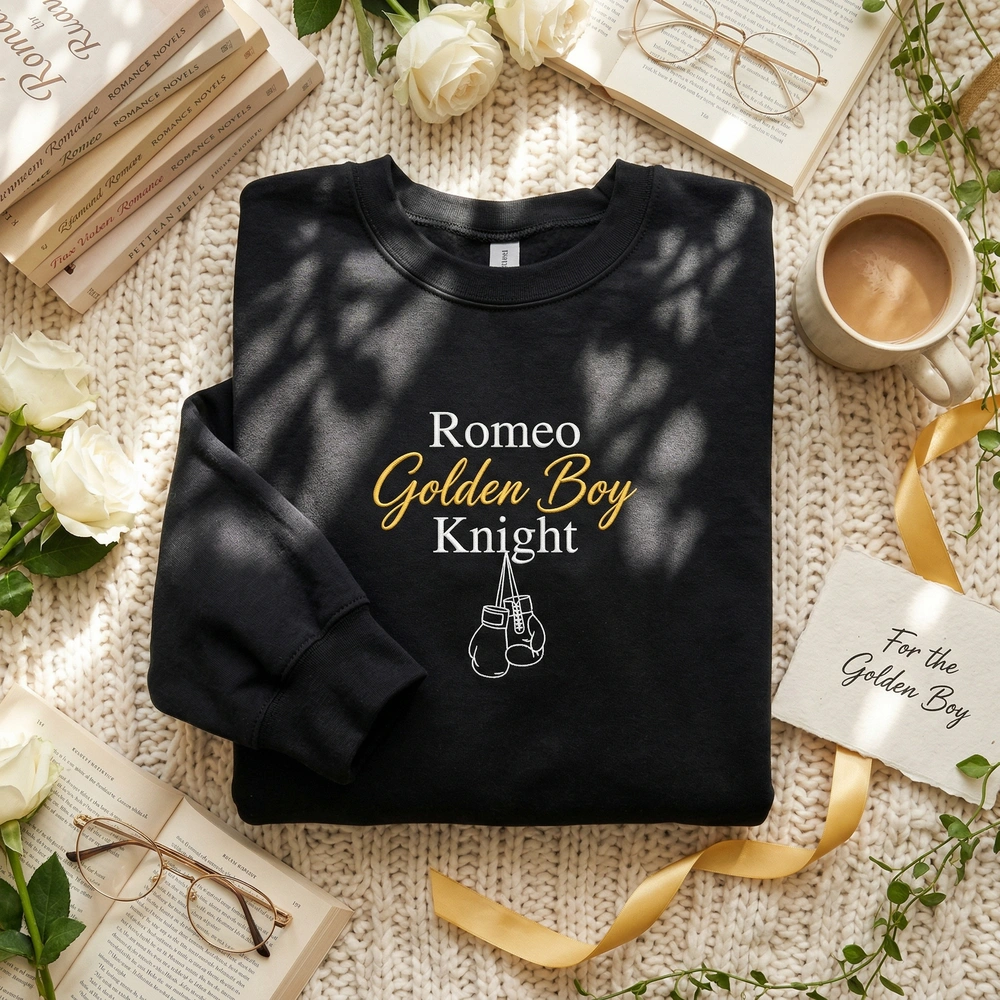
Small contained graphic, sports-romance styling — the sort of piece that works as an everyday layer, not a costume.
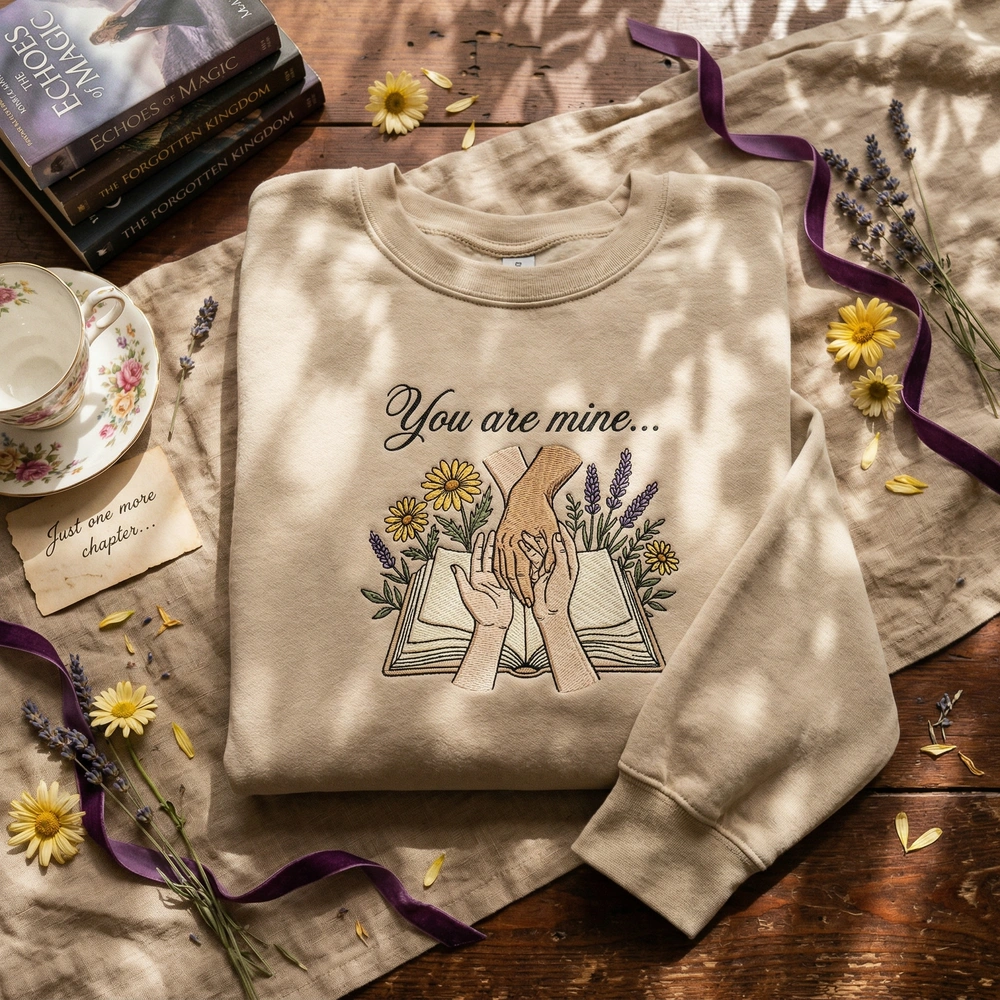
Floral fantasy design with lettering — useful if you're buying for a reader who likes romance-adjacent aesthetics.
Notice what’s shared here: a single design unit on the chest, thread colours limited enough to stay legible, and a concept that doesn’t depend on reproducing a protected cover. If you’re still weighing embroidered against printed before spending, the embroidered vs printed breakdown goes deeper on the wash-test side of the comparison.
One more note on fit and pairing: these read as wardrobe pieces, not novelty tees. If you’re building a small coordinated set, choose the embroidery thread colours to match rather than the base garment colours — two sweatshirts with the same stitch palette look deliberately paired even if they were ordered separately.
After it arrives: making the first impression last
Cold wash on a gentle cycle, line dry or low tumble, and turn the garment inside out for washing. That’s genuinely most of it. Thread doesn’t crack, but high heat and rough drying still flatten and fuzz embroidery over time.
- Wash cold, gentle. This is the whole rule. Warm water and a rough cycle are what flatten stitching.
- Dry inside out. It protects the raised thread from the drum.
- Skip fabric softener on the first few washes. Coatings can build up on thread.
- Iron from the reverse. Never press a hot iron straight onto lettering.
- Fold rather than hang. Hangers stretch the shoulders, especially on heavier fleece.
For presentation, the trick is styling rather than careful handling. Embroidered chest designs read best with sleeves pushed or layered under an open overshirt, where the raised texture catches light without you having to tug the garment flat. If you want the full picture on how these pieces get worn day to night, I wrote up some outfit combinations in how to style embroidered bookish apparel.
If you’re buying embroidered apparel for a child and you don’t know their exact size, go up and note the measurement in your message to the seller. An oversized embroidered sweatshirt is a gift; an undersized one gets quietly returned.

Quick questions
How do I know if an apparel design is genuinely licensed or just printed by a reseller?
Check whether the listing names the rights holder or publisher, and whether the product page carries artwork specifications rather than a lifestyle photo alone. A page that says "licensed" with no further detail may be repeating the seller's own claim rather than confirming it.
Is embroidered children's book apparel worth the extra cost over printed?
Yes, if the garment will be worn regularly. Thread doesn't crack or peel, and it holds colour through far more wash cycles. If it's a single costume wear, printed art is fine.
Does machine embroidery look cheaper than hand embroidery?
It looks different, not cheaper. Machine embroidery gives crisper lettering, even stitch density and repeatable colour from run to run, which is why it's the standard for made-to-order apparel and matching sets.
Can I buy folklore and nursery-rhyme apparel without licensing concerns?
Generally, yes — Mother Goose rhymes, fables and similar traditional material are in the public domain, so new artwork drawn in that style needs no clearance. Modern retellings and specific illustrated editions may still be protected.