You touch a freshly printed tee, the surface feels smooth, and your instinct is to pull it onto your back or toss it in the wash. That is exactly when the trouble starts. The ink may be dry to the touch while still short of a complete cure, which leaves the design vulnerable to washing, cracking, or unwanted transfer. These screen printed tee drying storage tips separate room drying from heat curing, then carry the garment safely through laundry and long-term storage. Whether you are protecting a favorite sports shirt or choosing a dependable gift alongside an embroidered design such as our mother goose shirt, the same careful handling makes the print last.

- Dry and cure are different stages: surface dryness does not guarantee that the ink is permanently bonded to the fabric.
- Plastisol curing depends on reaching the manufacturer's required temperature for sufficient dwell time, followed by a wash test.
- Water-based and plastisol inks both require controlled heat and time; room air alone is not a reliable cure.
- For laundry after purchase, tumble-dry low is the safer default, but the sewn-in care label comes first.
- Store printed tees clean, cool, dry, dark, and unfolded across the print, using breathable acid-free materials rather than sealed plastic.
Dry enough to touch, or cured enough to last?
A screen-printed tee can feel dry before the ink is fully cured. Speedball’s fabric ink instructions note that fabric ink dries but still must be cured to the fabric before washing, so treat surface dryness and permanent cure as separate milestones.
I have seen people lose a favorite print in the first wash because the shirt looked finished and felt ready. The visual dryness of ink tells you only that the surface is no longer wet. It does not confirm that the ink has developed the durable bond needed for washing. Speedball separates those stages explicitly: fabric ink can dry and still require curing to the fabric before it goes through laundry Speedball Screen Printing Instructions (2020).
Touch checks whether the surface is dry; a wash test checks whether the ink is cured. Do not use the first result as proof of the second.
This distinction matters most right after printing, but it also explains why a print behaves differently later. A properly cured design can still be damaged by repeated high heat, hard folds, or aggressive storage conditions. The safest routine starts with curing, then continues into ordinary care.
The heat-and-time window: what curing actually requires
Curing is controlled heat plus controlled time. For plastisol, the ink film must reach the manufacturer’s required temperature for enough dwell time; Avient defines dwell as the time a garment remains in the drying chamber at cure temperature.
If you are comparing curing options, the decisive variable is not whether a shirt feels warm after sitting out. It is whether the print held at the required cure conditions for long enough. PRINTING United Alliance’s troubleshooting guide addresses under-cured plastisol by checking dryer temperature, slowing the belt, raising dryer temperature, and performing a wash test PRINTING United Alliance Textile Plastisol Curing Guide.
| Stage | What it changes | What it proves |
|---|---|---|
| Room drying | Removes surface moisture or lets the ink film set enough to handle | The print feels dry to the touch |
| Heat cure | Activates the required temperature-and-time condition for bonding | The ink can withstand washing when the process is verified |
| Wash test | Checks the finished result after cure | Whether the print survives real laundering |
Room dry versus controlled cure
Water-based ink is not an automatic shortcut to no-heat finishing either. Avient’s conveyor dryer guide states that both plastisol and water-based inks need a specific amount of heat and time so the print does not release from fabric when washed Avient Conveyor Dryer Profiling Guide.
Avient defines dwell as the time a garment remains in the drying chamber at cure temperature.— Avient Specialty Inks
Before the first wear: a no-guesswork drying sequence
Let the print finish its controlled cure before wear or washing, confirm the result with a wash test when possible, and check the sewn-in care label before choosing any laundry-dryer setting.
- Separate handling from finishing. Once the shirt can be handled, do not assume the ink is ready for wear or washing.
- Complete the required cure. Use the ink manufacturer’s specified heat and time rather than room air as the finishing stage.
- Run a wash test. PRINTING United Alliance includes a wash test in its response to under-cured plastisol, because the print itself is the final proof.
- Read the permanent label. The FTC Care Labeling Rule requires manufacturers and importers to attach care instructions to textile wearing apparel, so your printed-tee drying instructions should not contradict that label FTC Care Labeling Rule.
Follow the sewn care label first. General print-care advice is a fallback, not permission to override the garment’s permanent instructions.
This sequence is also the sensible handoff between the printer and the wearer. If you are buying a keepsake gift rather than printing at home, ask whether the garment has completed its curing process and follow the seller’s care instructions from the first wash.
After the wash: choosing the safest dryer setting
For post-purchase laundry drying, tumble-dry low is the safer default. High heat can accelerate shrinkage and print wear, and the sewn-in care label remains the deciding instruction.
Once a print has survived its first wash, the goal shifts from curing to preservation. REI’s fabric-care guidance recognizes tumble-dry low as a distinct care setting and notes that high heat can speed both garment shrinkage and print wear REI Fabric Care Symbol Guide. That makes low heat the practical default when you are standing at the dryer and the options in front of you are high, medium, and low.
| Situation | Best default | Reason |
|---|---|---|
| Permanent label says tumble-dry low | Tumble-dry low | The garment's required care instruction controls |
| Label is unclear, print is colorful or heavy | Low heat or air dry | Reduces heat stress on both fibers and ink |
| Label prohibits machine drying | Follow the label | Do not substitute a general rule for the permanent instruction |
| You are unsure whether the print is cured | Wash test before committing the whole shirt | Confirms the result before repeated laundering |
Quick laundry decision guide
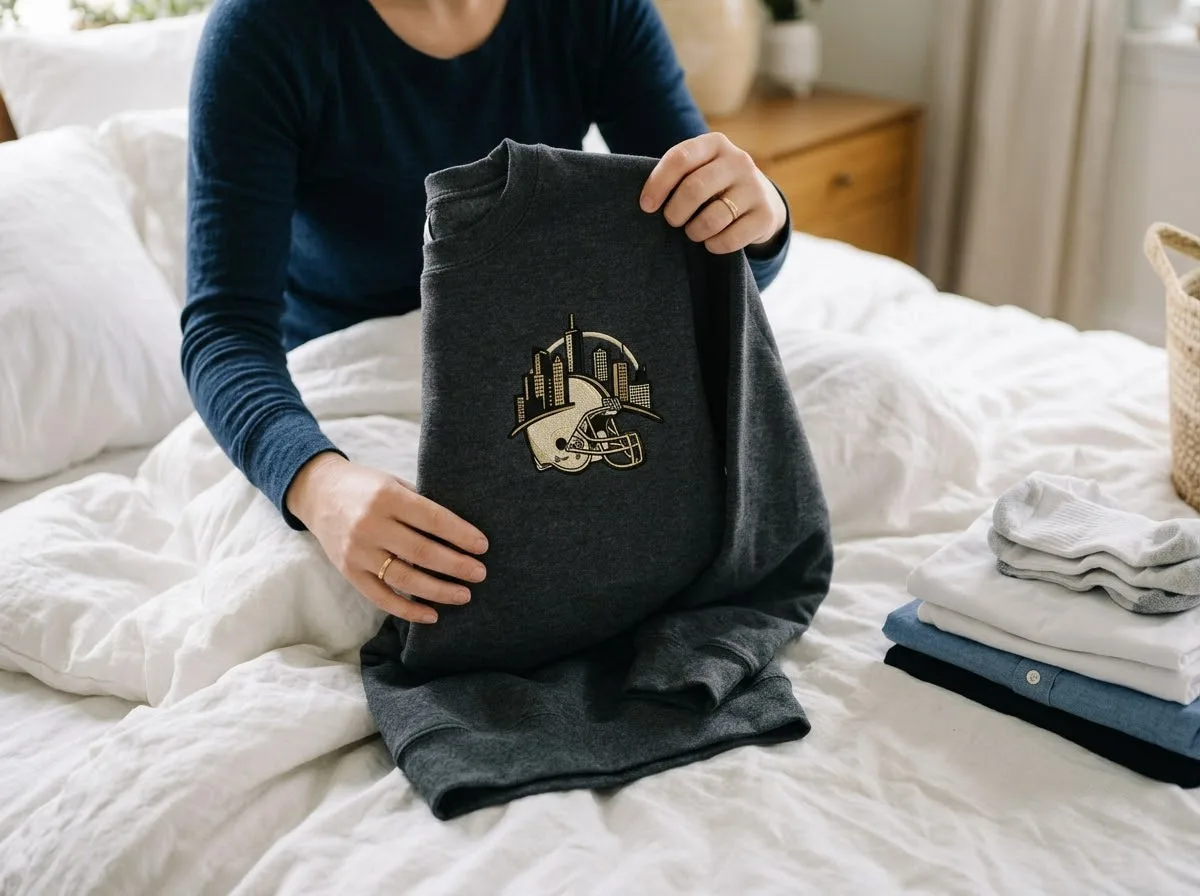
The same low-heat habit applies when you are caring for embroidered pieces in a gift rotation. A structured knit such as the Steelers 2026 Gridiron City Embroidered Sweatshirt – Black Gold Era rewards gentle drying because it keeps the garment shape and thread work looking sharp. For a game-day pick, the Black Gold Sunday – Steelers Game Day Fan Embroidered Sweatshirt is an easy recommendation when you want a bold fan gift that still fits a simple care routine. A third option, the Steelers Pittsburgh Football Embroidered Sweatshirt – Black Gold Fan, works well for someone who wants a classic black-and-gold layer without a loud all-over graphic.

A polished black-and-gold fan gift with a clean embroidered chest design and an easy low-heat care routine.
Storage that protects the print and the fibers
Store a printed tee clean, cool, dry, dark, and away from big temperature or humidity swings. For long storage, choose breathable acid-free materials and avoid sealed plastic that can trap condensation.
Storage is where good prints quietly lose their edge. Smithsonian textile guidance recommends clean, cool, dry, dark storage away from drastic temperature and humidity changes, and it specifically warns against basements and attics. It also advises against airtight plastic because condensation can damage fibers Smithsonian Antique Textile Storage FAQ.
- Clean first. Store the shirt only after it is fully clean and completely dry.
- Choose dark, stable space. Avoid attics, basements, and windowsills where heat, damp, or sunlight can fluctuate.
- Let the fabric breathe. Use an acid-free box or tissue instead of sealing the garment in plastic.
- Keep the print out of hard folds. Position folds around the ink so the design does not bear a sharp crease.
Light exposure matters while drying as well as during storage. Smithsonian climate guidance notes that acid-free boxes and tissue reduce exposure to light, abrasion, and soiling, and it states that intense sunlight and ultraviolet light accelerate fiber degradation Smithsonian Climate and Textiles Storage. A shaded drying spot is therefore more than an aesthetic preference.
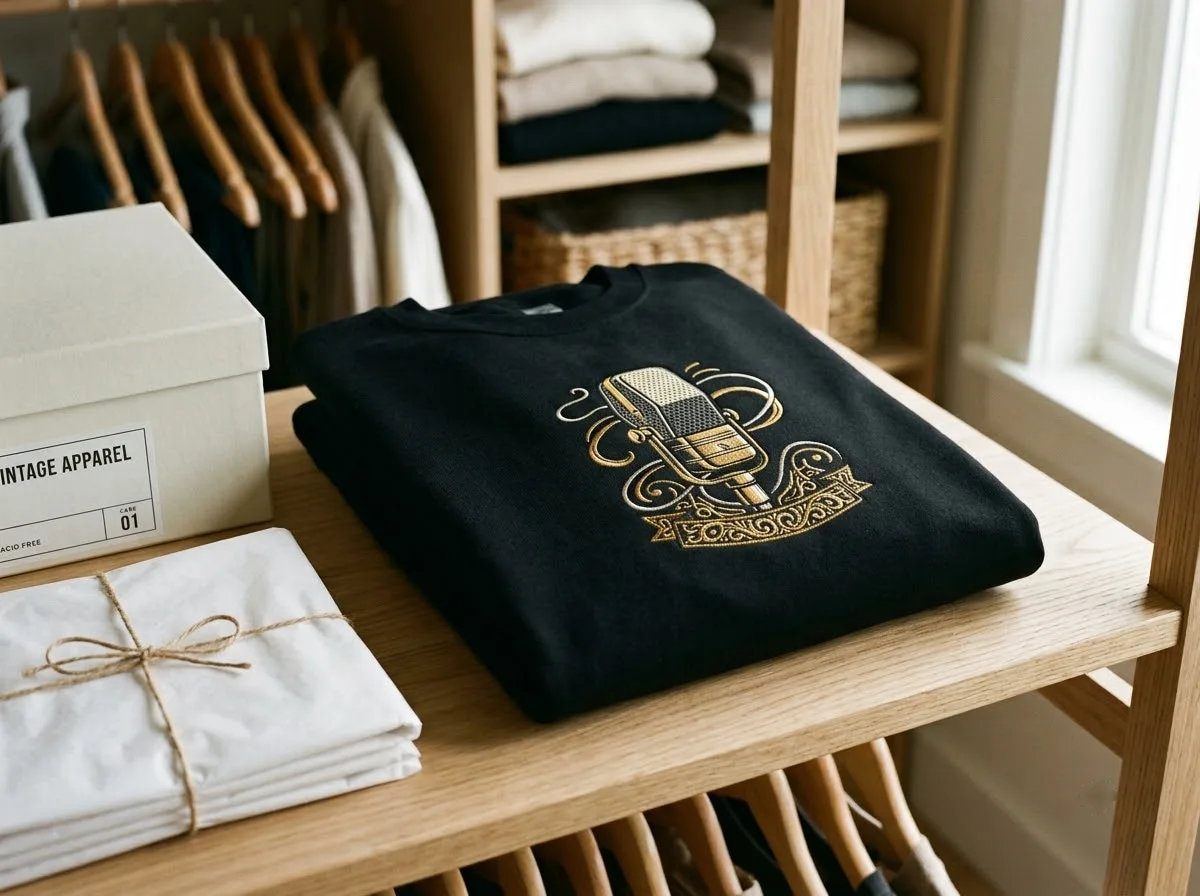
Folding around the artwork, not through it
Fold a printed tee around the design rather than sharply across the ink. The National Archives advises minimizing folds in textiles and softening necessary folds with acid-free tissue, which translates to protecting thick screen-printed areas from hard creases.
A thick plastisol print does not behave like plain cotton when it is folded repeatedly along the same line. The National Archives recommends minimizing textile folds and softening necessary folds with acid-free tissue National Archives Preserve Textiles. For a screen-printed tee, that means keeping the crease off the printed area instead of pressing a hard line through the ink film.
Fold the shirt so the chest print faces outward and the fold falls above or below the design. If tissue is available, place a soft layer inside the fold rather than forcing a crisp edge through the print.
That small habit keeps storage from becoming a source of damage. It also makes rotation easier: when you can see the design while the shirt is stacked, you are less likely to bury a favorite piece under a pile of heavier garments.
Choosing the print that fits your gift
Choose screen printing when you want a bold graphic finish and choose machine embroidery when you want a tactile, stitched design with a more premium gift feel. Match the method to the moment, then use the right care routine for whichever one you pick.
The care question becomes clearer once you know why you chose the garment in the first place. A screen-printed tee is excellent when the artwork needs broad color coverage or a graphic look, while an embroidered sweatshirt gives the gift a raised, stitched texture that reads as more substantial in the hand. Our comparison of embroidered versus printed gift shirts explains that tradeoff in more detail.
| Choice | Feels right when | Care priority |
|---|---|---|
| Screen-printed tee | You want a strong graphic, detailed artwork, or a casual everyday layer | Correct cure, low-heat drying, and no hard fold across the print |
| Machine-embroidered sweatshirt | You want visible stitch texture and a more structured gift presentation | Gentle cleaning, shape retention, and low-heat drying |
| Both in one gift set | You want a versatile present that covers daily wear and colder days | Read and follow each garment's permanent care label |
Which treatment suits the gift?
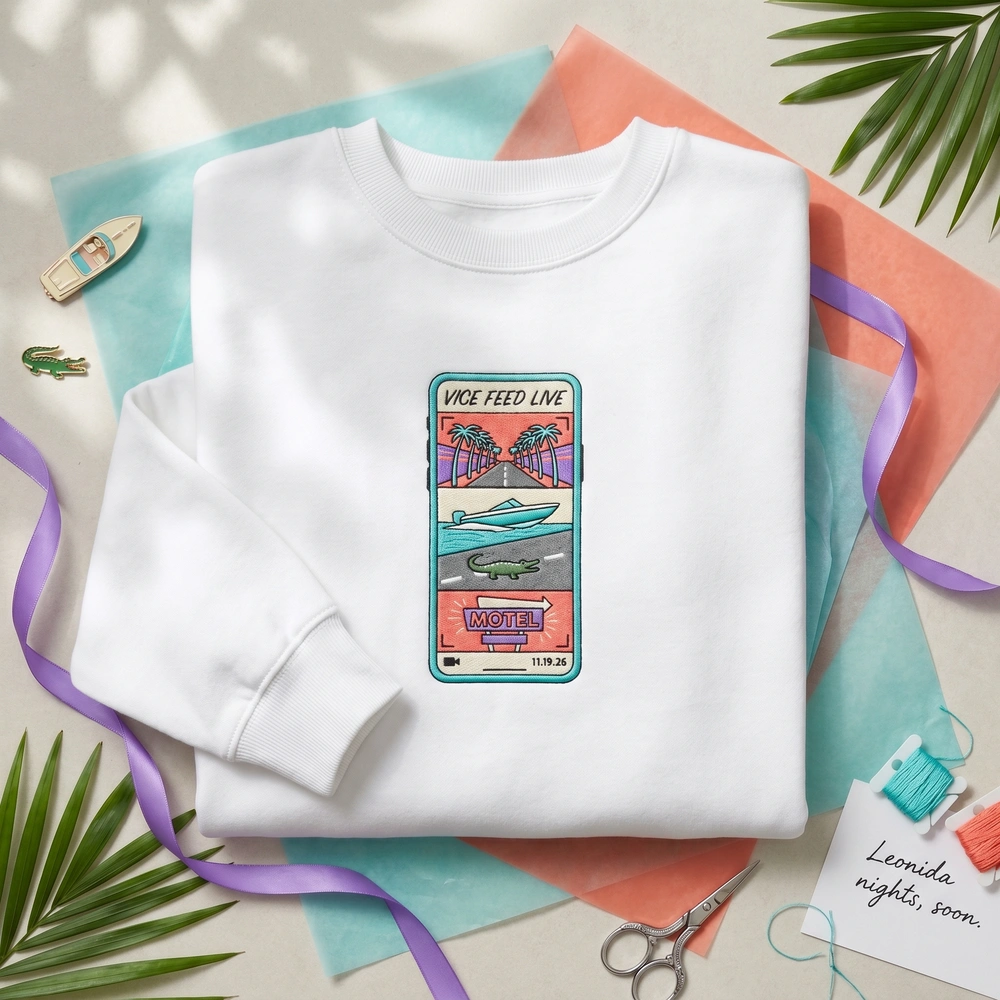
A colorful embroidered pick for a gamer or pop-culture fan who appreciates a design with texture and personality.
If the recipient is more likely to frame the shirt than wear it, storage quality matters as much as print quality. Keep the piece clean and dry, protect it from sunlight, and avoid a hard crease through the artwork. For a broader approach to laundry-day care, read How to Wash a Printed Graphic Tee: A Care Guide That Actually Works.
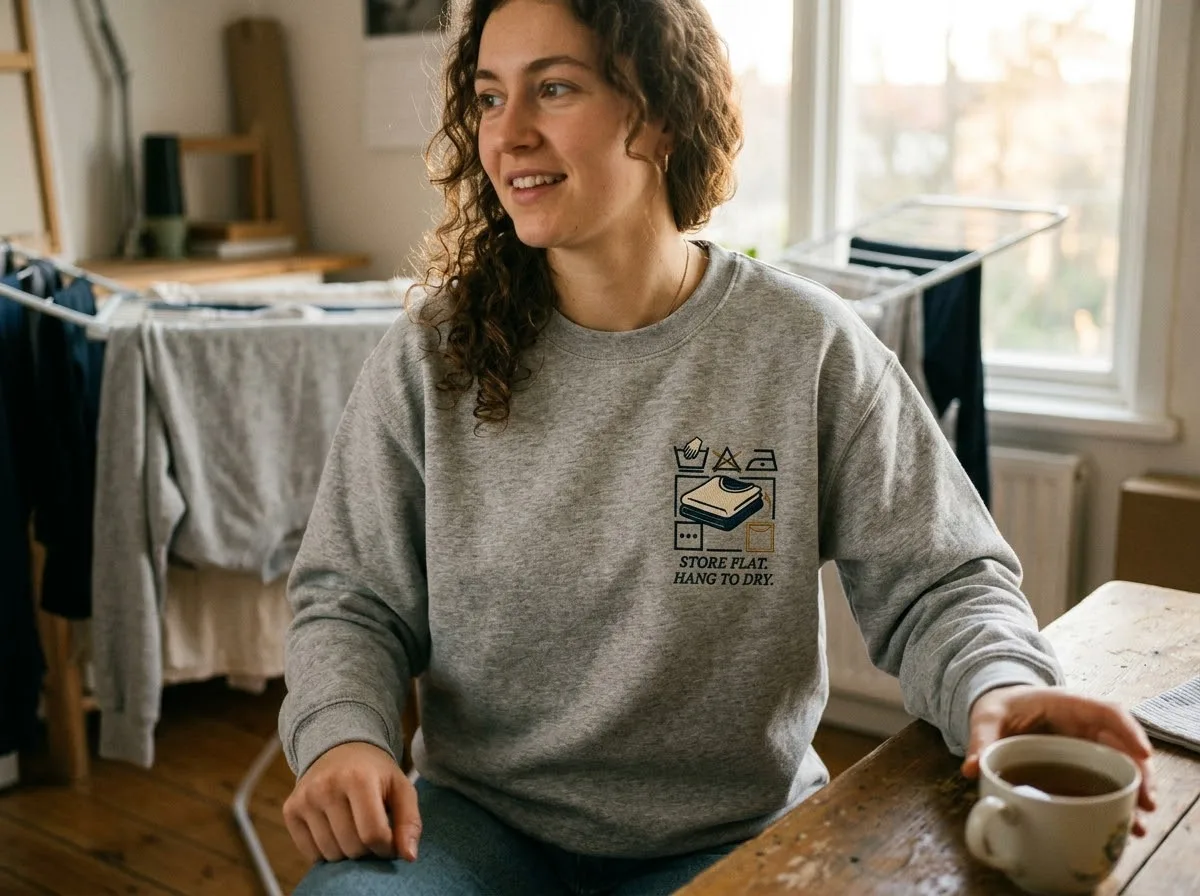
Common questions
How long after screen printing can you wash the shirt?
Do not wash it just because the surface feels dry. The ink must complete its required cure first; Speedball notes that fabric ink dries but still must be cured to the fabric before washing, and a wash test is the practical way to verify the result.
Is tumble-dry low safe for a screen-printed tee?
It is the safer general default because lower heat reduces the risk of shrinkage and print wear, but the sewn-in care label comes first. If the label specifies a different method, follow it.
What is the biggest storage mistake for printed tees?
Sealing a shirt in airtight plastic in a basement or attic. The Smithsonian warns that condensation can damage fibers and recommends cool, dry, dark storage away from drastic temperature and humidity changes.
Should I fold a printed tee across the design?
No. Fold around the print instead. The National Archives advises minimizing textile folds and softening necessary folds with acid-free tissue, which is especially relevant when the ink film is thick.