That first wash is where most embroidery gets ruined — not in the wearing. The threads loosen, the stabilizer shifts, colors bleed, and suddenly the crisp design you fell for looks tired. The good news? You don’t need special equipment to prevent it. With a few small adjustments to how you sort, wash, dry, and press, your embroidered sweatshirts, hoodies, and tees can stay vibrant and dimensional for years, even with regular wear.

- Always start with the garment's care label, then wash even more gently to protect the embroidery.
- Cold water, gentle cycle or hand wash, mild non-biological detergent — skip bleach and enzyme powders.
- Never wring or tumble on high heat; roll in towels and air dry to keep stitch shape.
- Press face-down between towels with a warm iron — never directly on the stitches.
- Knits need stabilization and a soft backing to stay comfortable and intact through repeated washing.
Start With the Label, Then Go Gentler for the Stitches
Always start with the garment’s care label as your baseline, then choose the gentlest option it allows to protect the embroidery. Care labels are designed to cover the whole garment, so embroidered areas need extra caution beyond the label.
In the U.S., care labels are meant to cover washing, drying, ironing, bleaching, dry cleaning and warnings, and the Federal Trade Commission notes that all of those elements must be considered together. That label tells you what the base fabric can handle, but embroidery thread, stabilizer, and backing often need a softer approach than the fabric itself. Whether you are caring for a heavyweight sweatshirt or a delicate piece from our sjm merch collection, read the label first, then dial everything down one notch for the stitches.
Sorting matters more for embroidered apparel than for plain garments. The American Cleaning Institute recommends sorting by color, fabric type and care instructions, and it specifically notes that trims and decorations should be checked for colorfastness. Treat embroidery as that decoration: wash embroidered pieces with similar colors and similar fabrics, and when in doubt, wash separately the first few times to catch any dye transfer early.
Before the first wash, dampen a hidden thread area with cold water and press with a white cloth. If color transfers, wash that piece alone in cold water on gentle. If you want a deeper routine for special gifts, see our guide on How to Care for Embroidered Cotton Shirts: The Stitch-Safe Laundry Routine.
The Wash That Actually Protects Embroidery
Wash embroidered clothing separately or with similar colors in cold water on a gentle cycle or by hand, using a small amount of mild, non-biological detergent. Skip chlorine bleach, harsh detergents, and biological or enzyme powders that can degrade threads.
For embroidered clothing, the safest default is to wash separately or with similar colors, using cold water and a gentle cycle or hand wash; DMC advises cold rinsing, a small amount of non-biological detergent, and stopping if rinse water becomes colored. That last detail is important — if you see tint in the water, stop and rinse separately to avoid dye setting into lighter threads.
- Cold water only: Warm and hot water swell fibers and can dull or bleed embroidery thread faster
- Gentle or hand wash: Less agitation means less friction on raised satin and fill stitches
- Turn inside out: Tucking the embroidery inside reduces snagging and pilling on the face
- Mild, non-biological detergent: Use a small amount — more soap does not mean cleaner stitches
- No chlorine bleach or enzyme powders: Avoid chlorine bleach, harsh detergents and biological/enzyme powders on embroidery when possible; DMC specifically lists biological powder, harsh detergents and chlorine bleach as things not to use on needlework
This is exactly why heavyweight pieces like the Flag Sweater Embroidered Sweatshirt hold up so well — the base fleece is durable, but the vintage-inspired chest embroidery still needs that cooler, slower cycle to keep edges crisp. The same applies to darker grounds: a design like the Forgotten Mask Reflection Embroidered Sweatshirt benefits from being washed alone or with other darks in cold water, so the contrast threads stay true.

A sturdy weekend sweatshirt whose raised chest embroidery stays sharpest with cold, gentle washes and inside-out care.
| Method | Best for | Why it protects stitches |
|---|---|---|
| Hand wash in cold water | Heavily textured or dark-ground embroidery | Minimal agitation, full control over rinsing |
| Machine gentle / delicate cold | Everyday sweatshirts and hoodies | Low spin reduces twisting and friction on threads |
| Regular warm cycle | Plain, non-embroidered basics only | Too much heat and agitation for raised stitches |
Choosing a wash method for embroidered apparel
After the Wash: Don't Wring, Don't Tumble Hot
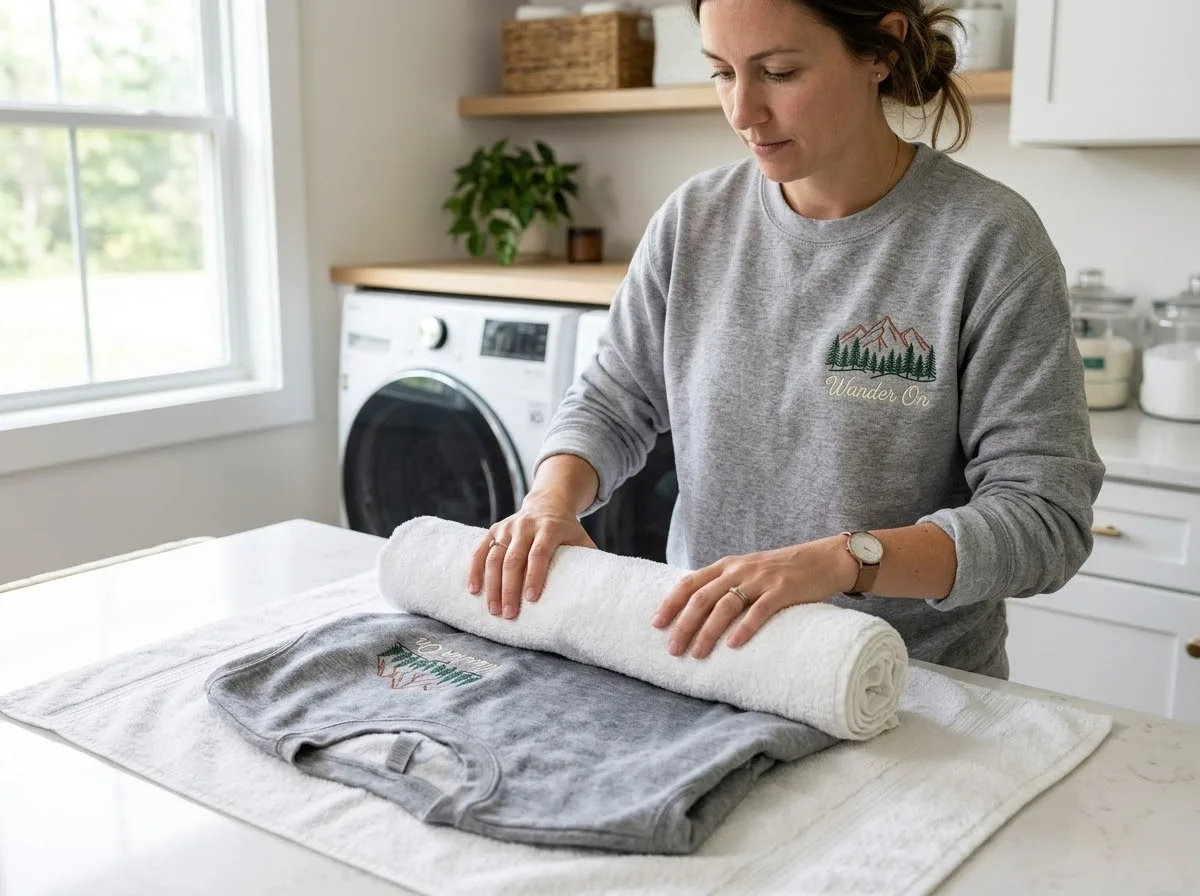
Do not wring embroidered garments to remove water, and skip high-heat tumble drying when you can. Roll the piece between clean towels to press out moisture, then air dry flat to preserve stitch shape.
Twisting is hard on embroidery. Do not wring embroidered garments: DMC recommends rolling the piece between clean towels and squeezing gently instead, which helps remove water without twisting stitches or distorting the fabric. Unroll, replace the damp towel with a dry one if needed, and squeeze again rather than wringing.
Air drying is generally safest for preserving stitch shape; DMC recommends laying washed embroidery on a dry towel and letting it air dry until damp before pressing. For sweatshirts, reshape the shoulders and cuffs while damp, smooth the embroidered area with your palm without stretching, and lay flat rather than hanging — hanging a wet embroidered sweatshirt can pull at the stitched area as it dries.
Use air-only or the lowest heat for no more than 10 minutes to knock out dampness, then remove promptly and lay flat to finish drying. Turn the garment inside out and avoid over-drying, which can make stabilizer brittle and leave puckering around dense stitching.
If you layer often — think fall fleece over tees — this dry-flat habit is the difference between a design that stays dimensional and one that goes wavy. For seasonal rotation, our piece on Fall Embroidered Sweatshirts to Layer Into the Coziest Stretch of the Year has practical layering notes that pair well with this care routine.
Pressing Without Crushing Your Design
Never press a hot iron directly onto embroidery. Place the embroidery face down between clean towels and press lightly with a warm iron so the stitches stay raised and dimensional.
Heat and pressure will flatten what makes embroidery beautiful. Never press a hot iron directly onto embroidery. DMC recommends placing embroidery face down between clean towels and pressing lightly with a warm iron so the stitches are not crushed. The bottom towel cushions the raised satin stitches, the top towel protects the base fabric, and the warm — not hot — temperature relaxes wrinkles without glazing thread.
- Set to warm: If your iron has dots, stay on 1 dot or low wool setting; add steam only if the garment label allows it
- Protect both sides: Lay a clean, dry towel on the board, place the garment face-down so embroidery touches the towel, cover with a second towel
- Press, don’t slide: Lift and press for 2-3 seconds, lift again; sliding drags stitches and can create shine
- Finish damp: Press while still slightly damp from air drying for the smoothest result with the least heat
Place embroidery face down between clean towels and press lightly with a warm iron — never directly on the stitches.— DMC
Pastel threads show crush marks more easily, so pieces like the Culture Nominee Embroidered Sweatshirt in Light Pink are a good place to practice this towel press method. The light pink ground and fine lettering keep their soft hand when you let the towel do the cushioning instead of the iron’s soleplate.
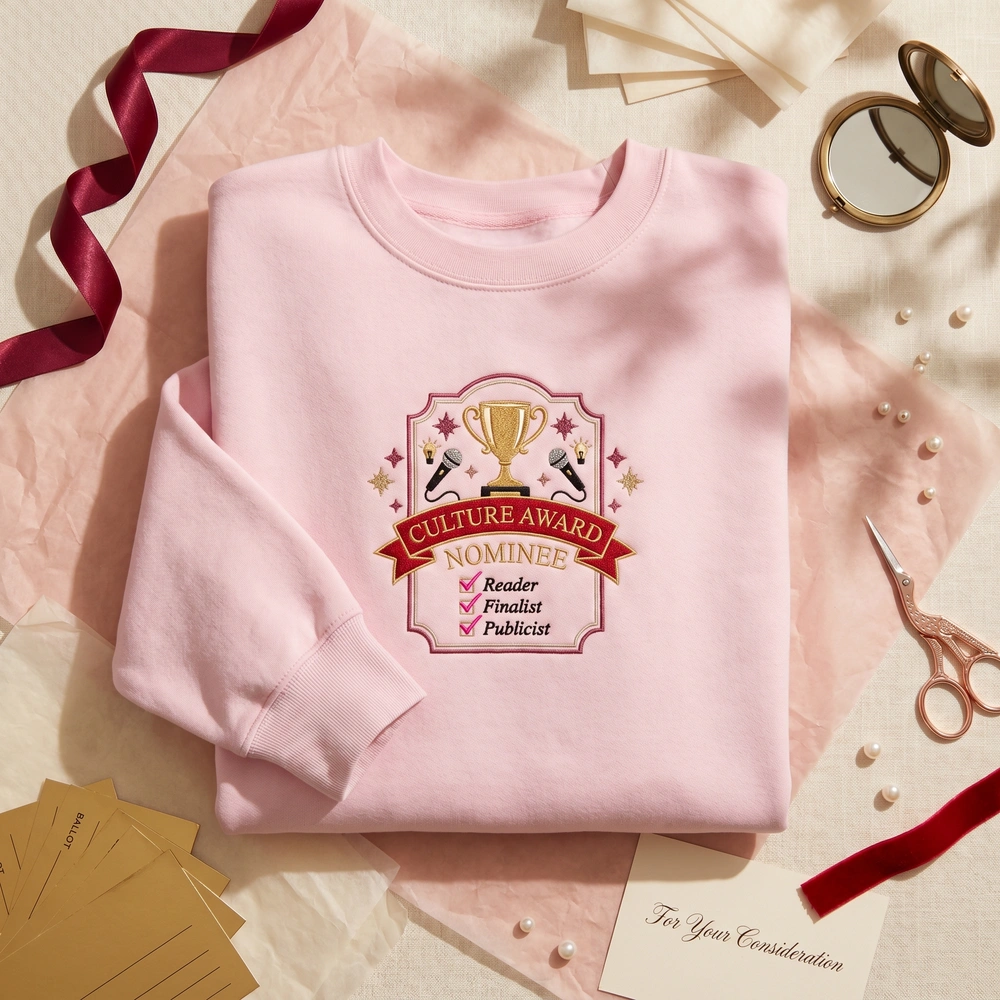
Delicate script on a soft pink base — best pressed face-down between towels on warm to keep the lettering crisp.
Knits, Tees, and Making the Care Last Beyond Laundry
For t-shirts and other knits, good care starts before the first wash with proper stabilization and can be extended with a soft backing that covers stitch backs for comfort through many washes.
For embroidered t-shirts and other knits, the long-term care story begins before the first wash: Sulky explains that knits need proper stabilization, excess stabilizer should be removed gently, and a soft protective backing can cover back stitches that touch skin and improve comfort through washings and wear. That backing isn’t just about comfort — it reduces friction between skin, thread tails, and detergent during laundering, so edges stay neater longer.
When those knit pieces come home, keep the sorting logic consistent: separate by care instructions as well as color, keep embroidered knits out of hot, rough loads with jeans and towels, and remove stabilizer remnants only as directed. After washing, check inside the garment; if a soft cover was applied over the stitch backs, make sure it is still smooth and reposition it flat before drying so it doesn’t crease against the embroidery.
| Garment | Key habit | Avoid |
|---|---|---|
| Embroidered sweatshirt / hoodie | Cold gentle wash, towel-roll dry, low-heat towel press | Wringing, high-heat tumble, iron directly on design |
| Embroidered tee / knit | Proper stabilization + soft backing, wash with knits only, air dry flat | Pulling stabilizer aggressively, washing with heavy denim |
| Light-color embroidery | Wash with similar lights, check rinse water for color | Chlorine bleach and harsh detergents |
Stitch-safe habits by garment type
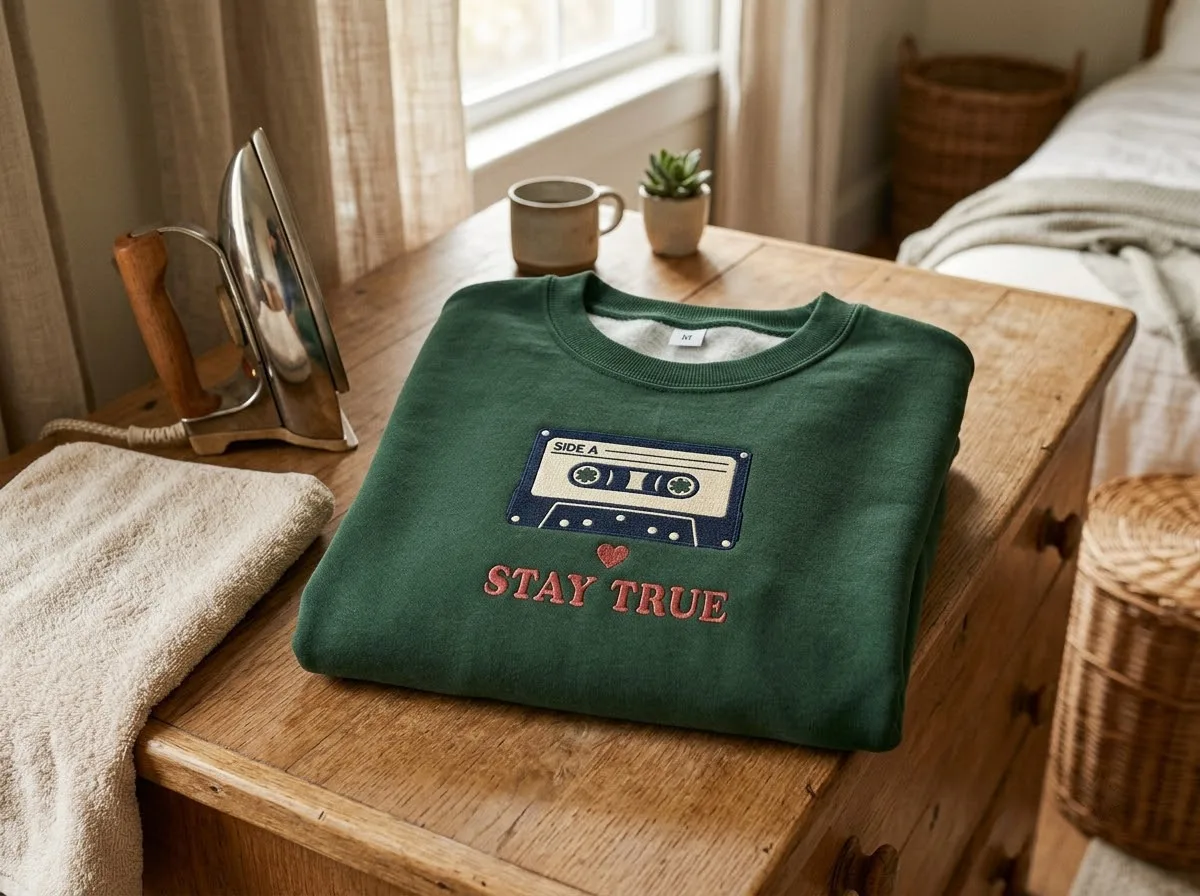
Storage matters too. Fold embroidered sweatshirts rather than hanging them long-term so the shoulders don’t stretch around the stitched area, and give deep-fill designs like the Eid Ul-Adha 2026 Embroidered Sweatshirt in Forest Green space in the drawer — stacking heavy items on top of raised embroidery for months can flatten the texture. If you want a fuller seasonal checklist, see How to Care for Embroidered Clothing So the Stitches Stay Beautiful for storage and handling extras.

Forest green fleece with a centered embroidered graphic — fold and store flat to keep the dimensional stitching lofty.
Quick questions
Can I machine wash embroidered clothing or should I always hand wash?
You can machine wash on a gentle or delicate cycle in cold water with a small amount of mild non-biological detergent, turned inside out. Hand washing gives you the most control for dense or dark-ground embroidery, but a cold gentle machine cycle is safe for most sweatshirts and tees when you skip bleach and enzyme powders.
What temperature should I use for embroidered sweatshirts?
Cold water for washing and low or warm — not hot — for ironing. Cold protects thread color and base fabric, while a warm iron used through a towel smooths wrinkles without crushing raised stitches.
Why is my embroidery puckering after washing?
Puckering often comes from heat, agitation, wringing, or an unstable knit base. Wash cold on gentle, roll between towels instead of wringing, air dry flat, and for knits ensure proper stabilization and a soft backing over the stitch backs to reduce movement through wash and wear.
Can I use bleach or stain remover on an embroidered area?
Avoid chlorine bleach, harsh detergents, and biological/enzyme powders directly on embroidery, as they can damage or discolor threads. Treat stains on the plain fabric around the design with a mild product, rinse thoroughly, and test colorfastness first.