
You bought the shirt at the merch table, soaked in sweat and adrenaline, and now it sits in your closet—a wearable ticket stub. But after three washes, the black is dull, the graphic looks tired, and you’re wondering if you should have just framed it. Concert tees fade faster than everyday shirts because the dyes are often less stable, the prints more fragile, and the sentiment too high to risk a careless wash cycle. The good news: a few deliberate steps can keep that shirt looking road-ready for years. Here’s how to do it right.

- Always check the care label first—cold water doesn't override manufacturer instructions for the garment or its decoration.
- Turn printed or embroidered concert shirts inside out before washing to minimize wear on the design.
- Use cold water and a shorter wash cycle to slow color loss, and air-dry instead of tumble-drying whenever possible.
- Wash new shirts separately for the first few washes to remove excess dye that can bleed onto other garments.
- A dull appearance isn't always permanent fading—detergent residue can make dark shirts look streaky or faded.
Start with the care label, not the internet
Before you reach for cold water or a delicate cycle, read the care label sewn into your concert shirt. Cold washing and gentle techniques can’t fix a garment that isn’t washable in the first place, and ignoring the label’s instructions—or the detergent’s dosing guidance—can damage both the fabric and the decoration.
The American Cleaning Institute is clear: follow the care label first. Some concert tees carry screen-printed plastisol that can crack under heat, while others use water-based inks or vinyl transfers that have different tolerances. A few vintage or specialty shirts may even be dry-clean only. If the label says “wash cold, tumble dry low,” that’s your baseline—not a suggestion.
The same goes for detergent. Overdosing can leave residue that dulls dark fabrics, and some formulas are too harsh for delicate prints. If your shirt looks streaky or faded after a wash but the design itself is intact, you might be dealing with detergent film rather than true color loss—a problem that’s fixable with proper dosing and a rinse cycle.
Wash new concert tees separately for the first two or three cycles to remove excess dye. Dark shirts often bleed in early washes, and that dye can transfer to lighter garments. Test any stain-removal products on an inconspicuous seam first—concentrated pretreatments can strip color from shirts with unstable dyes, according to the American Cleaning Institute’s laundering guide.
Cold water is your first line of defense
Hot water accelerates fading by loosening dye molecules and weakening fabric fibers. Washing your concert shirts in cold water—ideally 60°F or below—slows that process significantly, keeping colors darker and graphics sharper over time.
The American Cleaning Institute identifies hot water as one of the leading factors that make dark clothing fade faster. Cold water is gentler on dyes, especially the reactive and direct dyes commonly used in band merch. It also reduces the risk of shrinkage, which can distort prints and make graphics look cracked or peeling.
Modern detergents are formulated to work in cold water, so you’re not sacrificing cleaning power. If your shirt is heavily soiled—say, you wore it to an outdoor festival and it’s covered in dust—pretreat stains with a small amount of detergent or a stain stick before tossing it in the wash. Just test the product on a hidden seam first to make sure it won’t pull color from the fabric.
| Temperature | Effect on dyes | Best for |
|---|---|---|
| Cold (60°F or below) | Minimal dye loss, preserves color saturation | Dark concert tees, printed graphics, new shirts |
| Warm (90°F) | Moderate dye loss, faster cleaning | Lightly soiled everyday clothes, not recommended for dark merch |
| Hot (130°F+) | Significant dye loss, fiber weakening | Whites, heavily soiled work clothes—never concert shirts |
Water temperature and fading risk
Turn it inside out every single time
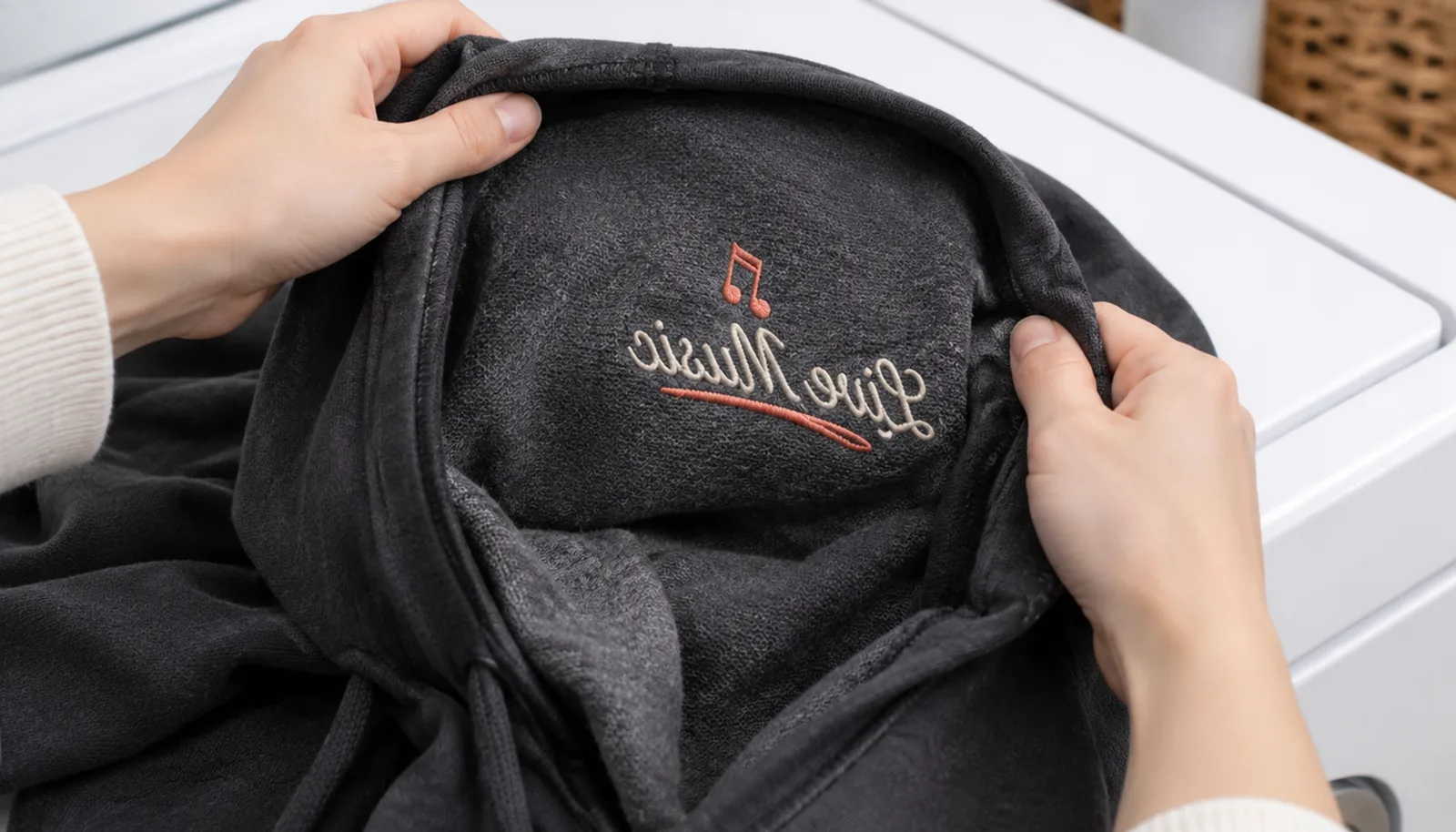
Flipping your concert shirt inside out before washing protects the print or embroidery from friction, detergent contact, and abrasion against other garments—three forces that gradually wear down the design and dull the colors.
Good Housekeeping’s cleaning experts recommend turning printed, embroidered, and appliqué garments inside out because it minimizes direct contact between the decoration and the wash drum. The inside-out method works for screen prints, heat transfers, vinyl decals, and embroidered designs alike—anything that sits on top of the fabric rather than being woven into it.
This is especially important for stick season merch and other embroidered concert apparel. Machine embroidery is durable, but the thread can snag on zippers, hooks, or rough fabric edges during the wash. Turning the garment inside out tucks the embroidery safely against the drum’s smooth interior, reducing the chance of pulls or thread breaks.
Turning a shirt inside out also protects the outer fabric from pilling and surface wear, which can make even a vibrant shirt look tired. If you’ve invested in a high-quality piece like the Showgirl Era embroidered sweatshirt, this one habit can extend its lifespan by years.
Choose a shorter wash cycle when you can
The less time your concert shirt spends agitating in the washer, the less dye it will lose. Shorter cycles—like a delicate or quick-wash setting—reduce mechanical wear on both the fabric and the design, slowing the fading process without compromising cleanliness for lightly soiled garments.
The American Cleaning Institute recommends shorter cycles for dark clothing, and Consumer Reports notes that less time in the washer means less fading. A typical normal cycle runs 45 to 60 minutes; a delicate or express cycle cuts that to 20 to 30 minutes. If your shirt isn’t heavily soiled—you wore it for a few hours at an indoor venue, not a muddy festival—the shorter cycle will do the job.
Avoid overloading the drum. When clothes are packed too tightly, detergent can’t rinse out properly, leaving behind residue that makes dark fabrics look dull or streaky. The American Cleaning Institute’s laundering guide points out that a dull or faded appearance isn’t always permanent color loss—it’s often undissolved detergent or mineral buildup. If you’re consistently seeing white streaks on your black concert tees, try switching to a liquid detergent and cutting your load size in half.
- Delicate cycle: Gentle agitation, slower spin, ideal for printed or embroidered shirts
- Quick wash: Short duration, effective for lightly worn garments, reduces dye exposure
- Normal cycle: Longer and more aggressive—reserve this for heavily soiled everyday clothes, not your concert merch
Air-dry whenever possible
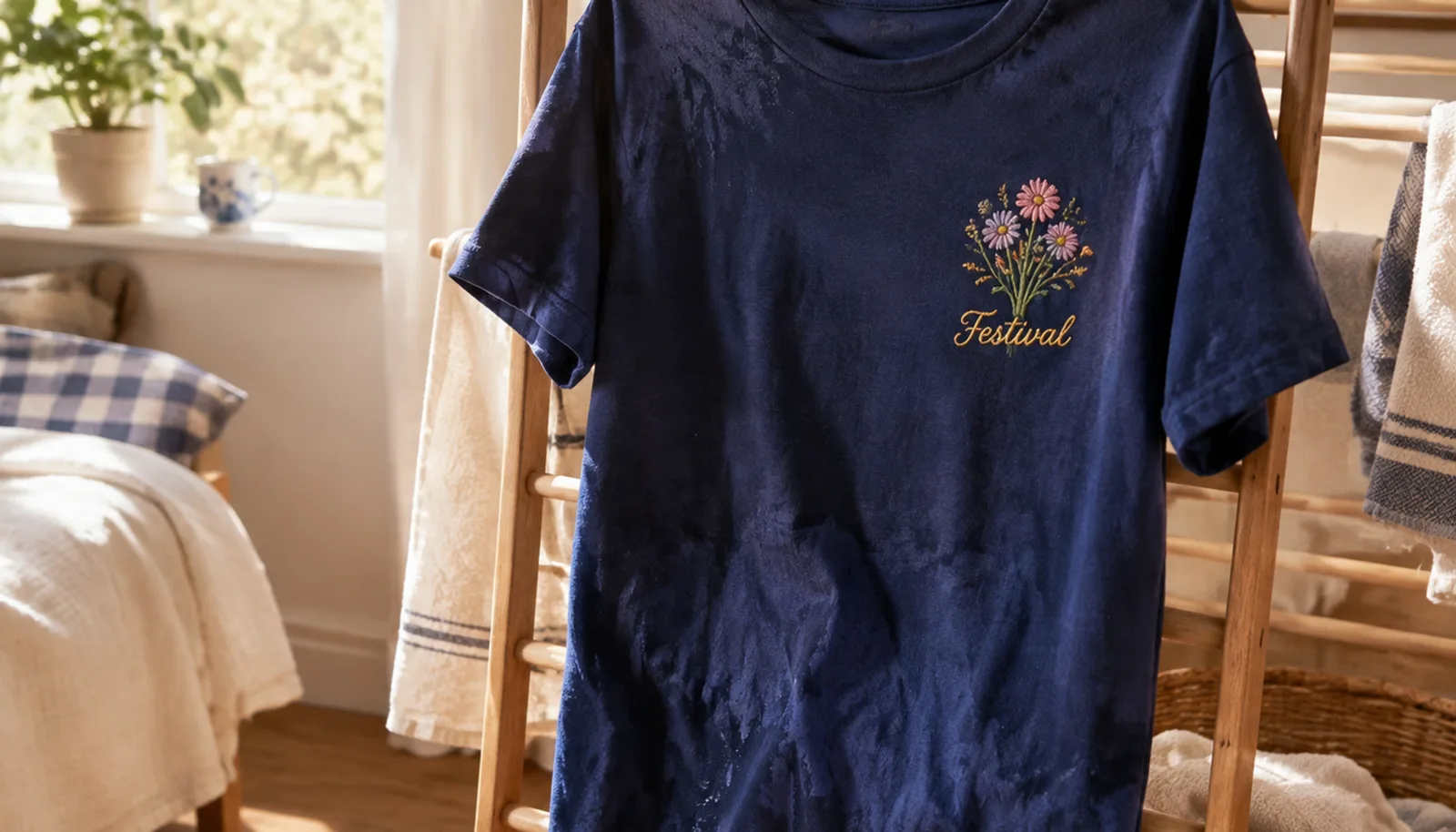
Tumble drying subjects your concert shirt to high heat and mechanical tumbling, both of which accelerate fading and can crack or peel printed designs. Air-drying—either on a rack or a hanger—is the single most effective way to slow color loss and extend the life of the graphic.
The American Cleaning Institute includes air-drying as a core strategy for keeping dark clothes from fading. Heat breaks down dye molecules and weakens the adhesive or ink binder that holds screen prints and transfers in place. Even a low-heat dryer setting generates enough heat to cause gradual damage over dozens of cycles.
If you must use a dryer—say, you’re on the road or don’t have space for a drying rack—set it to the lowest heat or use the air-dry (no heat) setting. Remove the shirt as soon as the cycle ends to prevent wrinkles from setting in, which can stress the print. For embroidered pieces like the Locket Era sweatshirt, air-drying also prevents the embroidery thread from becoming brittle or losing its sheen.
Hang lightweight tees on a hanger or over a shower rod; the weight won’t stretch the fabric. For heavier items like hoodies or sweatshirts—especially those with embroidery on the chest—lay them flat on a drying rack to prevent the shoulders from sagging or the embroidery from pulling the fabric out of shape.
When a shirt looks faded but might not be
A concert tee that appears dull or streaky after washing isn’t always permanently faded. Detergent residue, hard-water mineral deposits, and fabric softener buildup can all create a hazy film that mimics color loss—and unlike true fading, these problems are reversible.
The American Cleaning Institute explains that undissolved detergent and mineral-related residue are common culprits behind a dull appearance. If your black shirt looks grayish or has white streaks after washing, the issue is likely buildup rather than dye loss. To test: rinse the shirt in cold water with no detergent, then air-dry. If the color looks richer afterward, you’ve confirmed it’s a residue problem.
Prevent this by following detergent dosing instructions exactly—more is not better. If you have hard water, consider using a detergent formulated for hard water or adding a water softener to your wash. Avoid fabric softener on concert tees; it coats fibers with a waxy film that can dull colors and interfere with moisture-wicking fabrics. For embroidered pieces like the Madison Beer Locket Tour sweatshirt, fabric softener can also make the embroidery thread feel stiff or matted.
When fading is permanent
Some color loss is inevitable. The American Cleaning Institute notes that washing precautions can slow fading but can’t guarantee a concert tee stays unchanged indefinitely. Dark garments commonly fade with repeated washing, and damage caused by unstable dyes, excessively hot water, or improper bleaching is usually irreversible. If you’ve followed every guideline and the shirt still looks washed out after a dozen cycles, the dye itself may have been low-quality from the start—a common issue with budget merch sold at smaller venues.
When you want merch that lasts longer than the tour
If you’re tired of concert shirts that fade after a season, look for apparel made with higher-quality blanks and more durable decoration methods. Embroidered designs, for example, use colorfast polyester thread that doesn’t fade like screen-printed ink, and heavier-weight garments hold their shape and color longer than thin fast-fashion tees.
Machine-embroidered concert apparel—like the kind you’ll find in curated collections—offers a different longevity profile than standard printed merch. The thread is dye-stable, the stitching is mechanical (so it won’t crack or peel), and the designs are typically applied to premium blanks that can handle dozens of washes without pilling or stretching. If you’re building a rotation of concert outfits you’ll wear for years, embroidered pieces are worth the investment.

A country-show favorite with machine-embroidered detail that won't fade, crack, or peel—even after a full season of washes.
For more on keeping printed designs intact across all your merch, see how to wash printed merchandise so the design outlasts the gift and the full breakdown in how to wash a printed graphic tee.
Quick questions
Can I wash concert shirts with other clothes?
Yes, but wash new concert tees separately for the first two or three cycles to remove excess dye. After that, group them with similar colors and turn everything inside out to prevent snagging.
Will vinegar help keep concert shirts from fading?
Vinegar is sometimes suggested to set dyes, but it's not a substitute for cold water and proper care. The American Cleaning Institute doesn't list vinegar as a recommended fade-prevention method, and it can leave a lingering smell if not rinsed thoroughly.
How often should I wash a concert shirt?
Wash only when visibly soiled or after heavy wear. If you wore it for a few hours and it's not sweaty or stained, hang it to air out instead—every wash cycle contributes to gradual fading.
Is hand-washing better than machine-washing for concert tees?
Hand-washing is gentler, but a cold-water delicate cycle with the shirt turned inside out is nearly as effective and much more practical for regular use. Reserve hand-washing for vintage or irreplaceable shirts.