You check the wash basket and spot the cotton shirt you actually want to keep wearing: soft fabric, a raised machine-embroidered design, and one question—can it go in the machine? The safest answer starts with the sewn-in care label, which the Federal Trade Commission care-labeling rule requires to state regular washing guidance in the U.S. From there, use a gentler routine than ordinary cotton laundry: turn the shirt inside out, choose cold water, avoid harsh chemicals, and handle the design without twisting it. The same sequence makes care instructions easy to pass along when the shirt is a gift. It is a simple wash-to-storage habit, not a fussy ritual.

- Read the sewn-in care label first; in the U.S., it covers wash method and safe water temperature. <a href="https://www.ftc.gov/legal-library/browse/rules/care-labeling-textile-wearing-apparel-certain-piece-goods-text">Federal Trade Commission care-labeling rule</a>.
- Turn the shirt inside out, use cold water, and choose delicate/gentle or hand wash. <a href="https://www.ftc.gov/legal-library/browse/rules/care-labeling-textile-wearing-apparel-certain-piece-goods-text">Federal Trade Commission care-labeling rule</a>; <a href="https://www.dmc.com/US/en/technique-embroidery-clean-wash-finished-work">DMC washing instructions</a>.
- Use mild non-biological detergent; skip chlorine bleach, harsh detergents, soaking, and wringing. <a href="https://www.dmc.com/US/en/technique-embroidery-clean-wash-finished-work">DMC washing instructions</a>; <a href="https://www.madeirausa.com/resources/instructions-for-washing-embroidered-garments/">Madeira USA instructions</a>.
- Air-dry promptly on a towel; if ironing is necessary, press the embroidery face down between clean towels with a warm iron. <a href="https://www.dmc.com/US/en/technique-embroidery-clean-wash-finished-work">DMC washing instructions</a>.
Start with the label, then choose the gentler default
Read the shirt’s care label first. In the U.S., the Federal Trade Commission care-labeling rule requires regular care instructions such as whether to hand- or machine-wash and what water temperature is safe; it defines washing inside out as protecting the face fabric and a delicate/gentle cycle as slower agitation with reduced time. If the label permits washing without extra embroidery guidance, use cold water, turn the shirt inside out, and choose delicate/gentle or hand wash.
Cotton alone does not decide the best setting. A stitched face benefits from less rubbing and agitation, so treat the label’s most restrictive instruction as the ceiling. If the tag says hand wash, do not upgrade it to a machine cycle. If it permits machine washing, the gentler setting is the better starting point for the embroidery.
- Machine wash: Use only if the label permits it; turn the shirt inside out, select cold water, then choose delicate/gentle.
- Hand wash: Use cold water and gentle movement when the label says hand wash or when you want more control.
- Temperature: Follow the stated safe temperature; cold is the conservative default for the stitched design.
- No-wash instruction: Do not substitute this routine. Follow the label’s cleaning direction.
| Label signal | Recommended next move | What to avoid |
|---|---|---|
| Machine wash permitted | Inside out, cold water, delicate/gentle cycle | Hotter water or a stronger cycle |
| Hand wash permitted or required | Cold hand wash with gentle movement | Automatic machine agitation |
| Specific water temperature listed | Stay at or below the listed temperature | Guessing a hotter setting |
| Do not wash | Use the label’s specified alternative | Testing the shirt in a wash cycle |
Turn label language into a low-stress decision
If the label is missing or hard to read, do not guess a hotter temperature or stronger cycle. Treat uncertainty as a reason to choose the gentlest available handling, not a reason to test the embroidery.
The wash cycle is where stitch care matters most
Wash embroidered cotton shirts in cold water, inside out, with a delicate/gentle cycle or gentle hand wash. Add a small amount of mild non-biological detergent, rinse in cold water until clear, and stop if the rinse water becomes colored; avoid harsh detergents, chlorine bleach, and soaking. DMC’s finished-needlework washing instructions and Madeira USA’s embroidered-garment instructions support these precautions.
For a machine wash, load the shirt inside out and use a small, measured amount of mild non-biological detergent. Choose the gentlest cycle the care label allows; the goal is controlled cleaning, not maximum agitation. For hand washing, use cold running water, move the shirt gently through it, and rinse several times until clear. If the rinse water becomes colored, stop rather than continuing to work the design. These steps follow DMC’s finished-needlework washing instructions.
- Turn it inside out: Keep the embroidered face against the inside of the garment.
- Use cold water: Choose cold running water for hand washing or a cold machine setting.
- Measure detergent: Use a small amount of mild, non-biological detergent.
- Keep agitation low: Select delicate/gentle when machine washing is allowed.
- Skip harsh additives: Avoid chlorine bleach and harsh detergents; do not add bleaching agents such as peroxide or sodium carbonate.
- Do not soak: Do not leave an embroidered article sitting in water.
| Method | Choose it when | Routine |
|---|---|---|
| Machine wash | The label allows machine washing | Inside out, cold water, delicate/gentle cycle, mild non-biological detergent |
| Hand wash | The label says hand wash or direct control is preferred | Cold running water, gentle movement, several cold rinses |
| Bleach or soaking | Never use as an embroidery shortcut | Skip chlorine bleach, harsh detergent, and soaking |
Machine wash versus hand wash
If the rinse water turns colored, stop. DMC advises stopping when rinse water becomes colored rather than continuing to work the design aggressively.
After washing: dry promptly, never wring
Never wring an embroidered cotton shirt. Roll it between clean towels and squeeze gently to remove water, then air-dry it on a towel; do not soak it or leave it damp, folded, stuck together, or sitting wet. DMC’s instructions recommend the towel method, and Madeira USA’s embroidered-garment instructions warn against wringing, soaking, and damp folded storage.
The towel roll is the quiet part of the routine that replaces a rushed twist. Roll, squeeze, unroll promptly, and keep the embroidered area from folding onto itself while wet. Leave the shirt open on a clean towel until dry; if you need to press it, stop at the slightly damp stage described below. Damp fabric that is folded or stuck to another piece should be separated immediately, consistent with Madeira USA’s washing instructions.
- Roll: Place the washed shirt between clean towels.
- Squeeze: Press gently to remove water; do not twist or wring.
- Unroll: Open the shirt promptly so the embroidered face is not trapped in a wet fold.
- Air-dry: Leave the shirt on a clean towel until dry, or until slightly damp if it will be pressed.
- Finish the job: Never leave the shirt soaking, folded wet, stuck to another garment, or sitting in a damp pile.
| Move | Use it? | Reason |
|---|---|---|
| Towel roll and gentle squeeze | Yes | Removes water without wringing |
| Wring or twist | No | Madeira USA says never to wring embroidered articles |
| Leave soaked or folded damp | No | Madeira USA warns against soaking and damp folded or stuck-together storage |
| Air-dry on a towel | Yes | DMC recommends air drying needlework on a towel |
Drying moves that protect the stitched face
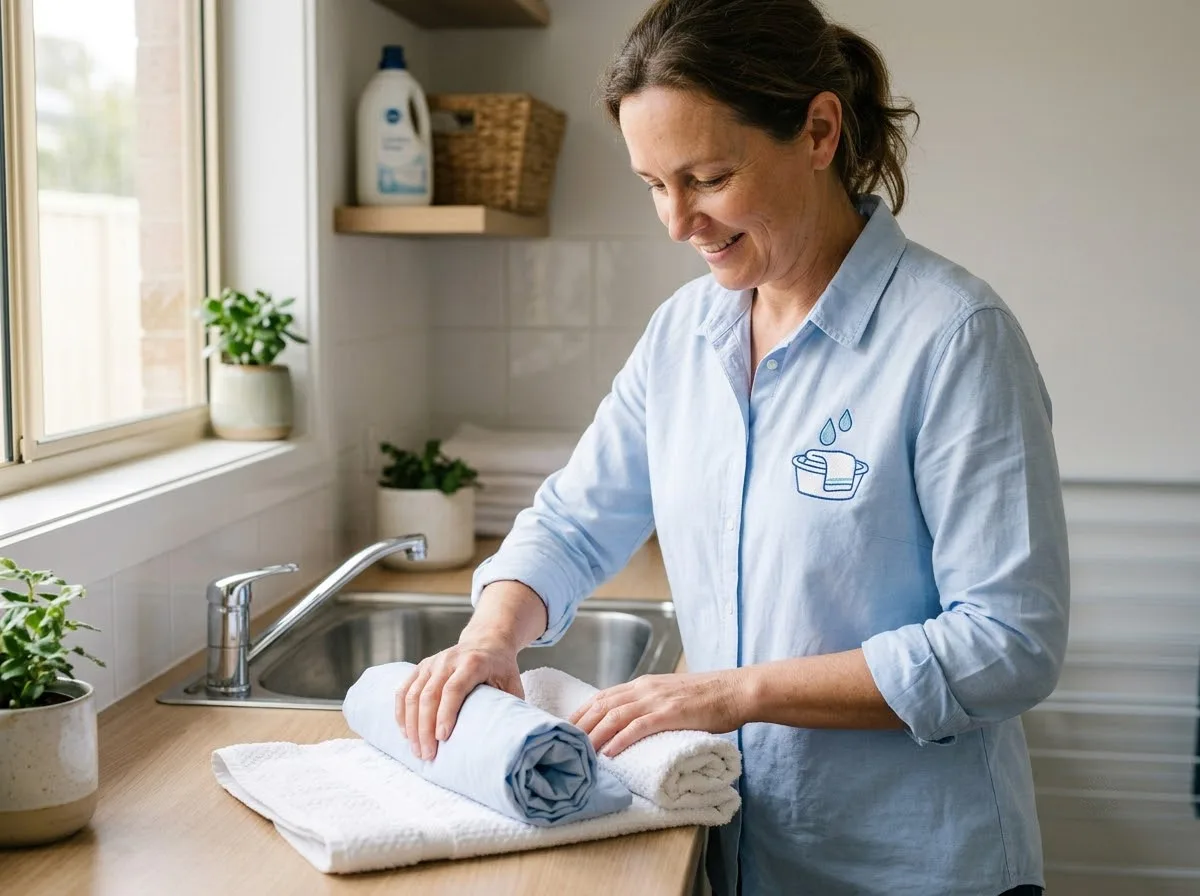
Take the shirt out of the basin or washer, unroll it, and place it on a clean towel. The embroidery should not be left folded and wet while other laundry waits.
Iron only with a barrier between heat and thread
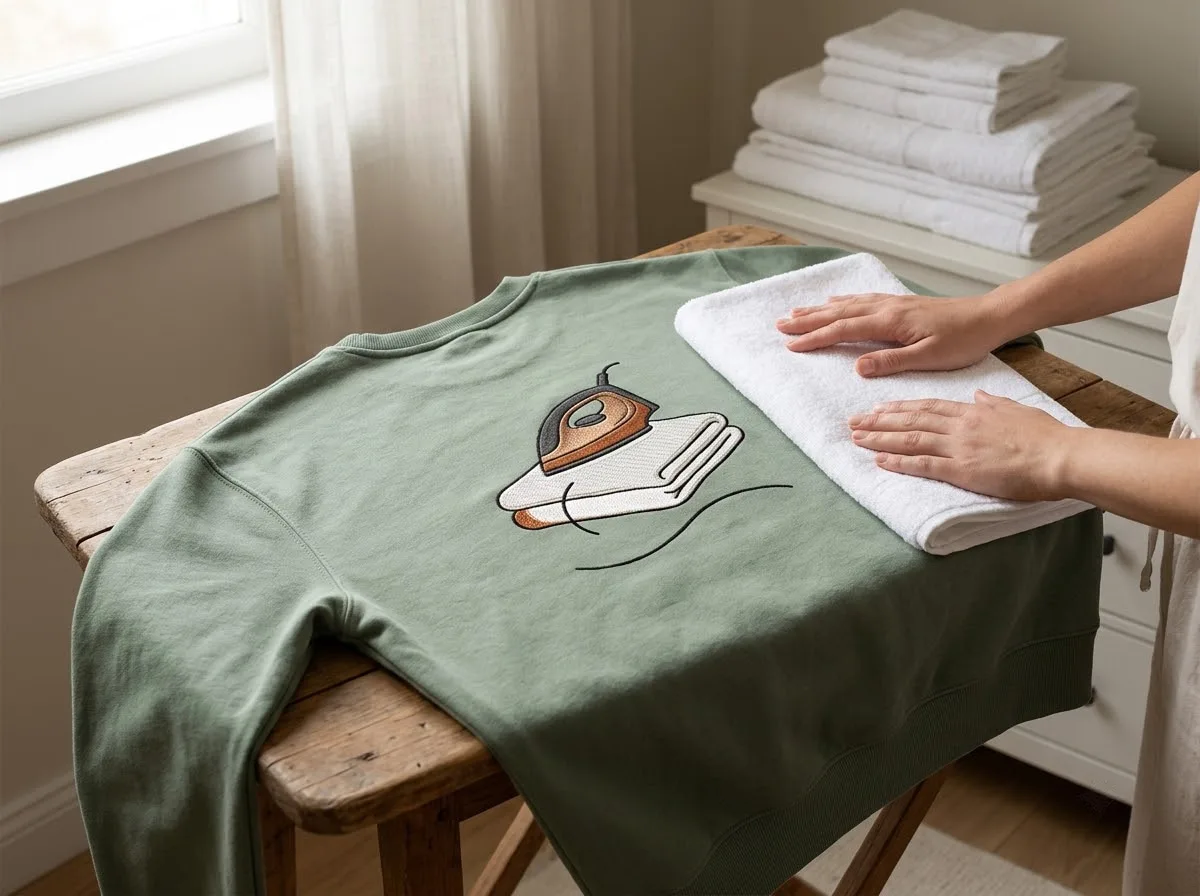
If ironing is needed, place the embroidery face down between clean towels and press lightly with a warm iron. Do not use a hot iron directly on the stitched design; DMC’s finished-needlework instructions recommend the towel barrier and specifically warn against a hot iron.
Iron after the shirt has air-dried on a towel until it is damp rather than dripping wet. Keep the design face down, use clean towels, and lift the iron between presses instead of dragging it across the stitches. Smooth the plain cotton around the motif first; give the embroidered area only the light pressure it needs. This face-down method is also the safest way to keep the iron from touching the raised design directly.
A safe pressing order
- Wait: Let the shirt air-dry until slightly damp.
- Position: Put the embroidery face down.
- Add a barrier: Place the design between clean towels.
- Set the heat: Use a warm iron, never a hot setting.
- Press lightly: Lift and place the iron instead of dragging it over the stitches.
If the design needs another pass, pause and check the fabric instead of increasing the heat. Direct hot ironing is the shortcut most likely to turn a simple finishing step into a repair problem.
For care questions beyond cotton shirts—especially accessories or different garment constructions—see How to Care for Embroidered Clothing So the Stitches Stay Beautiful. If the fabric itself is part of your buying decision, Best Fabrics for Embroidered Gift Shirts: What Actually Works is the useful next read.
Before you buy, match the design to the wearer
The best embroidered gift is a design the recipient will wear and a care label that fits their real laundry routine. Check the individual item’s instructions before ordering, then pass along the simple care note—inside out, cold water, gentle washing, no bleach, and no wringing—while keeping the label in charge. The Federal Trade Commission care-labeling rule, DMC’s finished-needlework instructions, and Madeira USA’s embroidered-garment instructions support that handoff.
Personalization changes the emotional fit, not the basic laundry logic. A photo portrait works when the gift should feel unmistakably personal; a constellation or music motif works when the recipient prefers a strong visual identity without a photo. Because these choices include shirts, sweaters, and sweatshirts, use the care label for the exact item rather than assuming every product has the same fiber or finish.
For a grandmother-focused present, start with LolliDollyArt’s grammy t shirts buying guide, then return to the care label on the individual product. For other recipients, choose between a personalized portrait and a fixed motif: portraits feel specific to the person, while celestial or music designs suit shoppers who want a recognizable style without uploading a photo.
| Design direction | Best gift fit | Buying checkpoint |
|---|---|---|
| Two-pet portrait | Cat or dog mom who wants both pets represented | Confirm the individual label and wash method |
| Cat portrait | Cat mom who wants a photo-based gift | Check the label’s water temperature and drying directions |
| Celestial motif | Astronomy lover or recipient who prefers non-personalized art | Check whether the item is a shirt or sweatshirt and follow its label |
| Music statement | Rock or metal fan who prefers bold apparel | Review the care instructions before gifting |
Match the embroidery style to the recipient
For a personalized pet gift, compare the two-pet portrait sweatshirt and the custom cat portrait shirt. For a fixed motif, the celestial Meteor Shower sweatshirt brings a different mood, while Too Metal For The Hall suits a rock-focused wardrobe. Each link is a style choice; the care label is the care choice.
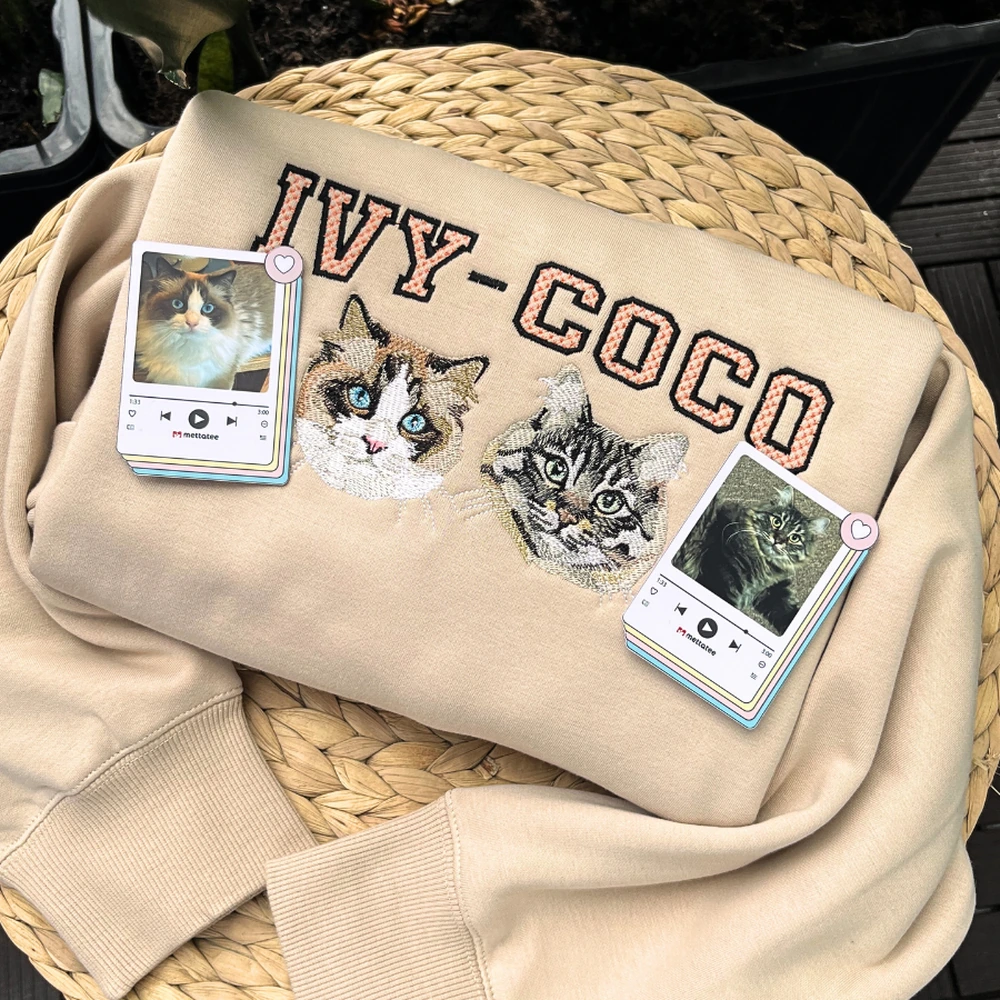
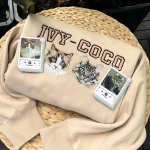
A personalized two-pet portrait gift option for cat and dog moms.
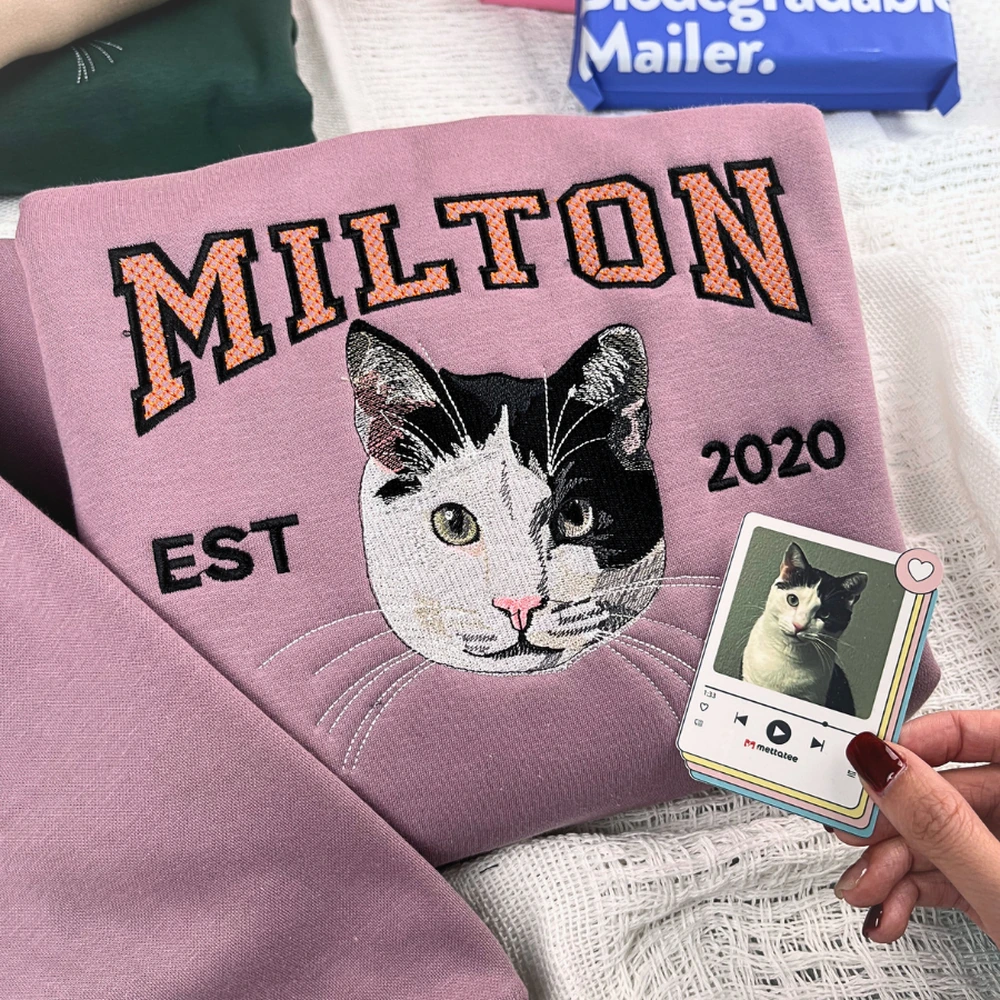
A photo-led cat portrait option available as a T-shirt or sweater.
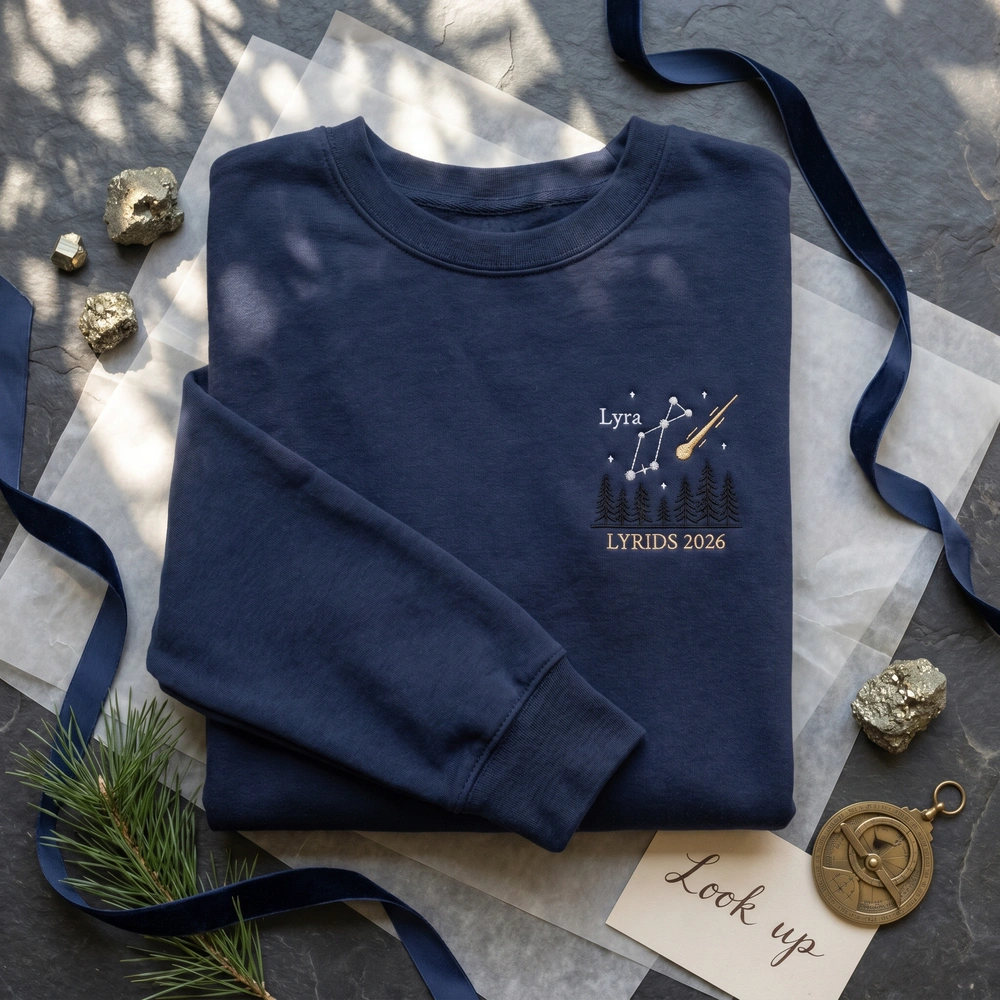
A celestial motif built around the Lyrid 2026, Lyra constellation, and shooting-star theme.
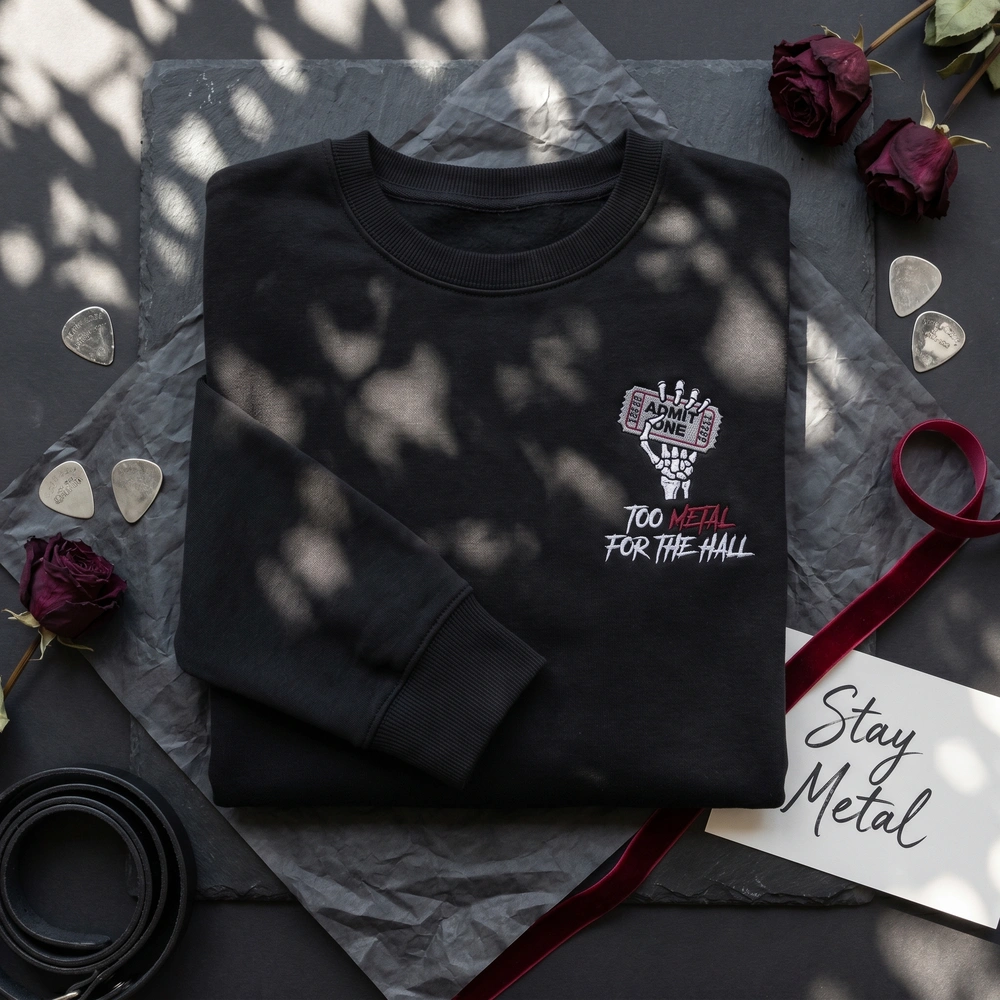
A bold heavy-metal statement sweatshirt for a recipient who likes rebel-style apparel.
Save this laundry-day checklist
For most washable embroidered cotton shirts, use this sequence: read the label; turn the shirt inside out; wash in cold water on delicate/gentle or by hand; use mild detergent; rinse in cold water until clear; skip bleach, soaking, and wringing; dry promptly on a towel; and press face down between clean towels with a warm iron only if needed. It is a compact routine, not a replacement for a stricter label. See the Federal Trade Commission care-labeling rule, DMC’s finished-needlework instructions, and Madeira USA’s embroidered-garment instructions.
Keep the sequence beside the laundry basket or include it with an embroidered gift. A short note—inside out, cold water, gentle wash; no bleach or wringing—gives the recipient the important actions without making the gift feel like a set of chores. When the label says something stricter, replace the default with the label’s instruction.
- Read: Check the garment care label before washing.
- Prepare: Turn the shirt inside out.
- Wash: Use cold water and delicate/gentle or hand washing, as permitted by the label.
- Clean: Add a small amount of mild non-biological detergent.
- Rinse: Use several cold rinses until clear; stop if the rinse water becomes colored.
- Protect: Avoid chlorine bleach, harsh detergents, and soaking.
- Dry: Roll between clean towels, squeeze gently, and air-dry promptly; never wring or leave folded wet.
- Press only if needed: Place embroidery face down between clean towels and use a warm iron with light pressure.
Gentle handling beats aggressive cleaning. Label first, cold water second, no twisting at any stage.

Quick questions
Can embroidered cotton shirts go in the washing machine?
Only when the care label permits machine washing. Turn the shirt inside out, use cold water, and choose a delicate or gentle cycle; see the <a href="https://www.ftc.gov/legal-library/browse/rules/care-labeling-textile-wearing-apparel-certain-piece-goods-text">Federal Trade Commission care-labeling rule</a>.
Can I use bleach on an embroidered cotton shirt?
Avoid chlorine bleach and harsh detergents. <a href="https://www.madeirausa.com/resources/instructions-for-washing-embroidered-garments/">Madeira USA’s instructions</a> also advise against bleaching agents such as peroxide and sodium carbonate.
Should I wring an embroidered shirt after washing?
No. Roll the shirt between clean towels and squeeze gently instead; <a href="https://www.madeirausa.com/resources/instructions-for-washing-embroidered-garments/">Madeira USA’s instructions</a> say never to wring embroidered articles.
How should I iron embroidered cotton fabric?
Let it air-dry on a towel until damp, place the embroidery face down between clean towels, and press lightly with a warm iron. Do not use a hot iron; <a href="https://www.dmc.com/US/en/technique-embroidery-clean-wash-finished-work">DMC’s instructions</a> recommend this method.