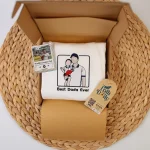
You’ve found the perfect custom design—a horse portrait for your sister, a cat face for your mom. But the shirt underneath? That’s where gifts get tricky. Some fabrics pucker, stretch, or swallow the stitches. I’ve seen it happen more times than I’d like. The good news: choosing the right base fabric is a skill you can learn in one read. Here’s exactly what to look for in an embroidered gift shirt, from GSM to stabilizer, so your present looks like it cost three times what you paid.
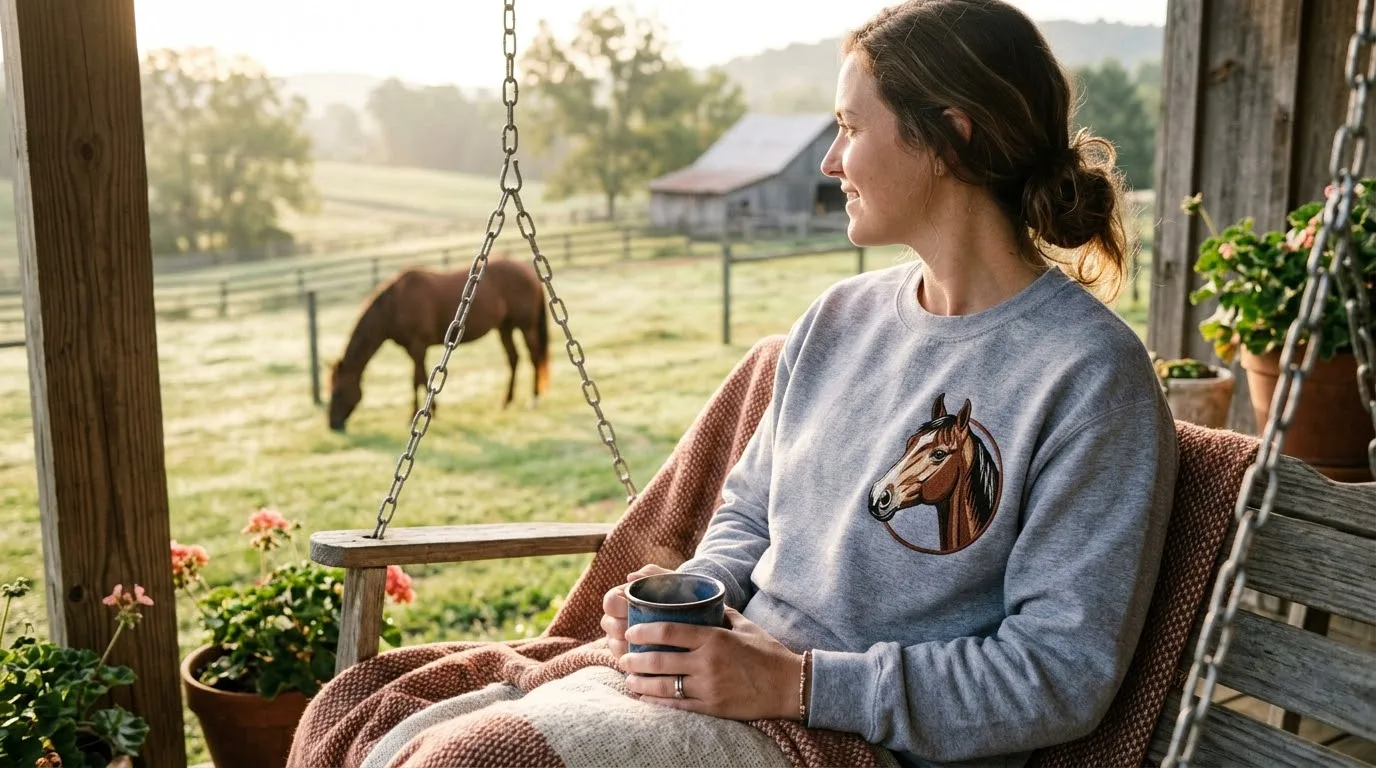
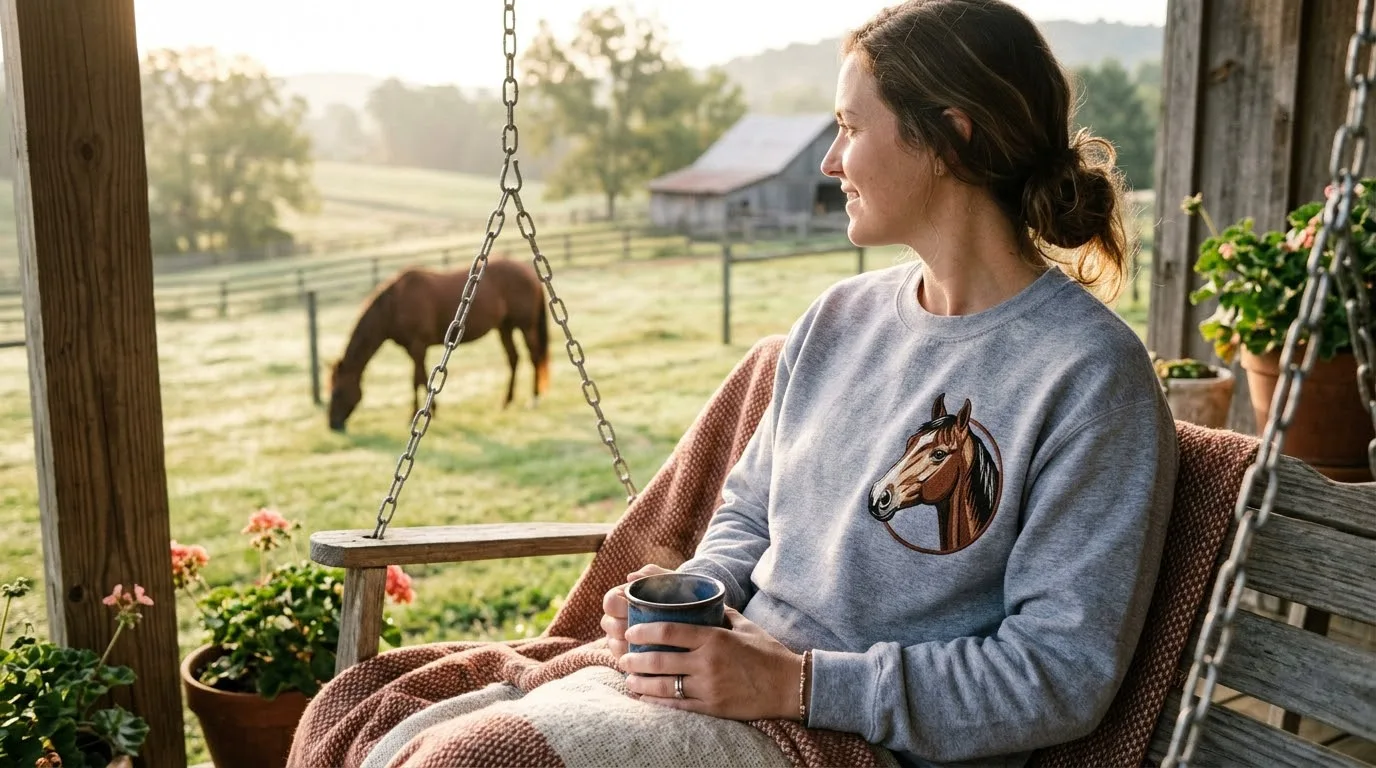
- Stable cotton knits and cotton/poly blends beat thin, stretchy fashion tees for embroidery.
- Fabric weight (GSM) matters: higher GSM supports stitches better without puckering.
- Cut-away stabilizer is non-negotiable for knit shirts—use soft poly mesh for thin or light-colored tees.
- Sweatshirt fleece handles heavier embroidery best, but needs a topping so stitches don't sink into the pile.
- Don't stretch the fabric while hooping; let it lie naturally to avoid ripples and puckering.
Why Your First Fabric Choice Can Make or Break the Embroidery
The safest base fabrics for embroidered gift shirts are stable cotton knits and cotton/polyester blends, not very thin, highly stretchy fashion tees. Embroidery adds non-stretching thread tension, so the fabric needs enough structure to handle it.
When you hoop a tee and stitch a design, that thread is now a rigid grid on a flexible garment. If the fabric is too thin or stretchy, the stitches pull and distort the surrounding knit—think ripples, puckers, and a design that looks wavy on the chest. Embroidery Library notes that T-shirts are typically cotton or cotton/poly blends and recommends pre-washing and drying before stitching to handle shrinkage first (Embroidery Library, 2024). That’s your first clue: the industry standard for embroidered tees is a stable, pre-shrunk knit, not a drapey bamboo-cotton blend that moves with every breath.
Before you order, hold the shirt up to the light. If you can see through it easily, it’s likely too thin for embroidery without a no-show stabilizer. Look for a compact, opaque knit with a bit of body.
Fabric Weight (GSM) and What It Means for Your Design
Fabric weight matters because embroidery adds non-stretching tension, and higher g/m² means a thicker, heavier construction that supports stitches better. Aim for mid-weight to heavy knits for most gift shirts.
GSM—grams per square meter—is the standard metric for fabric weight (Wikipedia, 2024). A typical everyday tee might run 140–180 GSM, while a premium sweatshirt can hit 280–350 GSM. For embroidery, the heavier the better, but not always necessary. A 180–200 GSM cotton or cotton/poly tee can handle a simple design fine. Dense, blocky artwork needs a heavier base to avoid a stiff, heavy look. If your gift is a portrait with fine details, you’ll want something that holds its shape.
| Fabric | Typical GSM | Best for | Watch out for |
|---|---|---|---|
| Lightweight tee | 120–150 GSM | Simple, small logos | Puckering, show-through, stretch |
| Mid-weight tee | 180–220 GSM | Balanced gift shirts | Still need stabilizer and light design |
| Sweatshirt fleece | 280–350 GSM | Heavy portraits, dense details | Stitches can sink into pile—use topping |
| Cotton/poly blend | Varies | Wrinkle resistance, durability | Check blend percentage for stability |
Fabric weight vs. embroidery suitability
The Cotton vs. Poly Blend Question
Cotton-polyester blends are a practical gift-shirt choice because polyester improves resistance to wrinkling and shrinking compared with cotton alone. But for embroidery, the blend’s stability matters more than the exact ratio.
Cotton feels soft and absorbs moisture, but it can shrink and wrinkle in the wash. Polyester, when blended, adds durability and shape retention. The Wikipedia entry on polyester notes that it’s commonly blended with cotton to combine desirable properties (Wikipedia, 2024). For an embroidered gift that will see many washes, a 50/50 or 60/40 cotton-poly knit is a smart choice. It keeps the softness while holding the embroidery flatter. Just avoid high-stretch athletic blends with spandex—those move too much and can distort your design.
- Cotton: breathable, soft, classic. Pre-wash to avoid post-embroidery shrinkage.
- Cotton/poly blend: wrinkle-resistant, holds shape better, great for gifts that get worn often.
- Sweatshirt fleece: thick, cozy, can carry heavy designs, but needs a topping.
- Thin fashion tees: skip unless the design is very light and you use a no-show stabilizer.
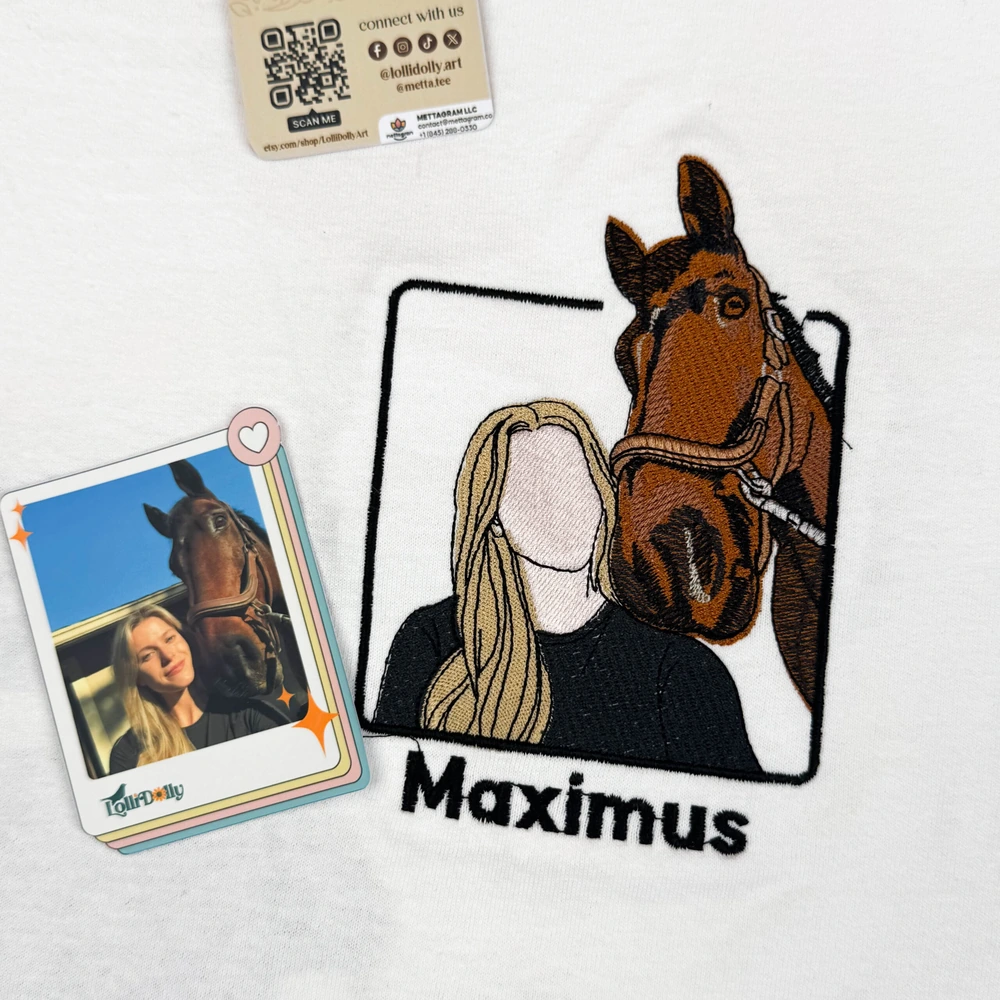
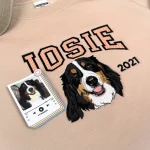
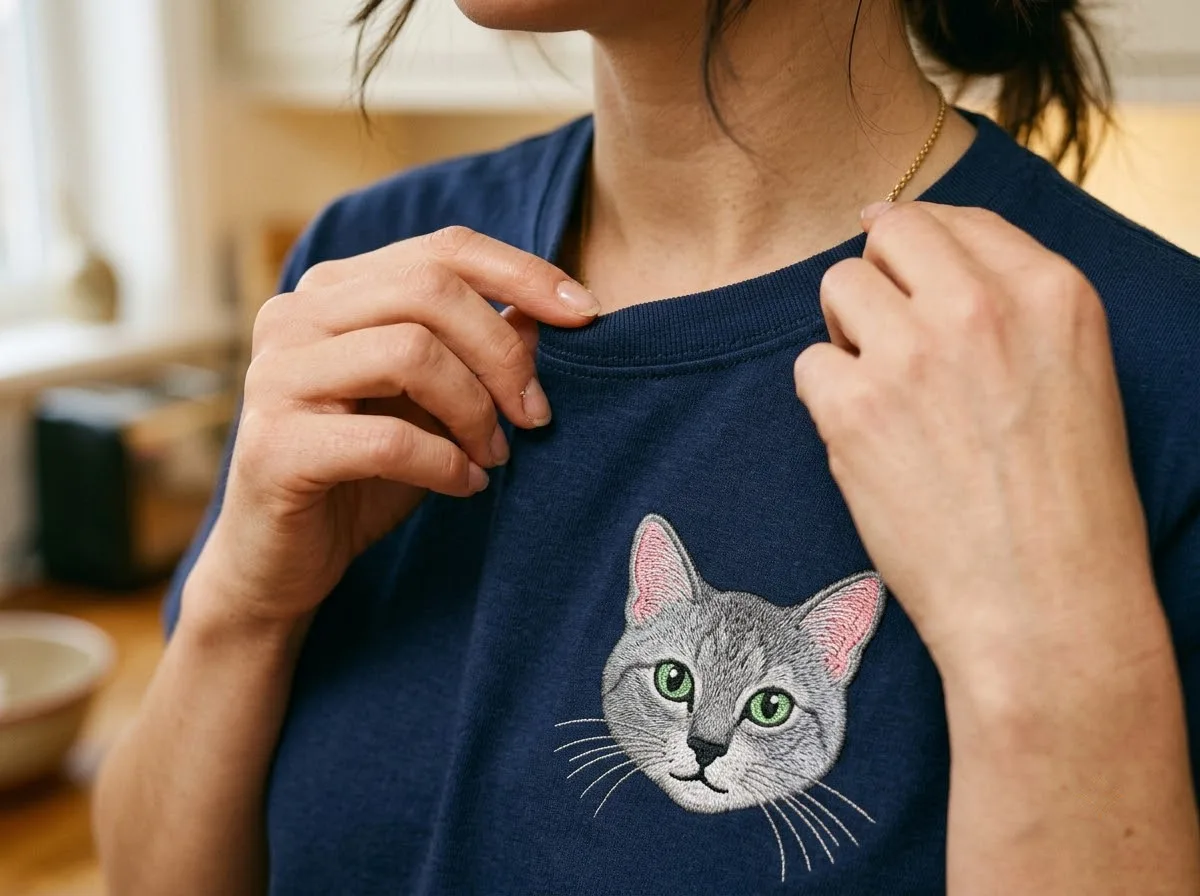
A horse lover's face-photo portrait stitched onto a heavy fleece sweatshirt—exactly the kind of gift that needs a substantial base fabric.
Sweatshirt Fleece and Thicker Knits: When to Choose Heavy
Sweatshirt fleece and thicker knits can carry heavier embroidery better than drapey tees, but they may need a topping so stitches do not sink into the pile. If your gift design is detailed or large, sweatshirt fleece is your friend.
I’ve had customers order a highly detailed cat portrait and worry it won’t show well on a light tee. Switch to a sweatshirt and the problem often solves itself. The dense knit holds each stitch cleanly. Threads Magazine notes that polyester fleece is thick and comfortable but stitches can sink into its pile, and toppers help keep stitches visible on textured fabrics (Threads Magazine, 2024). So on a fleece sweatshirt, you’ll want a water-soluble topping that washes away after embroidery.
For fleece or any fabric with a napped surface, place a layer of water-soluble topper over the fabric before stitching. It keeps the thread from sinking into the pile, and it rinses away cleanly.
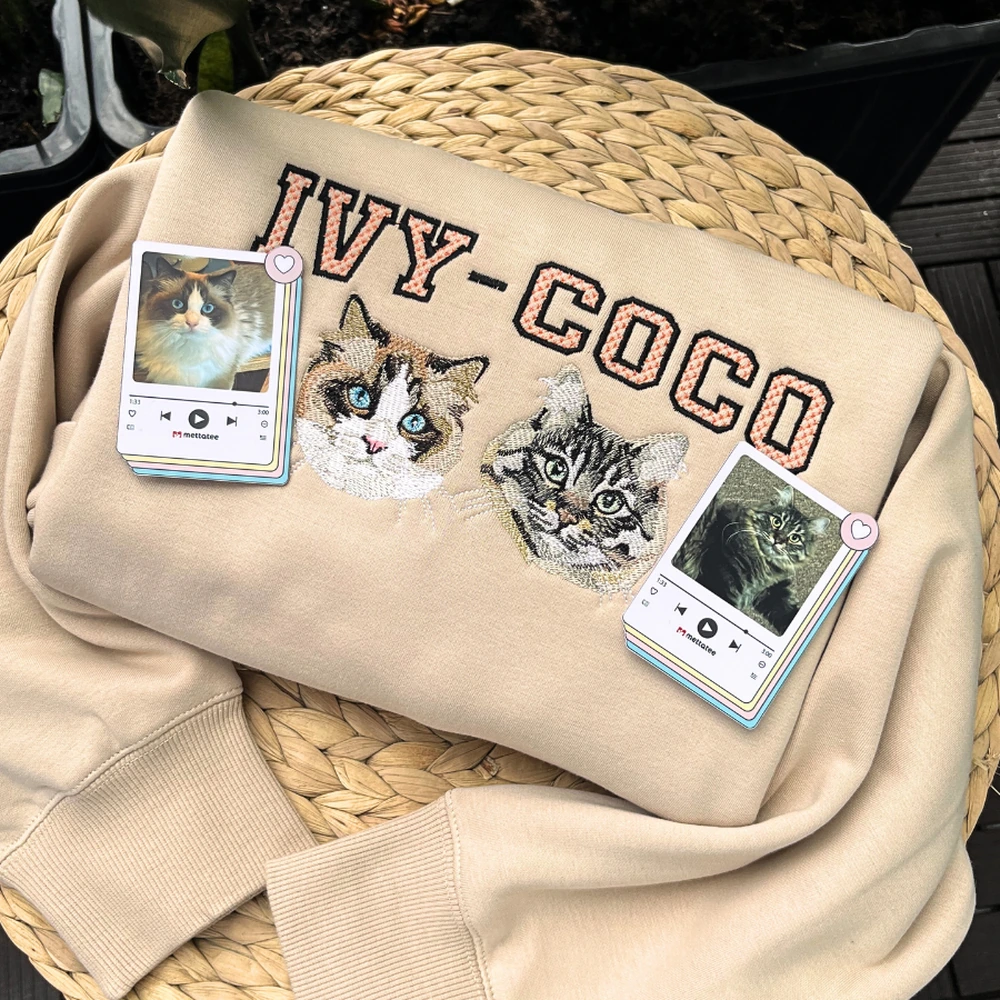
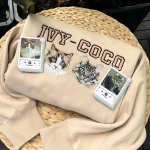
Two pet portraits on one sweatshirt need a substantial base—this style uses a fleece sweatshirt designed to carry that much detail.
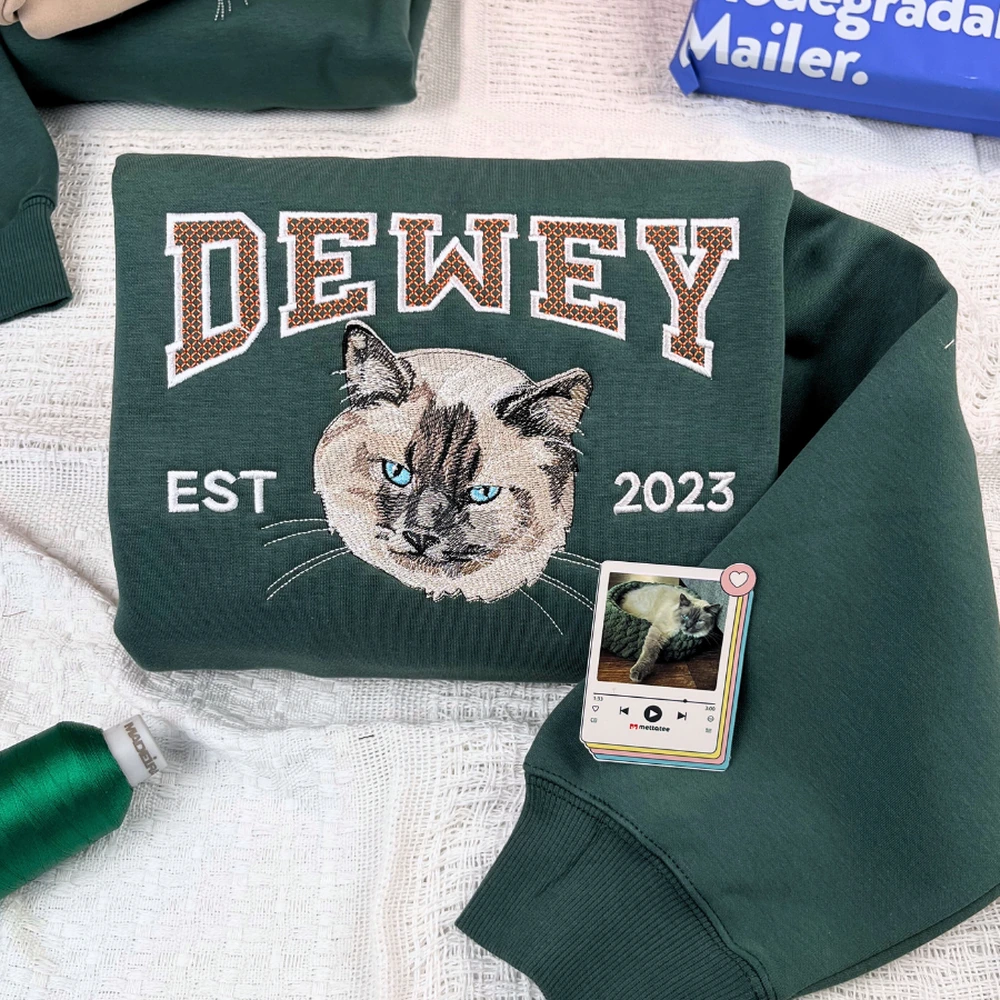
A cat face portrait shines on a mom-approved sweatshirt, with the thicker fleece supporting every stitch.
Stabilizer: The Hidden Hero of Embroidered Gift Shirts
Cut-away stabilizer is the default choice for knit gift shirts because it stays in the garment and supports stitches through washing and wearing. For thin or light-colored tees, use a soft no-show or polymesh cut-away instead of bulky backing.
Think of stabilizer as the invisible foundation. OESD says CutAway must be used on knits and stretchy fabrics, listing T-shirts and sweatshirts among the use cases (OESD, 2024). It remains in the garment, so the stitches have a permanent support system. On a thin tee, a bulky backing can show through and feel scratchy. OESD specifically describes PolyMesh CutAway as soft, strong, and useful for thinner fabrics (OESD, 2024). If you’re gifting a light-colored shirt, a white or clear no-show stabilizer prevents dark thread show-through on the inside.
- Cut-away: permanent, ideal for knits and stretchy fabrics.
- PolyMesh cut-away: soft, strong, good for thin tees.
- No-show: for light fabrics where backing might show through.
- Topping (water-soluble): for fleece and textured knits.

Hooping and Design Density: What to Avoid
Avoid stretching the shirt while hooping—let knit fabric lie naturally, because pulling it in the hoop can lead to rippling or puckering after the hoop is removed. Lightweight knits also need light, open embroidery designs.
You’ve chosen the right fabric, picked a good stabilizer, and now you’re ready to hoop. Don’t yank the fabric tight. OESD advises letting the knit lie naturally in the hoop (OESD, 2024). If you stretch it tight, the fabric snaps back once the hoop is off—and your design ripples. The same source, along with Embroidery Library, warns that dense or blocky designs on lightweight knits can cause puckering, wrinkles, and poor drape (Embroidery Library, 2024; OESD, 2024). For a tee, choose a design with open areas and light stitch count. For a heavy fleece, you can go denser.
A stretched hoop is the silent killer of embroidered tees—it looks perfect on the machine and ripples the moment you remove it.— OESD (2024)
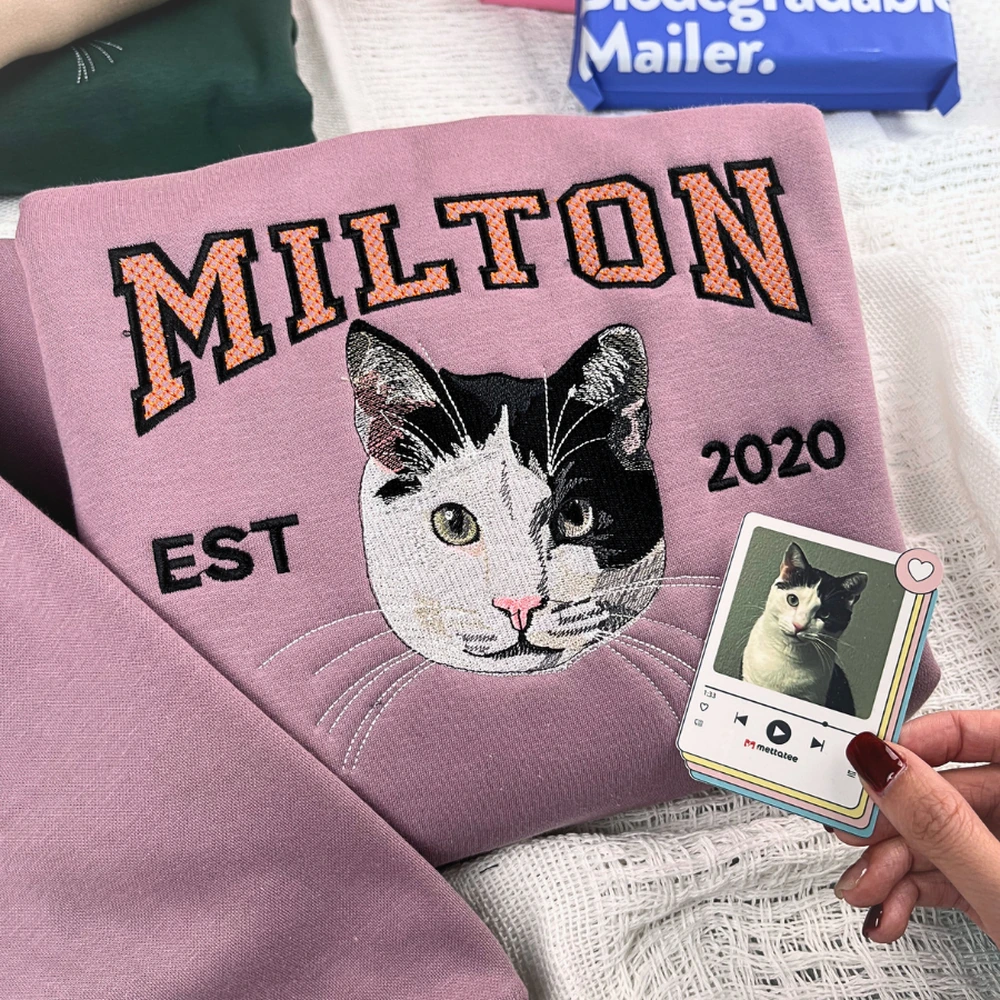
A custom cat portrait works on both tee and sweater, but the fabric should align with the design density—pick the heavier option for detailed faces.
Before You Order: Quick Checklist for the Perfect Gift Shirt
When you’re shopping for an embroidered gift shirt, prioritize stable cotton knits or cotton/poly blends, check the GSM for heaviness, and confirm the brand uses cut-away stabilizer. If you’re unsure, sweatshirt fleece is the forgiving choice.
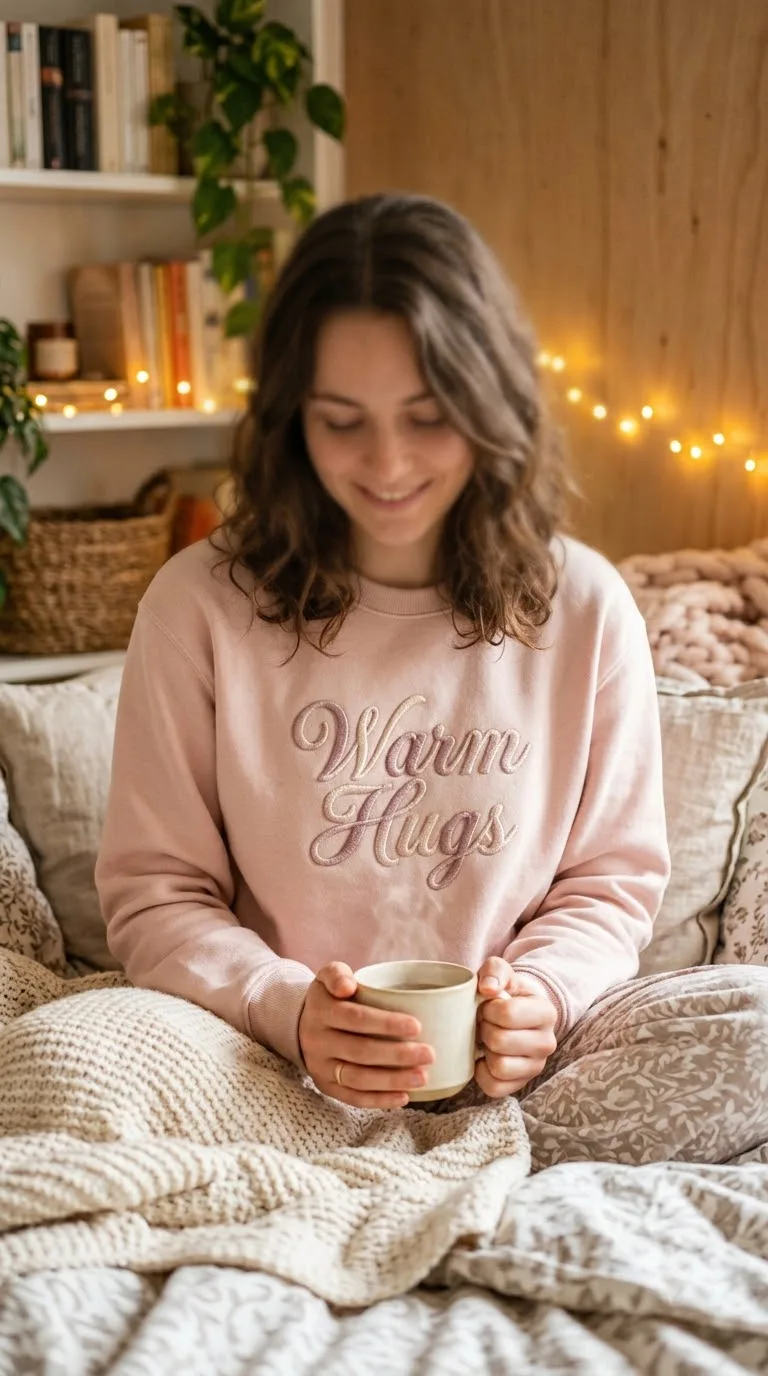
Here’s the practical rundown. If you’re buying a ready-made embroidered gift, you can’t re-hoop the fabric, but you can read the listing. Look for terms like “heavyweight,” “pre-washed,” or “cotton-poly blend.” If it’s a thin drapey tee, the design should be small and open. If it’s a sweatshirt, you’re safer with detailed portraits. And if you’re comparing options, remember that the best fabrics for embroidered gift shirts tend to be the ones you’d want to wear every day: soft, sturdy, and forgiving. That’s why our grammy t shirts at LolliDollyArt lean on stable sweatshirt fleece and mid-weight knits—they carry the embroidery beautifully and still feel like a hug. For even more guidance, you can also read our guide on choosing the right fonts for embroidered sweatshirts to make sure the lettering matches the fabric.
- Fabric: stable cotton knit or cotton/poly blend.
- Weight: mid-weight tee (180+ GSM) or sweatshirt fleece (280+ GSM) for detailed designs.
- Stabilizer: cut-away or poly mesh for tees; add topping for fleece.
- Hooping: let the fabric lie naturally—no stretching.
- Design: keep it open and light on thin tees, denser is okay on fleece.
Your gift should feel like you—no, not the fabric nerdy part. The embroidered shirt should make them smile, then wash well. Start with a fabric that can take the needle and you’ve already won half the battle.

Quick questions
What is the best fabric for an embroidered t-shirt gift?
A stable cotton knit or cotton/poly blend with a GSM of 180 or higher. Avoid very thin, stretchy fashion tees.
Can you embroider on any sweatshirt?
Most sweatshirts work, but fleece needs a water-soluble topping to keep stitches from sinking into the pile. Heavier fleece holds detailed designs best.
Should I use cut-away or tear-away stabilizer?
For knits and stretchy fabrics, use cut-away. It stays in the garment, providing permanent support. Poly mesh cut-away is softer for thin tees.
Why does my embroidery pucker on t-shirts?
Usually three reasons: the fabric is too thin/stretchy, the design is too dense, or the fabric was stretched while hooping.