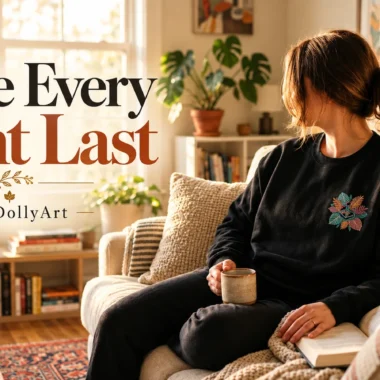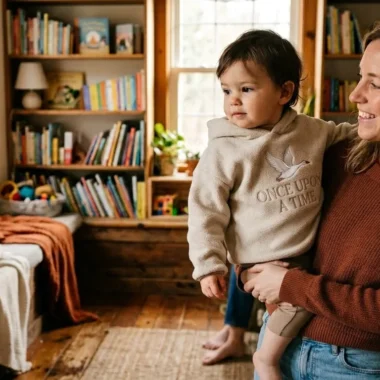
You love the artist, the team, the film — but you also want to look put-together. So you bounce between a cozy embroidered fan hoodie and a minimalist designer crewneck, both calling themselves “worth it.” One sells belonging, the other sells prestige, and both charge for the logo on your chest. This guide untangles what you’re actually paying for, how fan merch caught up on style, and when designer craft justifies the splurge, so your next buy gets worn, gifted, and kept.
- Fan merch monetizes identity and community; designer monetizes prestige and craft — both charge heavily for the logo.
- Licensed apparel drives 36% of U.S. licensed merchandise revenue, while sports fanwear alone is a $17B+ market growing toward athleisure.
- Since 2024, fan apparel has shifted from “shrink it and pink it” to stylish, everyday-ready cuts that rival fashion basics.
- Designer’s value is under pressure from dupes and a luxury slowdown — justification now needs to be quality, fit and cultural relevance, not just name.
- For custom embroidery, skip copied logos and trademarks; choose original art, inside jokes or personal text to stay authentic and safe.
The 30-second verdict: identity vs. prestige
Fan merch wins when you want identity and everyday wearability; designer wins when you want craft heritage and prestige. If your goal is gifting or daily comfort with a story attached, fan merch usually feels more personal for less money.
If the person lights up talking about a tour, a team, or a comfort show, fan merch does more emotional work per dollar than a designer label. It signals membership — “I was there, I get the reference” — in a way a luxury logo can’t. Designer shines when the wearer values fabric, construction, and quiet brand history over fandom. For a fandom-rooted collection, our hub on ouabh merch breaks down what to buy, gift and wear before you order, so you can place this comparison in context.
- Pick fan merch if the gift is about memory, inside jokes, or belonging and you want a cozy, story-rich daily piece.
- Pick designer if the priority is premium materials, tailored fit, or long-term brand service and resale cachet.
- Pick embroidered fan merch as the middle path when you want fandom + a fashion-level finish without the luxury markup.
Ask: will they wear this to coffee, not just to the concert? If yes, lean fan merch in a neutral color with a small chest embroidery — it reads like fashion, not costume.
What your money actually buys
You’re mostly buying licensing and brand equity, not just cotton. Fan merch sells belonging, designer sells prestige — and apparel is where both businesses make most of their money.
Licensed apparel is the commercial core of fan merch: in the U.S. licensed merchandise market, apparel accounted for 36% of total revenue in 2025, making it the largest product category, according to Grand View Research (2025). That’s why teams, artists and studios lead with hoodies, tees and hats — it’s where the demand lives.
Sports fanwear alone shows the scale: the U.S. licensed sports merchandise market generated $17.3246 billion in 2025 and is projected to reach $27.5189 billion by 2033, with demand tied to jerseys, caps, team apparel and athleisure-style everyday wear, per Grand View Research (2025). At the luxury end, the overall pie is still huge but flat: Bain and Altagamma via PR Newswire (2025) estimated worldwide luxury-industry spending at about €1.44 trillion in 2025, with personal luxury goods around €358 billion and broadly stable versus the prior year.
| Factor | Fan Merch | Designer Clothing |
|---|---|---|
| Core value | Identity, community, memory | Craft, heritage, prestige |
| Price driver | Official licensing + fandom demand | Brand equity + materials/construction |
| Best for | Daily wear, gifting, concerts, campus | Investment pieces, tailoring, quiet luxury |
| Risk | Trend-specific graphic ages out | Paying for logo without better quality |
Fan merch vs designer at a glance
Licensed apparel alone is 36% of U.S. licensed merchandise revenue — the largest category by far.— Grand View Research (2025)
Fan merch finally learned how to dress
Fan merch no longer means a boxy, ill-fitting tee. Since 2024 it has moved much closer to real fashion, with cleaner cuts and everyday silhouettes that work off the field and outside the venue.
AP (2024) reported that women’s sports apparel has shifted away from the old “pink it, bling it, shrink it” approach toward more stylish, celebrity-amplified, officially licensed pieces that merge fan culture with fashion. That shift is visible across music and film merch too: softer fleece, better fits, embroidery over cheap puff prints, and palettes you can actually style.
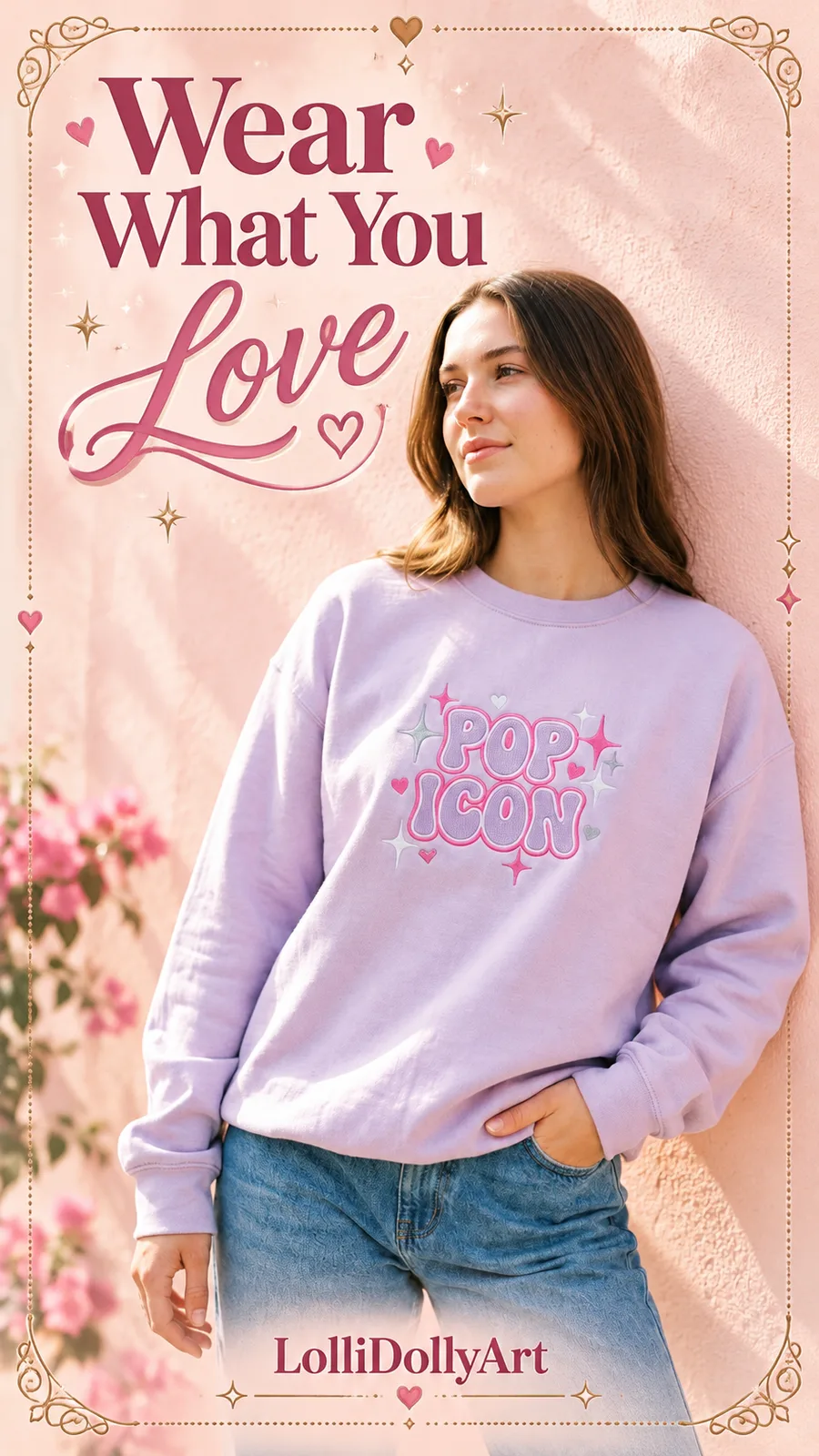
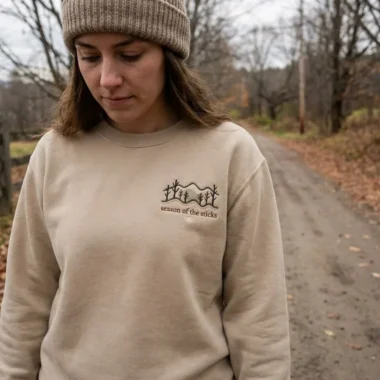
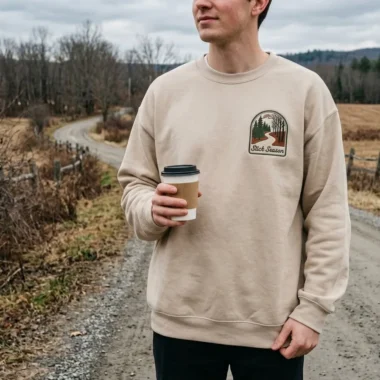
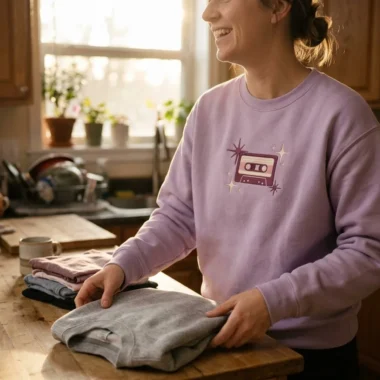
That’s why embroidered fan staples are crossing over. A piece like the Noah Kahan Stick Season Embroidered Sweatshirt – Fan Merch pairs a Vermont fall aesthetic with a small, textured chest design that reads like a boutique find, not a tour throwaway. Same for the Pop Star Merch Embroidered Sweatshirt – Purple Y2K Fan Gift Hoodie And T-Shirt — Y2K sparkle and script, but on a cut you can wear to brunch. To keep that finish looking new, follow our guide on How to Care for Embroidered Clothing So the Stitches Stay Beautiful.
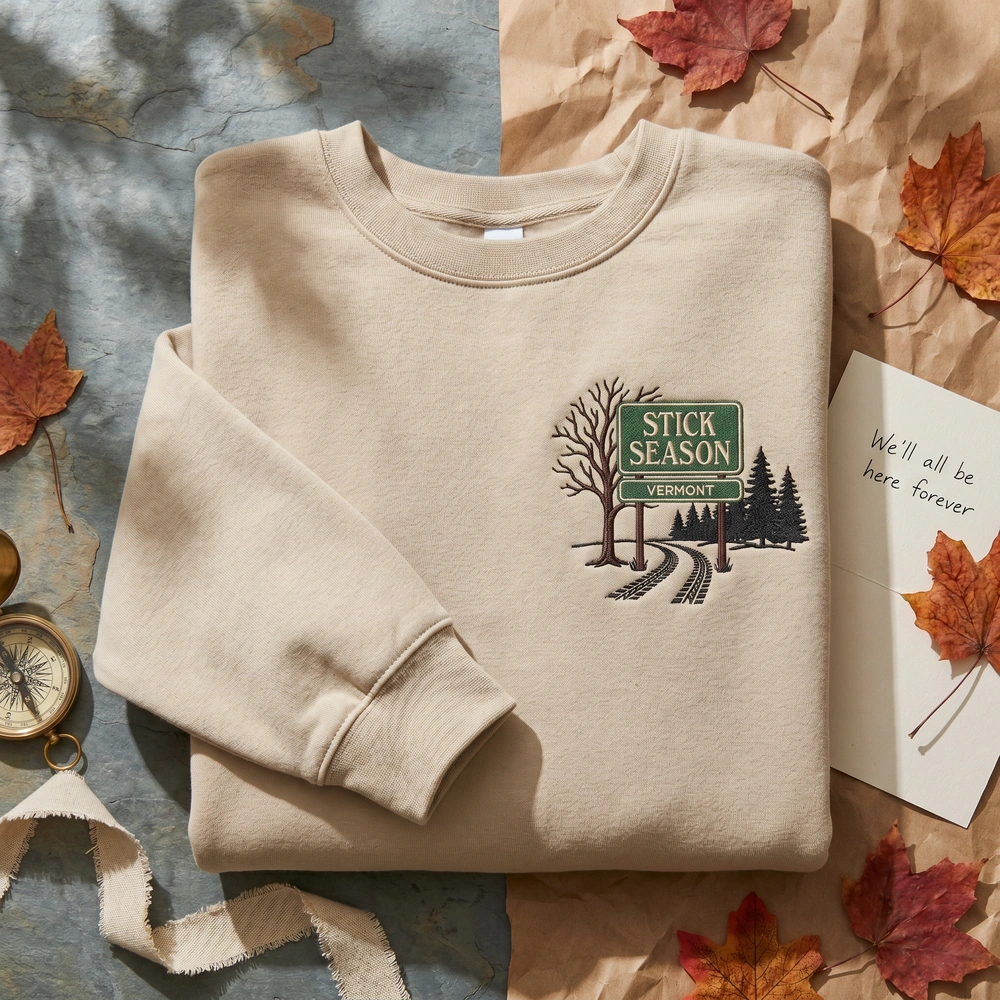
Fall-leaf Vermont vibes with a refined chest embroidery that wears like everyday fashion, not just concert gear.
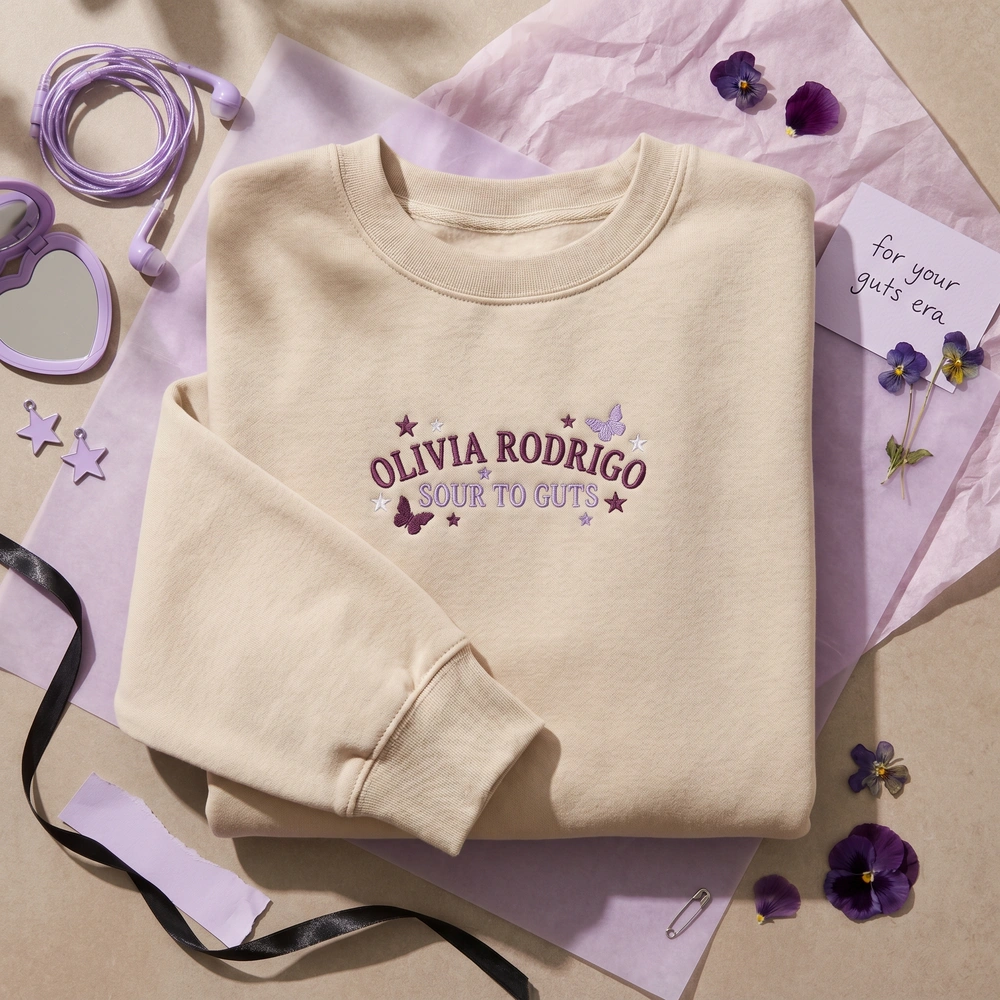
A purple Y2K-inspired fan piece with raised stitch texture that makes a playful fandom nod feel styled.
When designer prestige stops justifying the price
Designer makes sense when construction, materials and service are measurably better. It stops making sense when you’re mainly paying for a logo — a market that’s under more scrutiny than ever.
McKinsey (2025) highlights a luxury slowdown, the rise of dupes and consumer pressure on brands to justify prices, making brand prestige alone less persuasive than quality, fit and cultural relevance. Bain and Altagamma via PR Newswire (2025) adds context: accessible luxury fashion was described as rebounding among value-conscious Gen Z shoppers, a sign that shoppers are hunting value even within luxury.
Both worlds share one risk: when value lives in the logo, counterfeits follow. OECD/EUIPO (2021) found clothing, footwear and leather goods accounted for 62% of seized counterfeit goods in 2020-2021. U.S. enforcement echoes it: CBP (2023) reported seized wearing apparel/accessories with an MSRP value of $392,663,140 and footwear at $60,529,247, underscoring why official licensing and authentic branding matter for logo-heavy clothing.
- Designer wins for heavyweight fabrics, precise tailoring, warranty/repair programs and timeless colorways.
- Fan merch wins for emotional specificity, gifting punch, and lower price for frequent wear.
- Neither wins if the logo is the only feature — that’s where dupes and fakes thrive.
Buy licensed or from the maker who can show the design is original. If the price looks too good for a hyped logo, assume high counterfeit risk and check seller reputation.
Before you order: pick the keeper you’ll actually wear
Choose the piece you’ll reach for three times a week, not the one that impresses once. Check fit, fabric weight and whether the design will still mean something in a year.
For custom embroidery, remember the legal line: USPTO (2025) defines a trademark as a word, phrase, symbol or design that identifies the source of goods and helps protect against counterfeiting and fraud, so copying team, band or designer marks onto hoodies, hats or tees usually requires authorization. Safer creative territory is original artwork, names, inside jokes and non-infringing personal designs — the kind that feel personal without borrowing a protected logo.
- Fit first: check the Merch Clothing Size Guide: How to Pick the Right Fit Before You Order — embroidered fleece doesn’t stretch like a tee.
- Fabric weight: midweight (8-10 oz) is the everyday sweet spot; heavyweight is cozy but warm for indoor wear.
- Design longevity: small chest embroidery in 3-5 thread colors ages better than a giant chest print tied to one tour date.
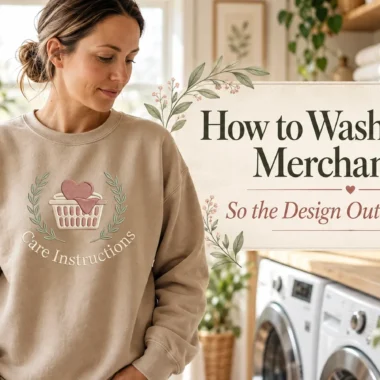
- Care: wash cold, inside-out, and see How to Wash Printed Merchandise So the Design Outlasts the Gift if you’re mixing prints and stitch.
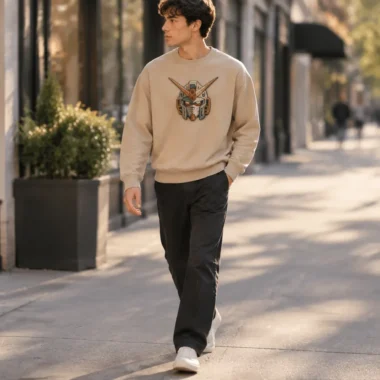
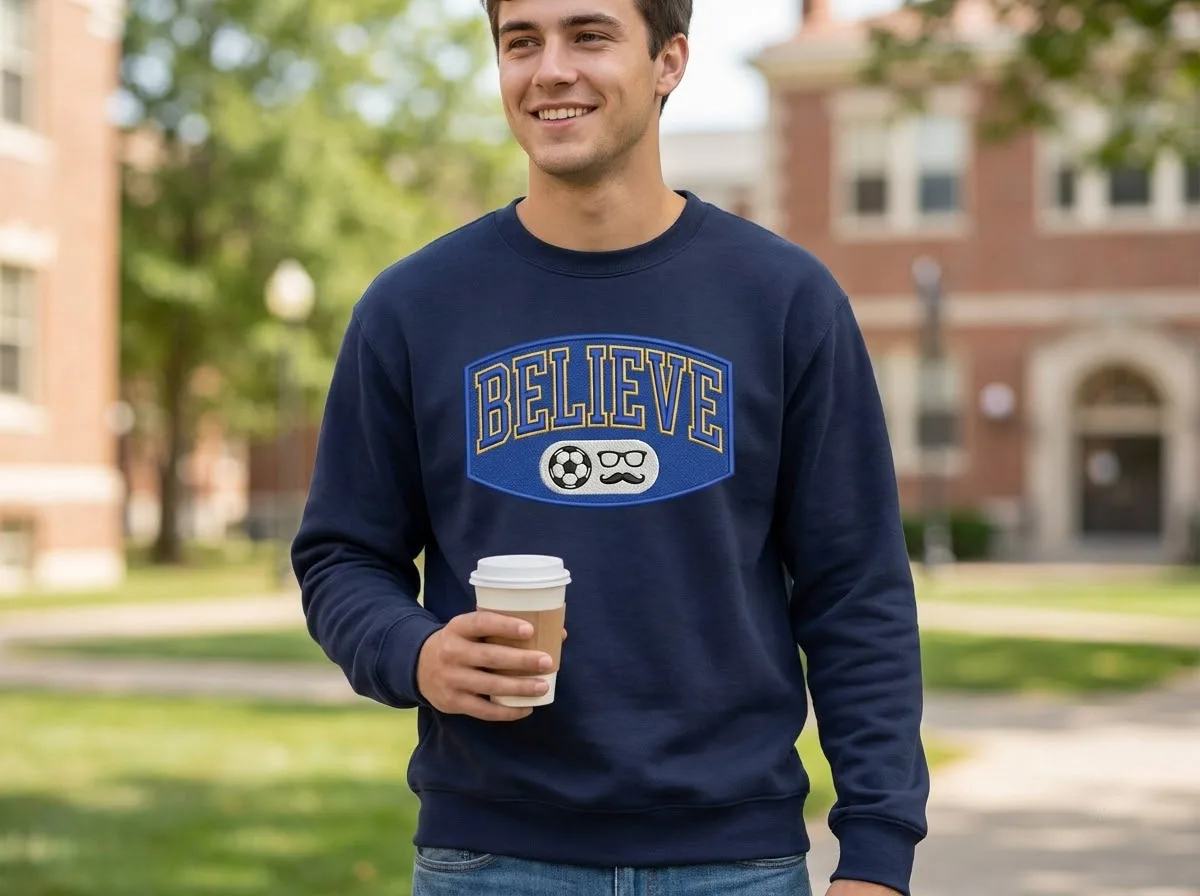
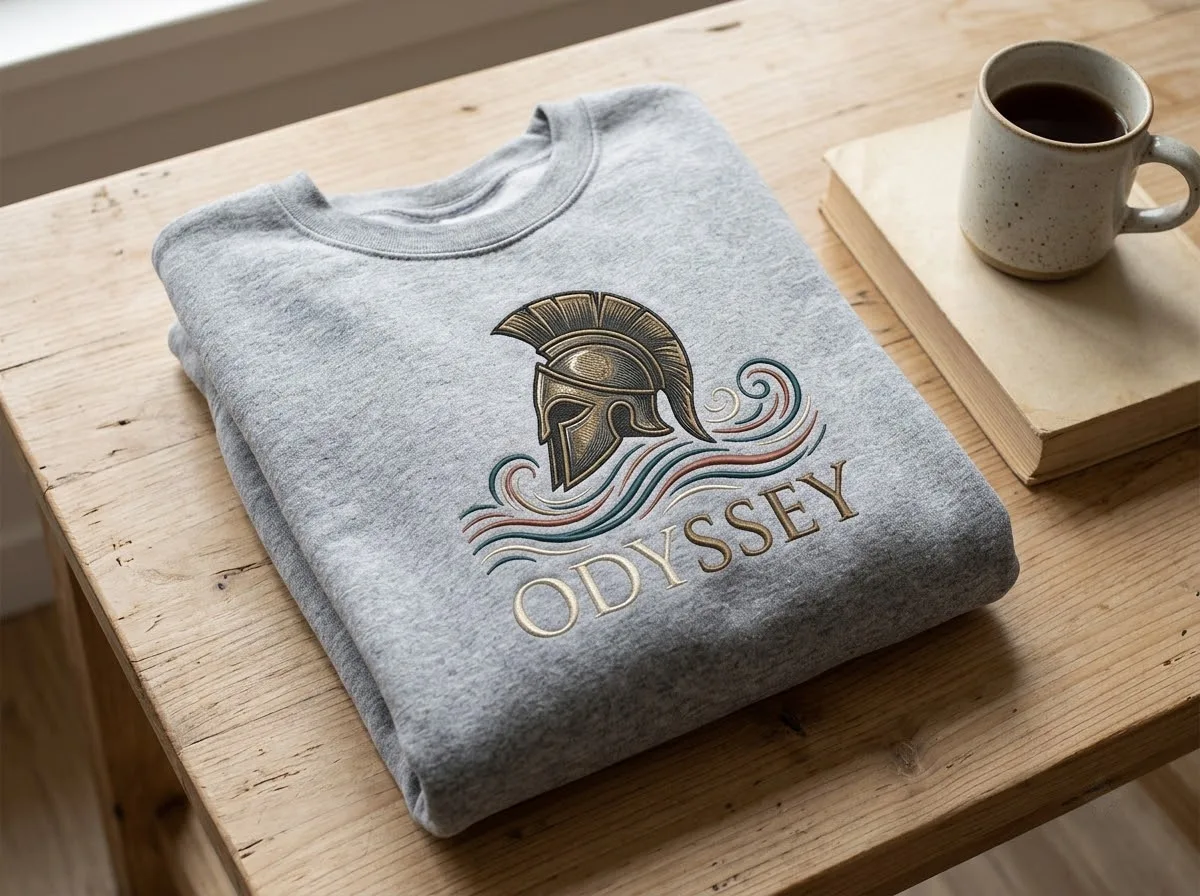
If you want character-driven charm without a trademark headache, go narrative. The Ted Lasso Gift Believe Merch Soccer Comedy Fan Embroidered Sweatshirt nods to the show with “Believe,” a tiny soccer ball and mustache-glasses icon — recognizable to fans, wearable to everyone else. For film buffs, the The Odyssey Movie Siren Merch Embroidered Sweatshirt – Nolan Fan gives mythology lovers a bronze helmet and siren-wave motif that reads as stylish, not costume-y.
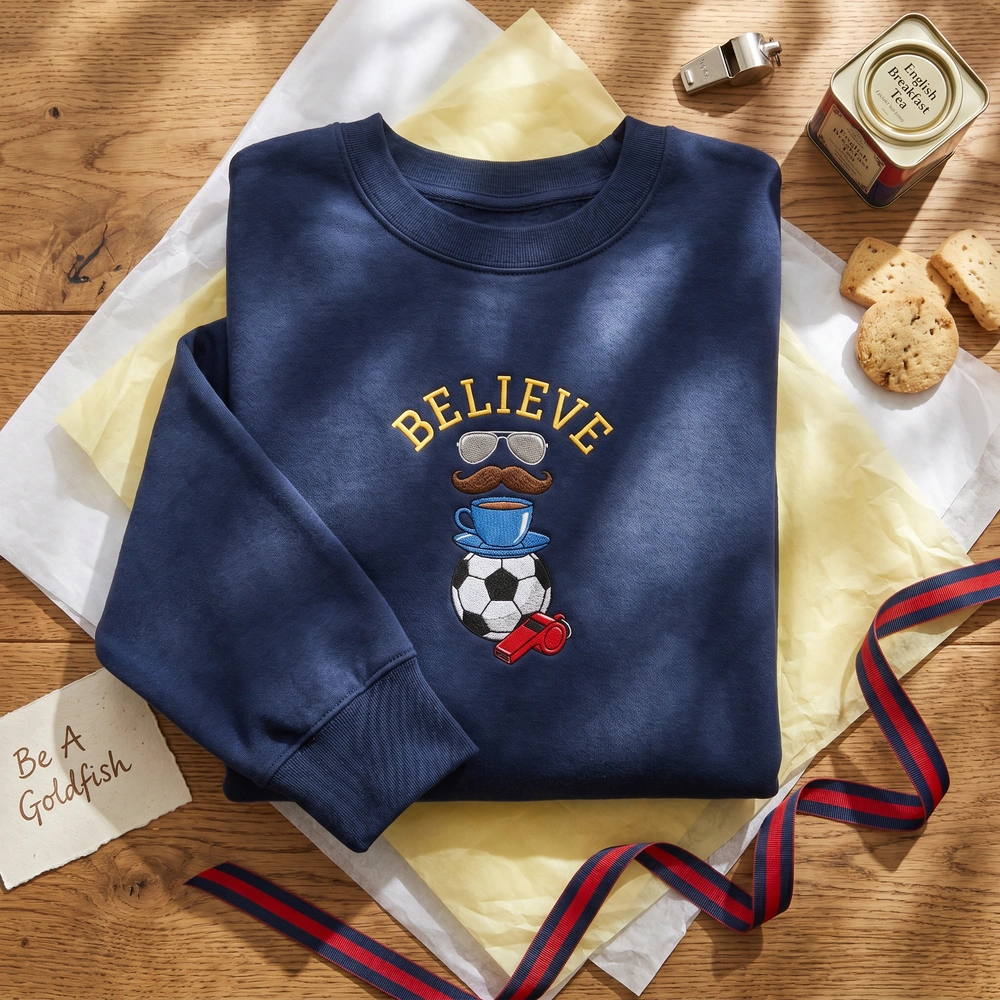
A feel-good fan nod with Believe lettering and subtle soccer-comedy icons that works as an everyday neutral.
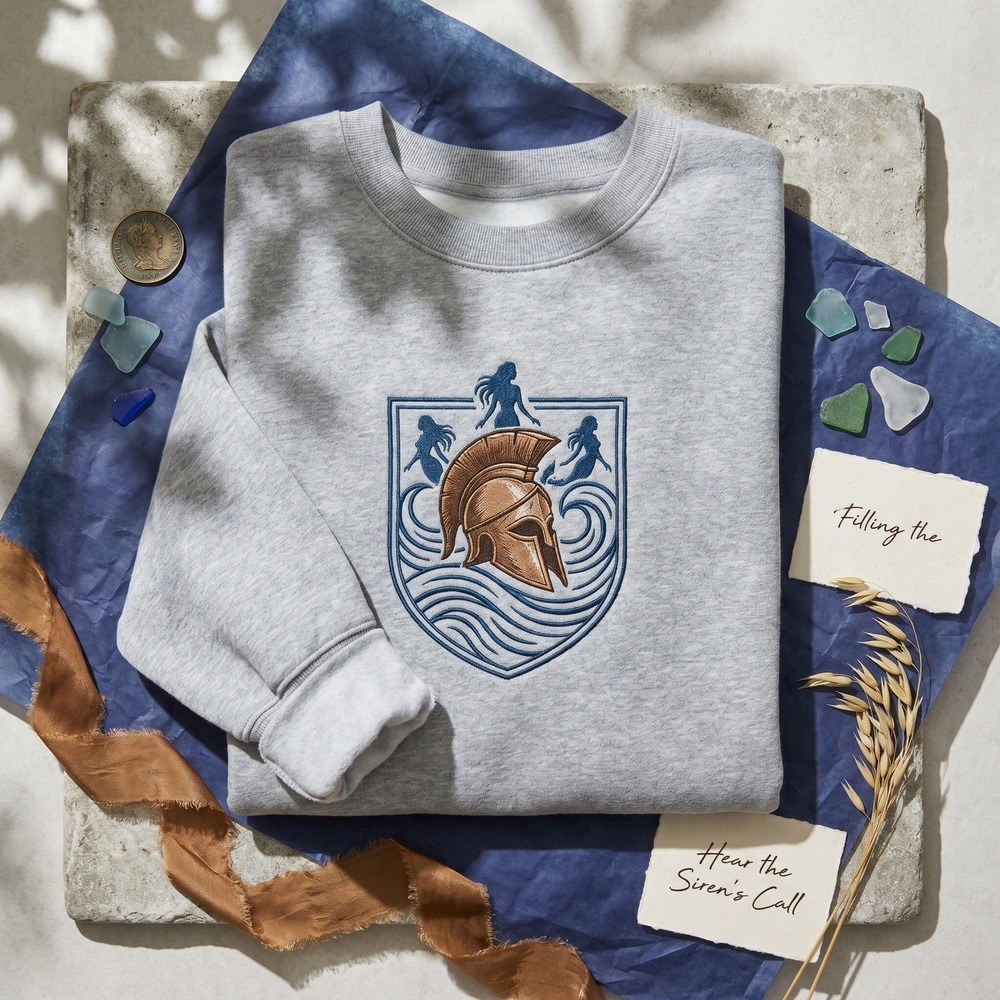
Mythology-inspired embroidery with a bronze helmet and siren wave — fandom for film lovers that still looks like fashion.
Quick questions
Is fan merch lower quality than designer clothing?
Not automatically. Quality depends on blank, stitch density and construction, not just label. Look at fabric weight, seam finishing and whether the design is embroidery versus a thin print — embroidered fan pieces often outlast printed ones with gentle care.
Can I put a team, band or designer logo on a custom embroidered sweatshirt?
Usually you need permission. The USPTO defines a trademark as identifying the source of goods and protecting against counterfeiting and fraud, so reproducing protected marks without authorization can infringe. Use original art, custom lettering, or personal inside jokes instead.
Which is the better gift: fan merch or designer?
For most recipients, fan merch feels more personal and gets worn more often. Choose designer when the person specifically values luxury craftsmanship or prefers logo-free minimalism over fandom.
How do I avoid counterfeits when logo matters?
Buy licensed or from a maker who proves originality. High-logo categories have the highest seizure rates, so unusually low prices and vague seller info are red flags — authentic licensing is part of what you’re paying for.