The quickest way to understand Lord of the Flies is to separate the island’s power struggle from its moral one. Ralph wants cooperation; Jack wants control; Simon offers compassion; Piggy supplies reason; Roger turns violence into cruelty. Add the twins, the littluns, and the supporting boys, and the story becomes much larger than a duel between two stranded children.
- The central characters are Ralph, Jack, Piggy, Simon, Roger, and the twins Sam and Eric, collectively called Samneric.
- Ralph represents organized leadership and civilization, while Jack becomes his principal rival and the novel’s principal antagonist.
- Piggy embodies rational thinking, Simon represents innate goodness, and Roger embodies the most extreme expression of cruelty.
- Samneric names two characters—Sam and Eric—not one child.
- The beast and the severed sow’s head are symbolic presences, not additional boys on the island.
The central characters at a glance
The central cast consists of Ralph, Jack, Piggy, Simon, Roger, and the twins Sam and Eric. Samneric is the collective name for the twins, so it represents two boys rather than one character.
A useful lord of the flies characters list should show each child’s role as well as their symbolic function. That second layer matters because William Golding does not present the island as a simple adventure story: the children’s choices reveal competing ideas about leadership, reason, goodness, and power.
| Character | Island role | Central interpretation |
|---|---|---|
| Ralph | Elected leader and protagonist | Civilization, order, cooperation, and hope |
| Jack | Leader of the hunters and Ralph’s rival | Power, savagery, and the rejection of restraint |
| Piggy | Ralph’s adviser and practical problem-solver | Scientific reason and rational civilization |
| Simon | Compassionate helper of the younger children | Innate human goodness |
| Roger | A brutal follower of Jack | Extreme cruelty and violence |
| Sam and Eric, or Samneric | The twins | Collectively associated with fear and confusion |
The most important characters and what they represent
For the major-character overview, compare SparkNotes’ character analysis with EBSCO Research Starters’ major-character analysis. Both are strong starting points when you need a clear distinction between plot function and literary interpretation.
Ralph and Jack: the island’s opposing leaders
Ralph is the twelve-year-old elected leader and protagonist, while Jack leads the hunters and becomes Ralph’s principal rival. Ralph champions cooperation and rescue; Jack’s growing hunger for power and violence makes him the novel’s antagonist.
Ralph begins with a legitimate claim to leadership because the boys choose him. His concern is not simply winning; it is maintaining the structures that allow the group to survive. The conch becomes closely associated with his attempts to summon order, while his focus on rescue keeps the possibility of returning to civilization alive. His leadership is commonly interpreted as representing civilization and order.
Jack offers the novel’s sharpest challenge to Ralph. He gathers support around hunting and offers a different kind of authority: direct, primal, and tied to the boys’ growing appetite for violence. As Jack becomes increasingly committed to power, he shifts from rival to antagonist and becomes the symbolic counterpoint to Ralph’s civilizing aims. SparkNotes identifies this contrast as central to understanding the two boys.
Ralph leads toward cooperation; Jack leads toward control.— SparkNotes
That opposition also makes Ralph difficult to read as a flawless hero. He can be uncertain, fearful, and inconsistent. Still, the plot repeatedly returns to his desire for an organized community. Jack may command fear more efficiently, but Ralph remains the character whose actions preserve the meaning of leadership rather than reducing it to dominance.
Piggy and Simon: reason and goodness take different forms
Piggy and Simon both support the island community, but in distinct ways. Piggy represents rational, scientific thought, while Simon represents compassion and innate goodness that does not depend on rules or authority.
Piggy is Ralph’s intellectually resourceful adviser. His ideas often create solutions that the more physically powerful boys overlook, and his glasses become a practical means of making fire. Literary interpretations associate him with scientific reasoning and rational civilization. His vulnerability makes that symbolism sharper: the ability to reason does not automatically protect him from those who abandon reason.
Simon is compassionate toward the younger children and helps the community without seeking authority. He is commonly interpreted as representing innate human goodness rather than morality imposed by external rules. The distinction is important. Ralph’s civilization depends on procedures and collective decisions; Simon’s goodness is quieter, personal, and instinctive.
SuperSummary’s character list is especially useful for tracing how Piggy’s intellectual traits and Simon’s gentleness support the larger moral argument. Together, they ask whether order and decency can exist independently—and whether either one is enough.
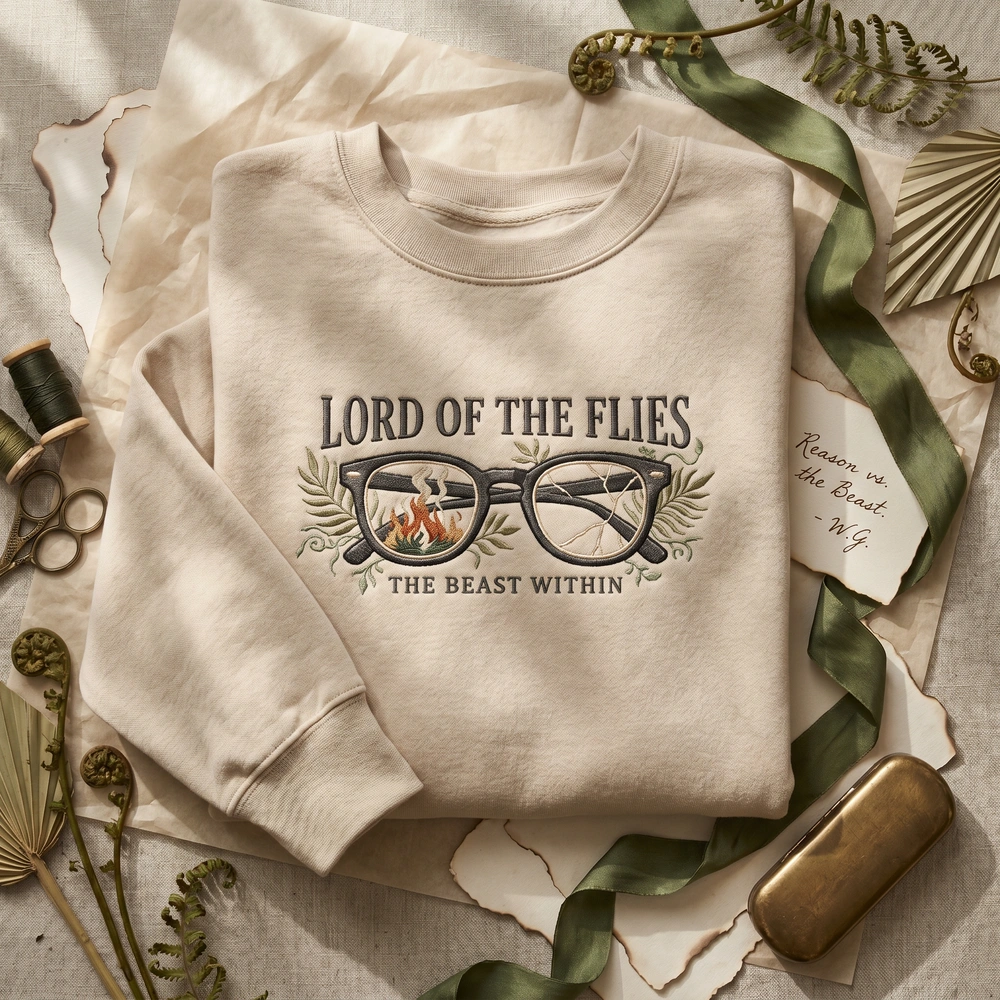
A restrained, recognizable gift for readers who connect Piggy with reason, fragility, and the novel’s critique of unchecked power.

Roger and Samneric: where the minor cast sharpens the conflict
Roger develops into one of Jack’s most brutal followers, making him a concentrated expression of cruelty. Sam and Eric are the twins collectively called Samneric, and their fear of the imagined beast makes them recurring witnesses to the island’s collapse into panic.
Roger initially appears among the boys but becomes a particularly brutal follower of Jack. His cruelty is not merely a personality flaw; it represents an extreme form of the violence that grows within the group. In a major plot event, he kills Piggy by releasing a boulder. The act changes how the island’s “civilization” and savagery can no longer be treated as separate systems.
Sam and Eric are frequently listed together as Samneric, but they are two boys. Their shared identity makes them easier to recognize in plot summaries, while their reactions to the beast and the changing power structure add to the atmosphere of fear. SparkNotes’ guide to the major characters confirms that Samneric refers to both twins.
When a quiz or study guide asks how many central characters there are, do not merge Sam and Eric into a single entry. “Samneric” is a convenient shorthand for the pair, but the answer is still two characters.
The wider island roster: littluns, older boys, and the naval officer
A complete list expands beyond the central cast to include Percival Wemys Madison, Henry, and Phil among the younger boys; Maurice, Robert, and Bill among the older boys; and an unnamed British naval officer. “Littluns” means the younger children collectively, not one character.
For a complete reading map, LitCharts’ complete character guide is the better reference than a short major-character summary. It helps distinguish the boys named in the novel from labels that refer to a group.
- Percival Wemys Madison — one of the younger children named in the expanded cast.
- Henry and Phil — younger boys who broaden the community beyond its principal figures.
- Maurice, Robert, and Bill — older boys included in the wider island roster.
- The unnamed British naval officer — the adult who appears at the end of the novel.
- Littluns — the collective name for the younger children, not an individual boy.
These supporting figures are not disposable names. The younger children give Simon’s protectiveness something concrete to act upon, while the larger population of boys makes the struggle over social control feel collective rather than purely personal. The final naval officer also matters because he enters the story only after the island’s experiment has ended.
The beast is not another character
The “Lord of the Flies” is not a stranded boy. It is the severed sow’s head placed on a stake as an offering to the beast, and it functions as a symbolic presence in Simon’s experience.
This distinction prevents one of the easiest mistakes in a character study. The title does not identify an additional child with a strange name. The sow’s head is an object created by the boys, while the imagined beast drives much of their fear. In Simon’s experience, the head becomes a symbolic presence associated with the evil within humanity. SparkNotes’ guide to the novel’s symbols explains that symbolic role.
| Name | What it is | How to classify it |
|---|---|---|
| Lord of the Flies | The severed sow’s head on a stake | Symbolic presence |
| The beast | The boys’ imagined or perceived threat | A fear projected onto the island |
| Samneric | Sam and Eric | Two characters addressed collectively |
| Littluns | The younger children | A group label |
Character or symbol?
If the symbols themselves interest you, continue with Lord of the Flies Symbols Explained: What the Conch, Glasses, Fire, and Beast Really Mean. It provides useful context for why the conch, Piggy’s glasses, fire, and the sow’s head carry so much weight.
Choosing a gift that reflects the character, not just the title
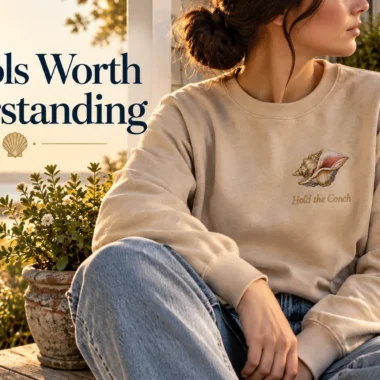
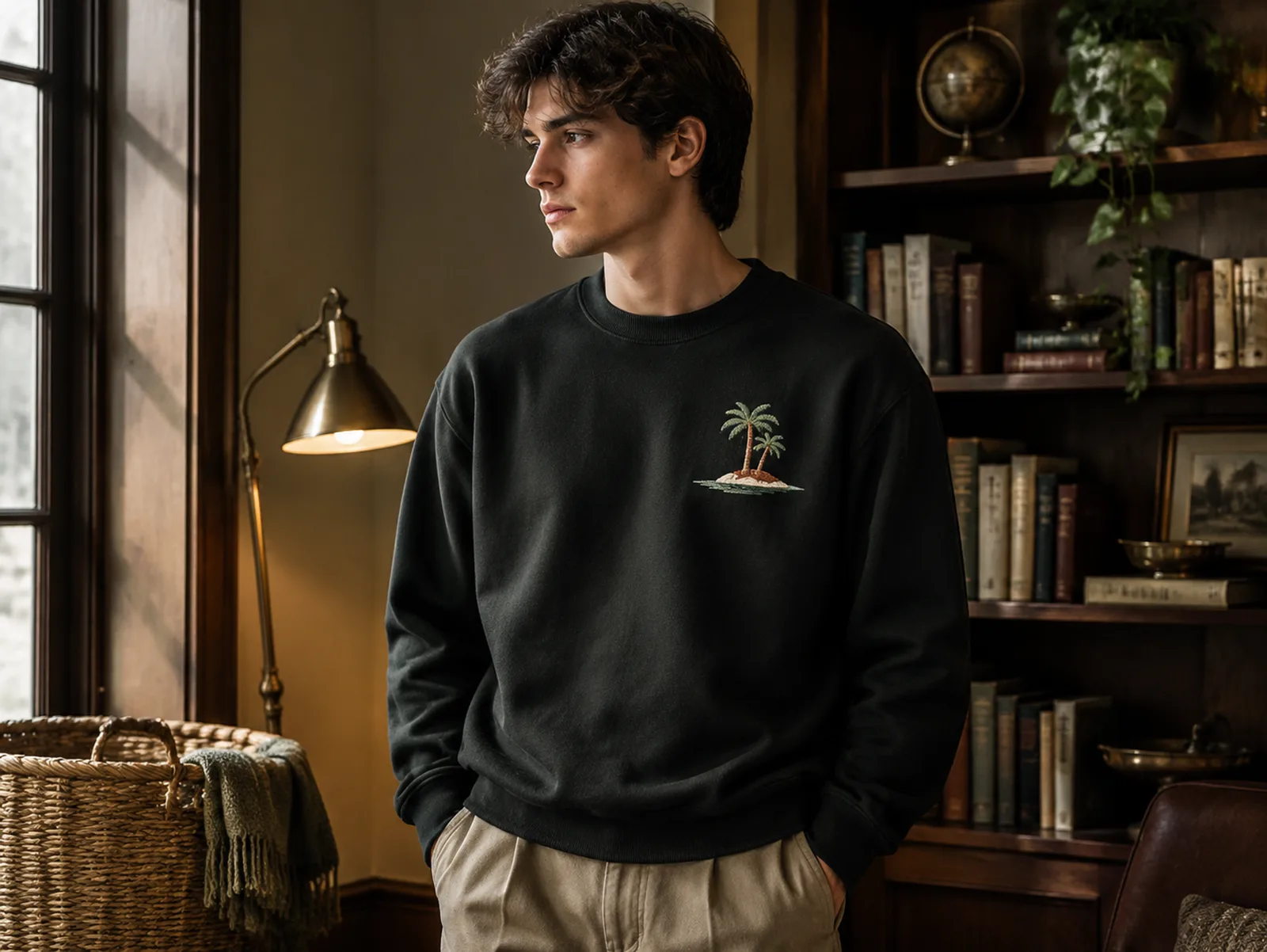
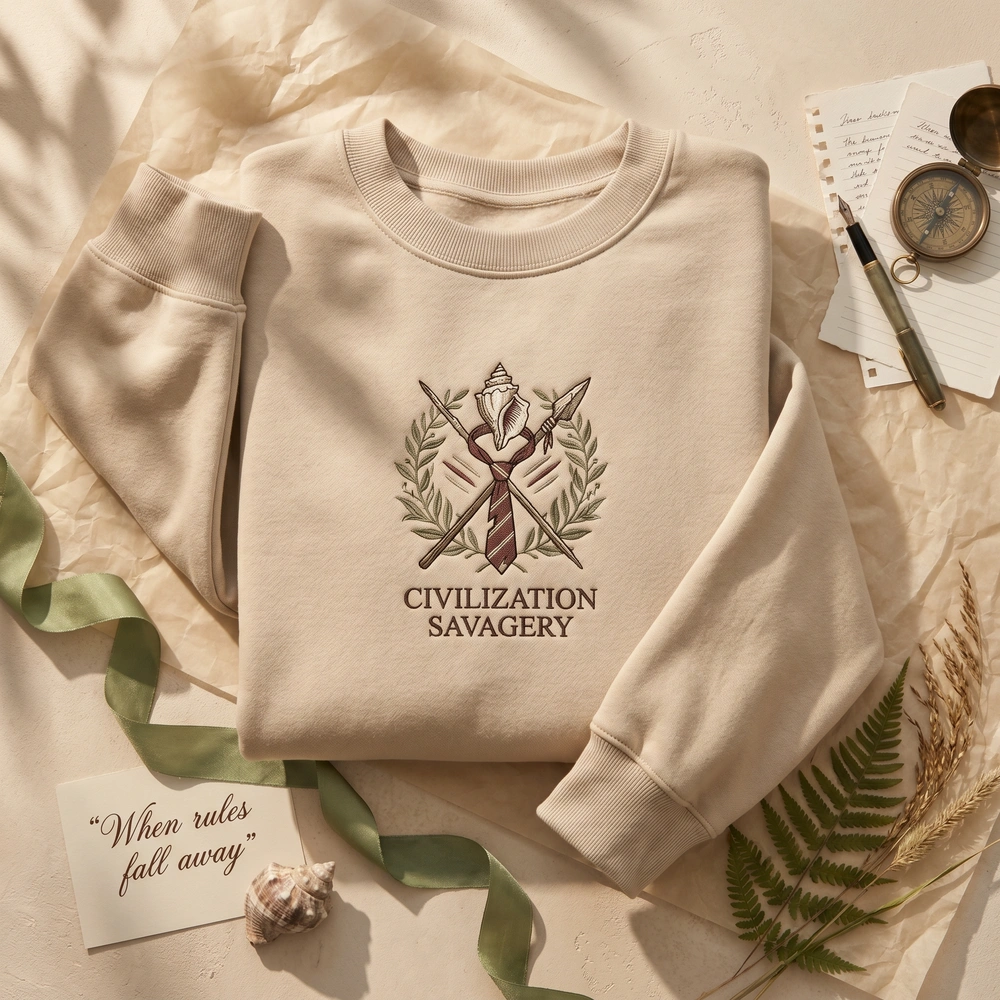
The strongest literary gift echoes a specific character or symbol rather than relying on the title alone. Choose the conch for Ralph’s leadership, broken glasses for Piggy’s reason and fragility, or the island design for a broader treatment of the novel.
When you are shopping for a reader, ask one simple question: what part of the story does the recipient care about most? A Ralph reader may want the conch and the idea of organized leadership. A Piggy reader may respond to the broken glasses. Someone who loves the novel’s moral tension may prefer the broader island motif.
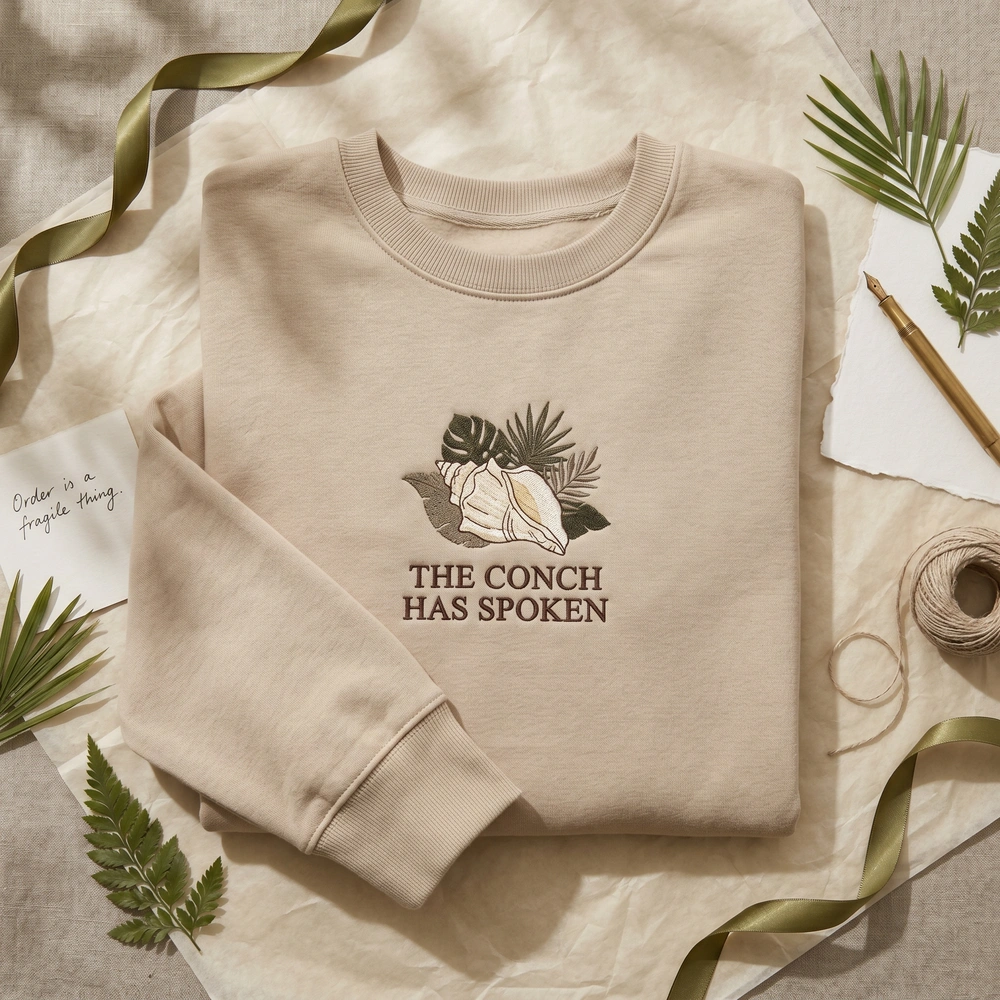
The most focused choice for Ralph, leadership, the conch, and the attempt to keep order alive.
A broader, classic-literary option for readers who want the island setting without tying the gift to one character.
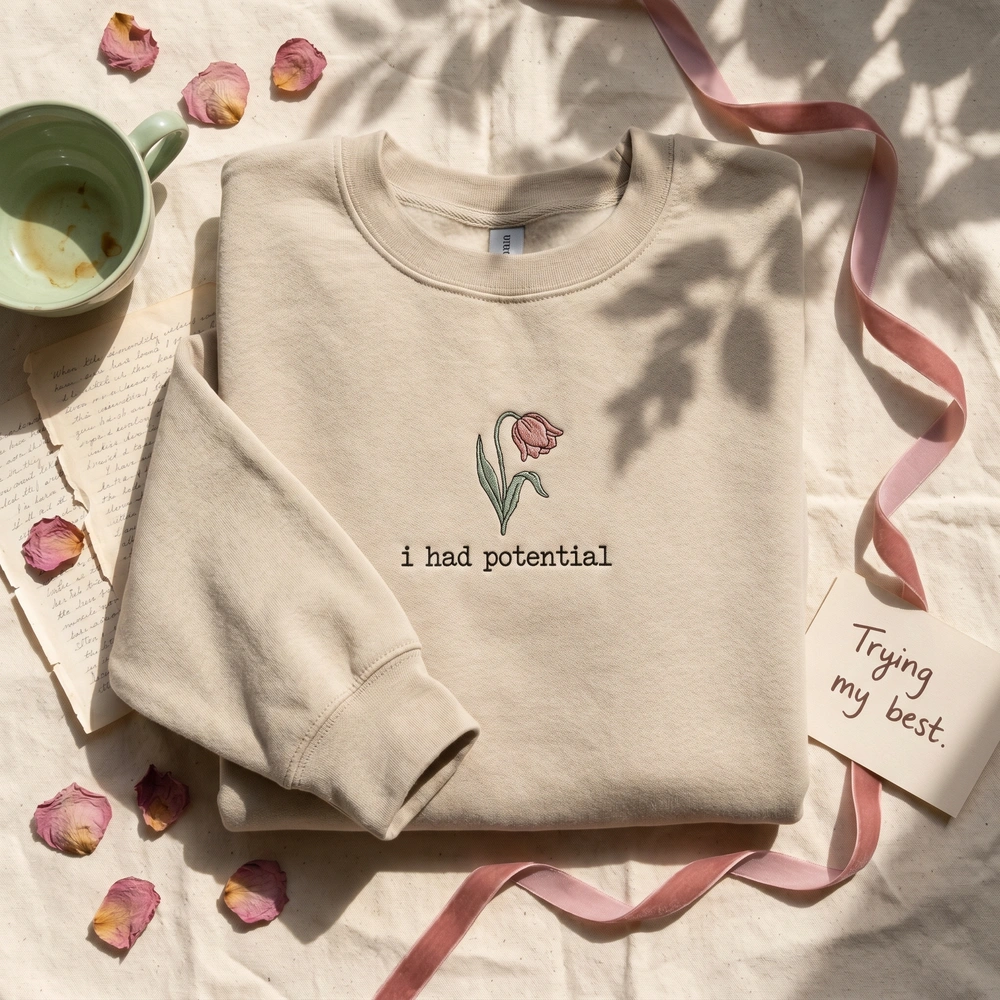
An understated ironic gift for fans of the novel’s bleak humor, collapse of hope, and sharp observations about human behavior.
For a broader buying guide, use lord of the flies merch as a starting point for comparing symbol choices and garment styles. For character-focused giving, however, the symbol-to-character connection should decide the choice before the color or general style.
Match the design to the reader’s interpretation: conch for order, glasses for reason, island for the whole moral experiment, and the wilted-tulip design for dark irony. The garment then feels personal rather than merely licensed merchandise.
Quick questions
Who are the main characters in Lord of the Flies?
The central characters are Ralph, Jack, Piggy, Simon, Roger, and the twins Sam and Eric. Samneric is the collective name for the twins.
Is Samneric one character or two?
Samneric is two characters: Sam and Eric. The name is a convenient shorthand for addressing the twins together.
Who is the villain in Lord of the Flies?
Jack is the novel’s principal antagonist because his pursuit of power and violence opposes Ralph’s civilizing aims. Roger represents an extreme form of that brutality.
Is the Lord of the Flies a character?
No. The title refers to the severed sow’s head placed on a stake as an offering to the beast. It functions as a symbol rather than another boy on the island.
Who are the littluns?
The littluns are the younger children collectively, not one named character. Percival Wemys Madison, Henry, and Phil are among the younger boys included in an expanded cast.