You’re about to spend $40–$80 on a shirt for someone you care about, and the last thing you want is for it to crack, peel, or feel cheap after three washes. The embroidered vs printed gift shirts decision isn’t just aesthetic—it determines whether the gift feels like a keepsake or a novelty. Here’s what actually matters when you’re choosing between stitched thread and pressed ink.
- Embroidery adds raised, stitched texture that lasts for years—ideal for small personalization like names, initials, and dates.
- Screen printing handles large, complex graphics better and is more cost-effective for multi-color, full-front designs.
- Fabric weight matters: dense embroidery can feel stiff on lightweight tees, while prints sit flatter on any material.
- For gift shirts, embroidery wins on perceived value and longevity; printing wins on artwork detail and price at scale.
- Neither method is universally better—the right choice depends on the design size, detail level, and how the shirt will be worn.
What's Actually Happening to the Fabric
Embroidery decorates fabric with stitched thread, while screen printing pushes ink through a stencil onto textiles. One builds texture into the garment; the other lays a flat image on top of it. That fundamental difference drives every other tradeoff.
When you choose embroidery, a machine stitches colored thread directly into the fabric, creating a raised, tactile surface you can feel with your fingertips. Screen printing, by contrast, forces ink through a mesh screen and stencil, depositing a thin layer of pigment that bonds to the fabric’s surface Wikipedia – Screen printing. Both methods are proven and widely used, but they produce fundamentally different results in how the design sits on—and interacts with—the garment.
| Factor | Embroidery | Screen Printing |
|---|---|---|
| How it works | Stitched thread sewn into fabric | Ink pushed through a stencil onto fabric |
| Texture | Raised, tactile, dimensional | Flat, smooth, integrated with surface |
| Best design size | Small to medium (left chest, cuffs, hats) | Large (full front, full back) |
| Color handling | Limited thread colors per design | Unlimited ink colors, gradients possible |
| Longevity | Extremely durable—won't crack or peel | Durable but can crack over many washes |
| Perceived value | Premium, keepsake feel | Casual, graphic-tee feel |
Embroidery vs Screen Printing at a Glance
There’s also direct-to-garment (DTG) printing, which works like an inkjet printer for fabric. DTG is especially useful for one-off shirts because it avoids the long setup and cleanup associated with screen printing Wikipedia – Direct-to-garment printing. If you’re ordering a single personalized shirt as a gift, DTG may be the print method you actually encounter—not screen printing.
When Embroidery Is the Clear Winner
Embroidery is usually better for small, premium-feeling personalization—initials, names, dates, small icons, left-chest designs, cuffs, or hats—because it adds raised texture and a keepsake feel rather than a flat graphic.
Think about the last embroidered shirt you kept for years. It probably had a name, a monogram, or a small meaningful symbol—not a full-torso illustration. That’s not a coincidence. Embroidery excels at intimate, personal details that feel intentional and permanent. ASI notes that monograms remain a strong personalization opportunity across garments and accessories ASI – How To Stitch Monograms Onto Garments (2019).
- Names and initials — the classic personalized gift; embroidery makes them feel engraved, not stamped
- Dates and milestones — anniversary years, birth dates, graduation years stitched into a cuff or chest
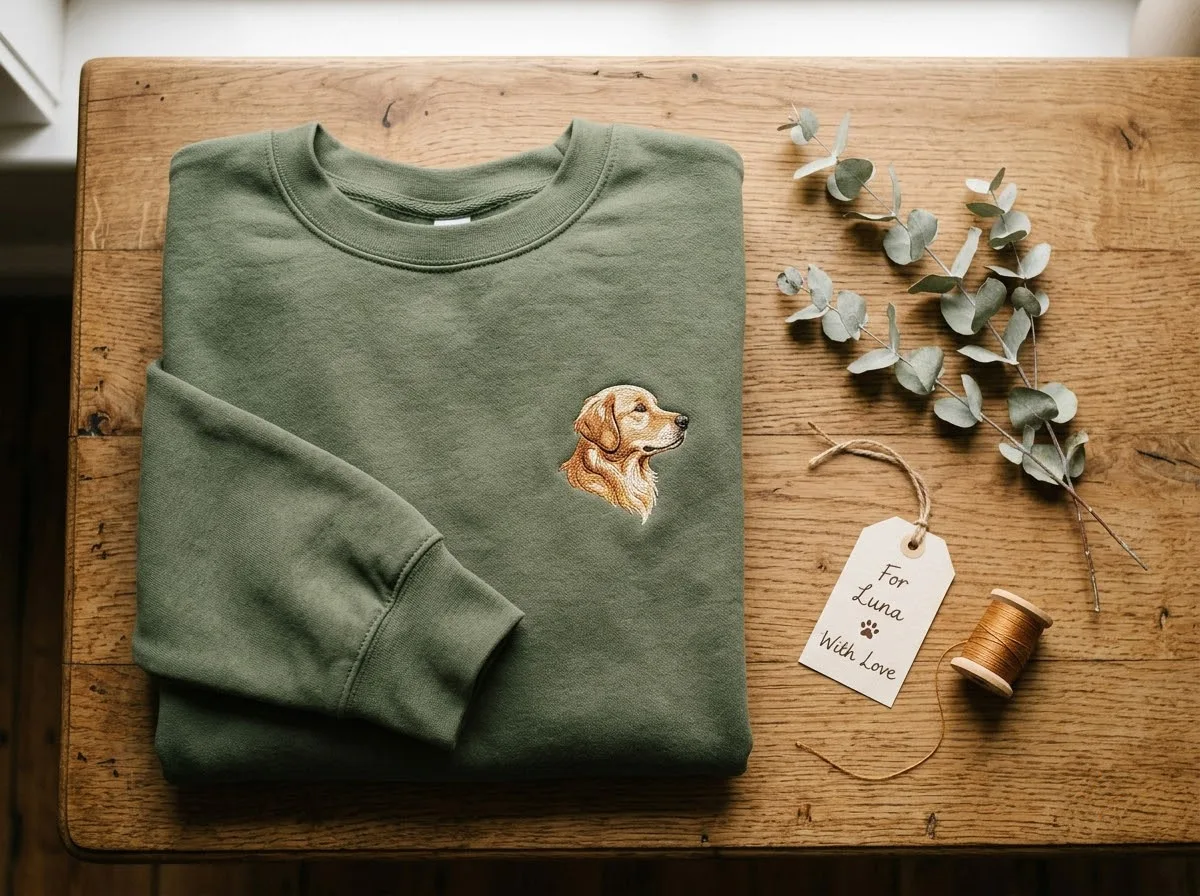
- Small icons and motifs — a tiny heart, a pet silhouette, a small floral sprig
- Left-chest placement — the standard premium spot for embroidered designs on sweatshirts and polos
- Hats and accessories — embroidery is the dominant method for caps because the curved surface resists flat printing

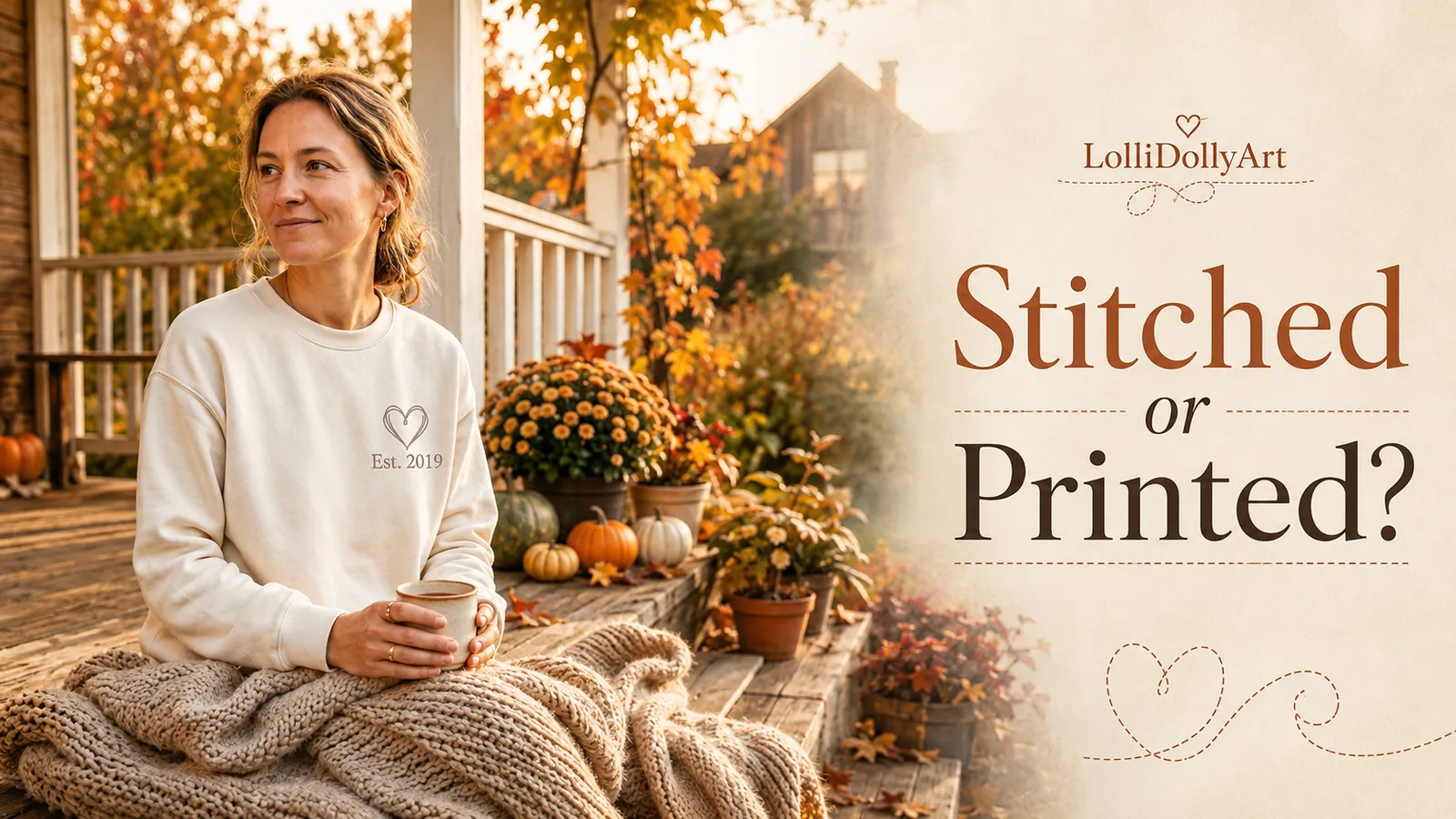
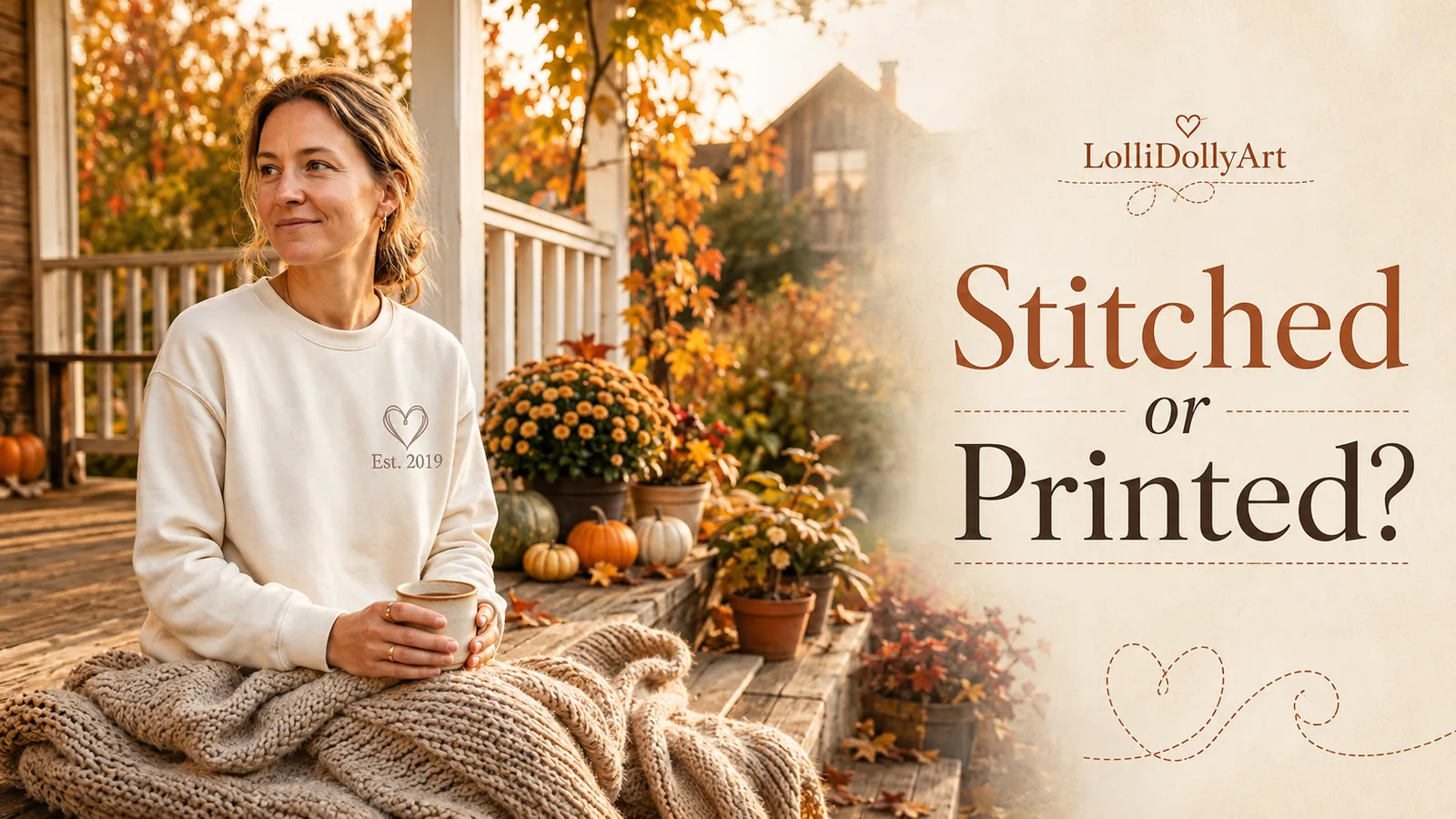
A perfect example of embroidery done right: clean script lettering with an EST year, stitched into a cozy sweatshirt that feels like a real gift—not a novelty.
If your design fits comfortably within about 3–4 inches wide, embroidery will almost always look and feel better than print. That’s the sweet spot where stitched thread reads as intentional and premium. Go much larger, and you’re fighting embroidery’s natural strengths.
Where Printing Earns Its Keep
Printing is usually better for large, graphic, full-front or full-back shirt designs because complex artwork and higher garment counts are often more cost-effective to screen print than embroider.
Here’s the honest truth: if your design is a detailed illustration, a photo-realistic image, or anything with gradients and many colors, embroidery is the wrong tool. Impressions’ apparel-decoration guidance makes this clear—design complexity is a key factor in choosing a decoration method Impressions – Picking the Best Decorating Method. Very fine detail, gradients, photo-style images, or many colors favor print methods over embroidery.
- Large graphic designs — full-front illustrations, back prints, all-over patterns
- Complex artwork — detailed illustrations, photographic images, designs with many colors or gradients
- Batch orders — screen printing becomes significantly cheaper per unit at higher quantities
- Flat, casual aesthetic — when you want the design to feel like part of the fabric, not sitting on top of it
Clothing or accessories were the No. 2 most-wanted gift category at 46%, behind gift cards at 50%.— NRF 2025 Holiday Survey
That NRF stat matters here: personalized shirts aren’t a niche gift—they’re a mainstream category. And when someone unwraps a shirt with a large, detailed graphic they love, the print method is invisible to them. They just see a great design. Printing doesn’t mean cheap; it means the right tool for the job.
The Fabric Factor Most People Overlook
Embroidery can feel stiff or heavy on lightweight T-shirts, especially with dense stitch areas, because stabilizers used to prevent puckering can add rigidity to softer fabrics.
This is the detail that separates a good gift from a great one. The University of Illinois School of Art & Design notes that stabilizers support embroidery and prevent puckering or gapping, but some stabilizers can feel stiff on softer fabrics U of I – Choosing an Embroidery Stabilizer. If you’re embroidering a lightweight cotton tee, that dense stitch area on the chest might feel like a patch of cardboard against the wearer’s skin.
| Fabric | Embroidery | Printing |
|---|---|---|
| Lightweight tee (cotton, rayon) | Can feel stiff; stabilizer adds rigidity | Sits flat; minimal hand-feel change |
| Mid-weight sweatshirt (fleece, French terry) | Ideal—fabric supports stitches without stiffness | Works well; ink bonds to the looped surface |
| Heavyweight hoodie (brushed fleece) | Excellent—dense fabric absorbs stitch tension | Good; may need multiple passes for opacity |
| Knit or stretchy fabric | Risky—stitches can distort when stretched | Flexible; ink moves with the fabric |
How Fabric Weight Affects Each Method
Before you order, check the fabric weight. Our guide on best fabrics for embroidered gift shirts walks through which materials hold stitches cleanly and which ones fight back.
A Side-by-Side Gift Decision Framework
For gift shirts, the core tradeoff is texture and longevity versus artwork detail: embroidery delivers a premium, lasting feel for small personalization, while printing handles complex, large-scale graphics more effectively and affordably.
Stop thinking about which method is “better” and start thinking about what the gift needs to do. A shirt with someone’s name and anniversary date? That’s embroidery territory. A shirt with a detailed illustration of their favorite place? Printing. Here’s a quick decision framework:
| Gift Scenario | Recommended Method | Why |
|---|---|---|
| Anniversary sweatshirt with names + year | Embroidery | Small text, personal detail, premium feel |
| Matching couple shirts with a graphic | Printing (DTG or screen) | Larger artwork, multiple colors, flat comfort |
| Pet memorial with a portrait | Depends on detail | Simple silhouette → embroidery; photo-realistic → DTG print |
| Hat with initials or a small logo | Embroidery | Curved surface, small design, industry standard |
| Full-back band tee or event shirt | Screen printing | Large design, multiple colors, cost-effective at scale |
| One-off custom shirt for a birthday | DTG printing or embroidery | DTG for complex art; embroidery for simple personalization |
Which Method for Which Gift?
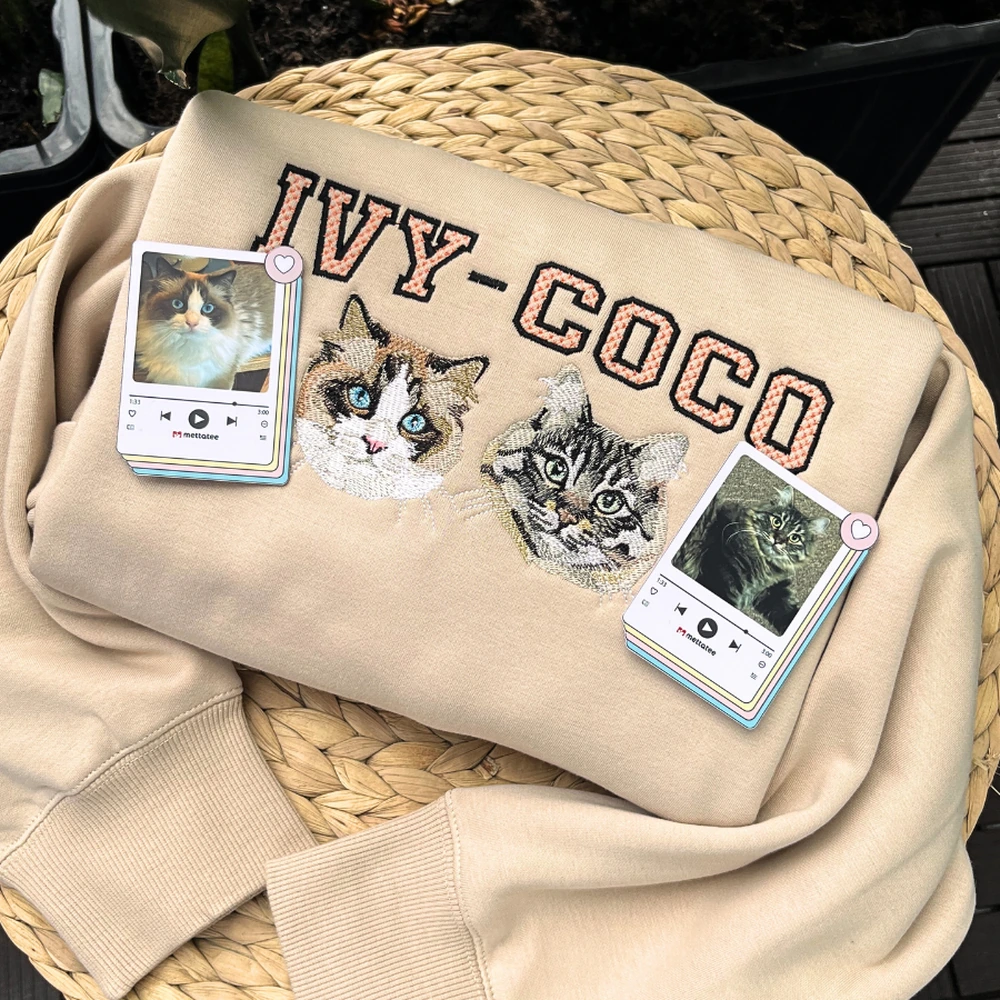
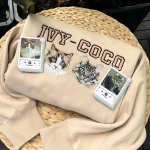
A great example of where embroidery shines for gifts: two simplified pet silhouettes stitched in thread, creating a keepsake that feels personal without needing photo-realistic detail.
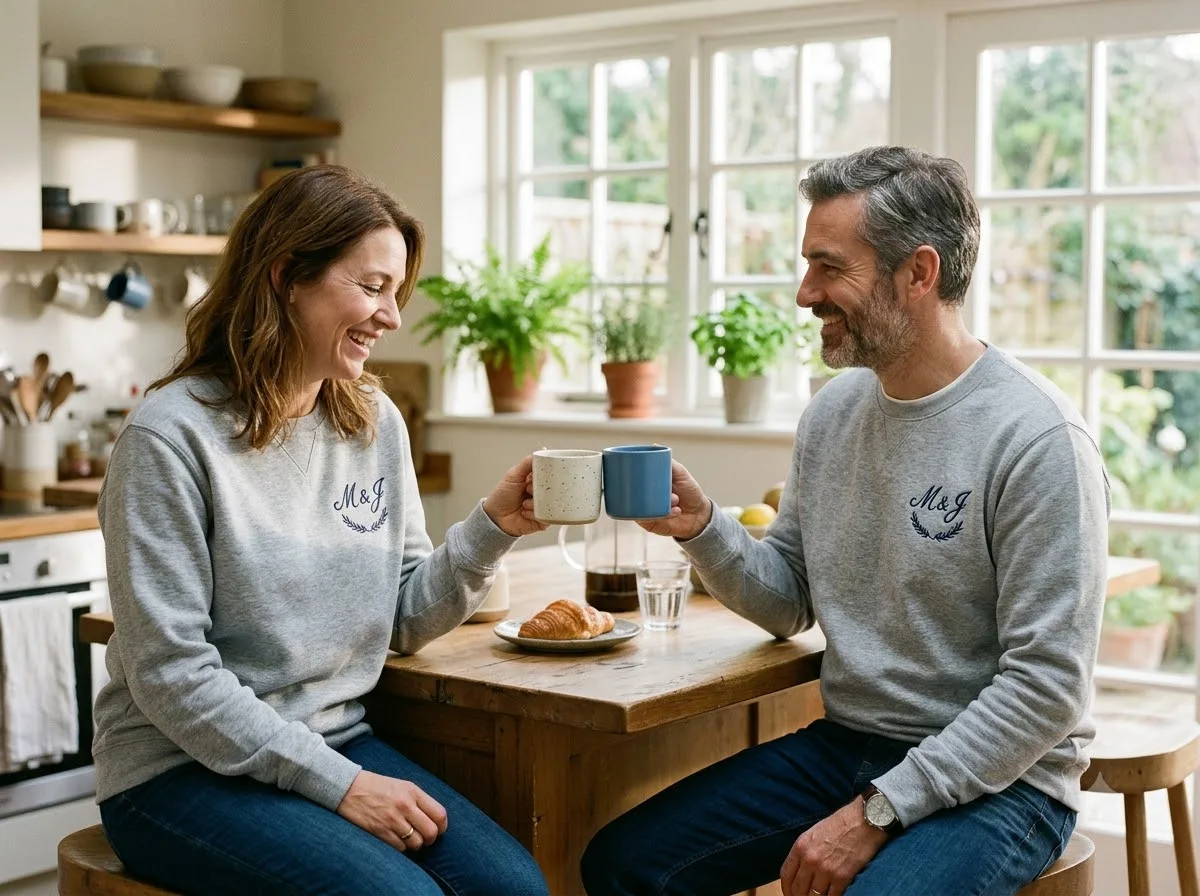
For couples specifically, embroidered matching sets hit a sweet spot. The Mr & Mrs embroidered sweatshirts use clean text and a date—exactly the kind of small, meaningful detail that embroidery handles beautifully. And if you’re shopping for a Valentine’s gift, the matching wifey and hubby embroidered sweatshirts show how a simple stitched design can feel romantic without being overdone.
Before You Order: Care, Longevity, and What to Tell the Recipient
The FTC Care Labeling Rule requires textile wearing apparel to carry care information for ordinary use, including washing or dry-cleaning instructions—so check the care label and pass those details along with the gift.
A custom gift shirt only stays great if it’s cared for properly. The FTC’s Care Labeling Rule requires textile wearing apparel to carry care information for ordinary use, including washing or dry-cleaning instructions, and washing labels must address machine or hand washing, water temperature, drying, ironing, bleaching, and warnings where needed FTC – Care Labeling Rule. That’s not just a legal checkbox—it’s the difference between a gift that lasts five years and one that fades after five washes.
- Turn inside out before washing — protects both embroidered stitches and printed ink from friction
- Cold water, gentle cycle — heat is the enemy of both methods; cold water preserves color and texture
- Air dry or low heat — high dryer heat can warp embroidery stabilizers and crack printed ink
- Don’t iron directly on the design — embroidery can flatten; print can melt or transfer
- Include a care note with the gift — a small card with washing instructions shows you thought ahead
Print a small care instruction card to tuck into the gift box. It takes two minutes and signals that this isn’t a throwaway present—it’s something worth maintaining. If you’re shopping for a grandma, our grammie shirts guide covers styles that real grandmothers actually reach for again and again.
Common questions
Does embroidery last longer than printing?
Generally yes. Embroidered designs are stitched directly into the fabric with thread, so they don't crack, peel, or fade the way printed ink can over many washes. However, both methods are durable when cared for properly—turn the shirt inside out, wash cold, and air dry.
Can I embroider a photo or detailed illustration?
Not well. Embroidery works best with simplified designs—clean lines, limited colors, and small to medium sizes. For photo-realistic images, gradients, or designs with many colors, DTG or screen printing is the better choice.
Is embroidery more expensive than printing?
For small, simple designs (like a name or monogram), embroidery is competitively priced. For large, complex, multi-color designs, screen printing is usually more cost-effective—especially at higher quantities. The cost difference narrows significantly for small personalization.
Will embroidery feel stiff on a lightweight T-shirt?
It can. Dense stitch areas require stabilizers that add rigidity, which can feel uncomfortable on thin, soft fabrics. If you're gifting a lightweight tee, consider a simpler, smaller embroidered design or opt for printing instead.