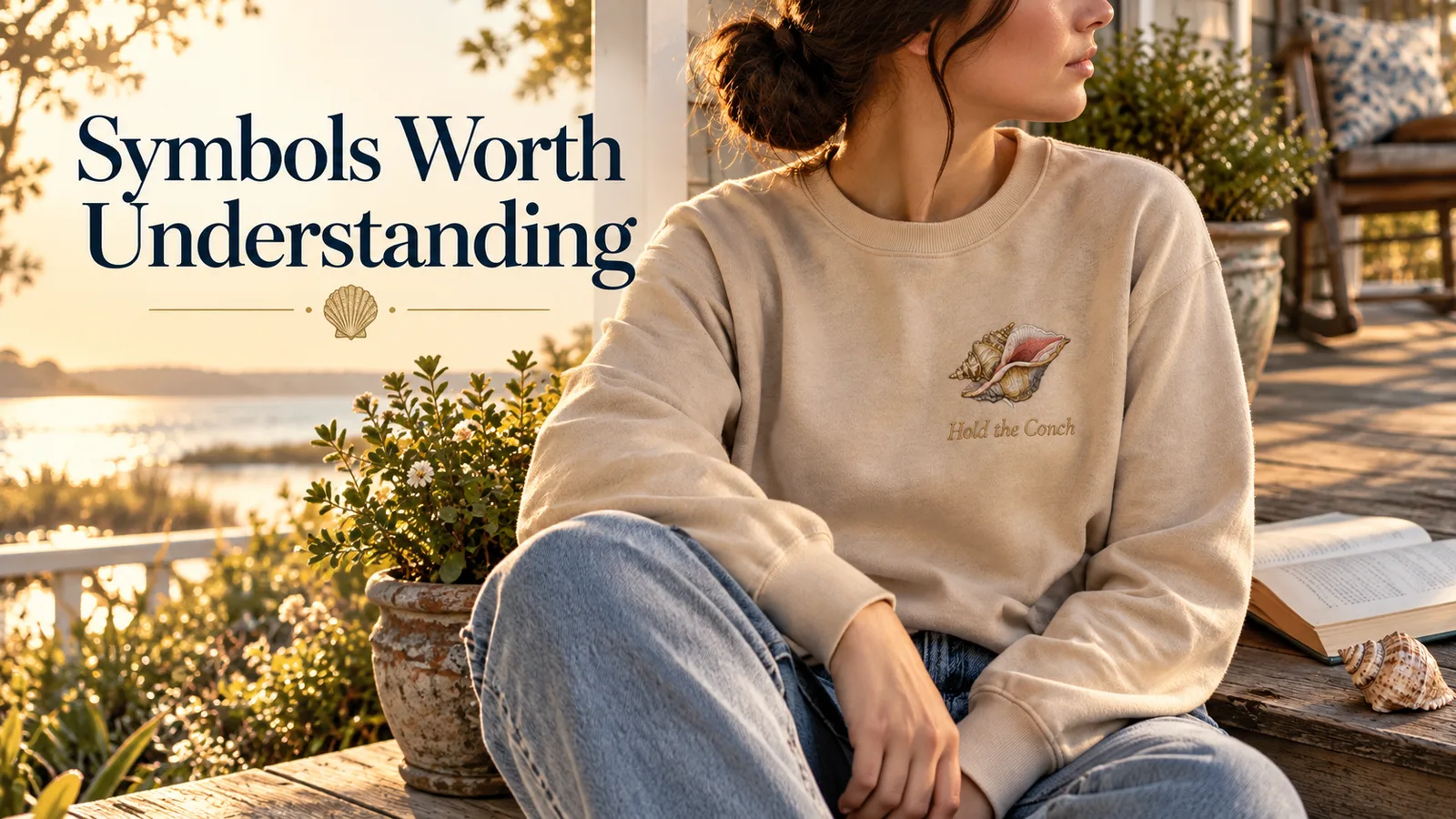
The fire is out, the conch has gone quiet, and a boy is still holding Piggy’s broken glasses. That sequence contains most of Lord of the Flies: civilization depends on shared rules, knowledge, and restraint, and each can be taken away. If you are studying for a test, leading a discussion, or trying to understand a gift inspired by the novel, this guide gives you a direct reading of the major symbols without flattening them into one-line morals. We will follow the story’s progression, distinguish literal objects from what they represent, and flag the interpretations that deserve the most support.
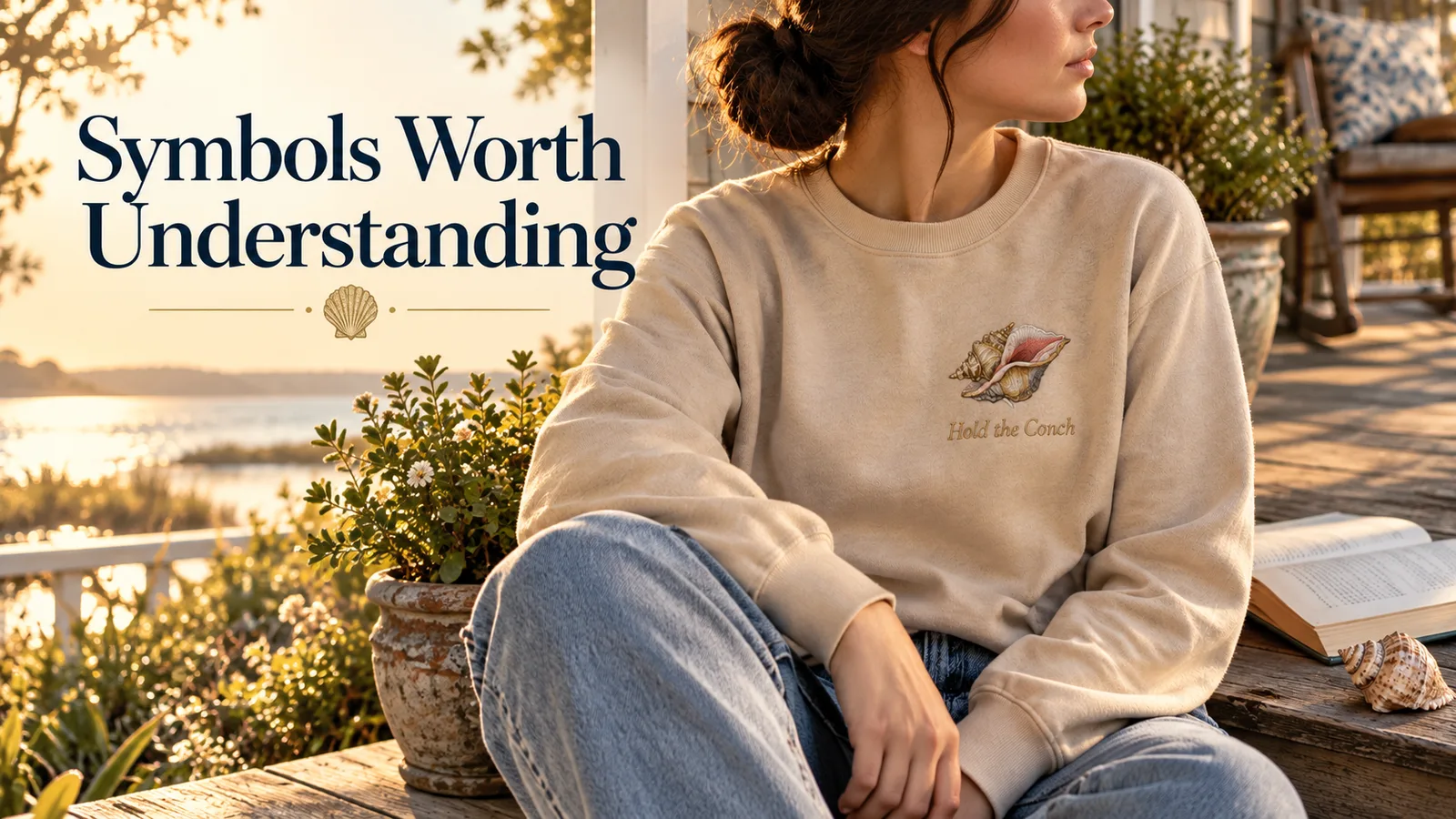
- The conch represents shared rules, civilized order, and the right to speak; its authority lasts only while the boys continue respecting that agreement.
- Piggy's glasses represent rational knowledge and practical power because their lenses start fire.
- The signal fire represents rescue and the boys' connection to civilization, while its neglect tracks their changing priorities.
- The beast represents the violence and evil the boys fear without recognizing their own capacity for it.
- The severed sow's head gives the novel's idea of evil within humanity a physical form; it is not evidence of a literal supernatural monster.
The one-line answer first
Lord of the Flies symbols explained in one sentence: the conch stands for civilized authority and fair speech, Piggy’s glasses for rational knowledge, the signal fire for rescue, the beast for human evil the boys fail to recognize, and the Lord of the Flies for that evil made frighteningly immediate.
The novel’s symbolism works because the objects remain ordinary. Boys pick up a shell, wear spectacles, tend a fire, and invent a creature. Their meanings emerge from how the group uses—or stops using—those things. That is why a strong interpretation should connect object, action, and change rather than simply label the object: conch = order tells a teacher very little; the conch granting each speaker a turn, then being ignored, then breaking, tells the whole argument.
Write three links for every symbol: what it is, what the boys do with it, and what changes when it is lost or misused. This keeps the interpretation anchored in events rather than abstract keywords.
The conch: authority you can hold
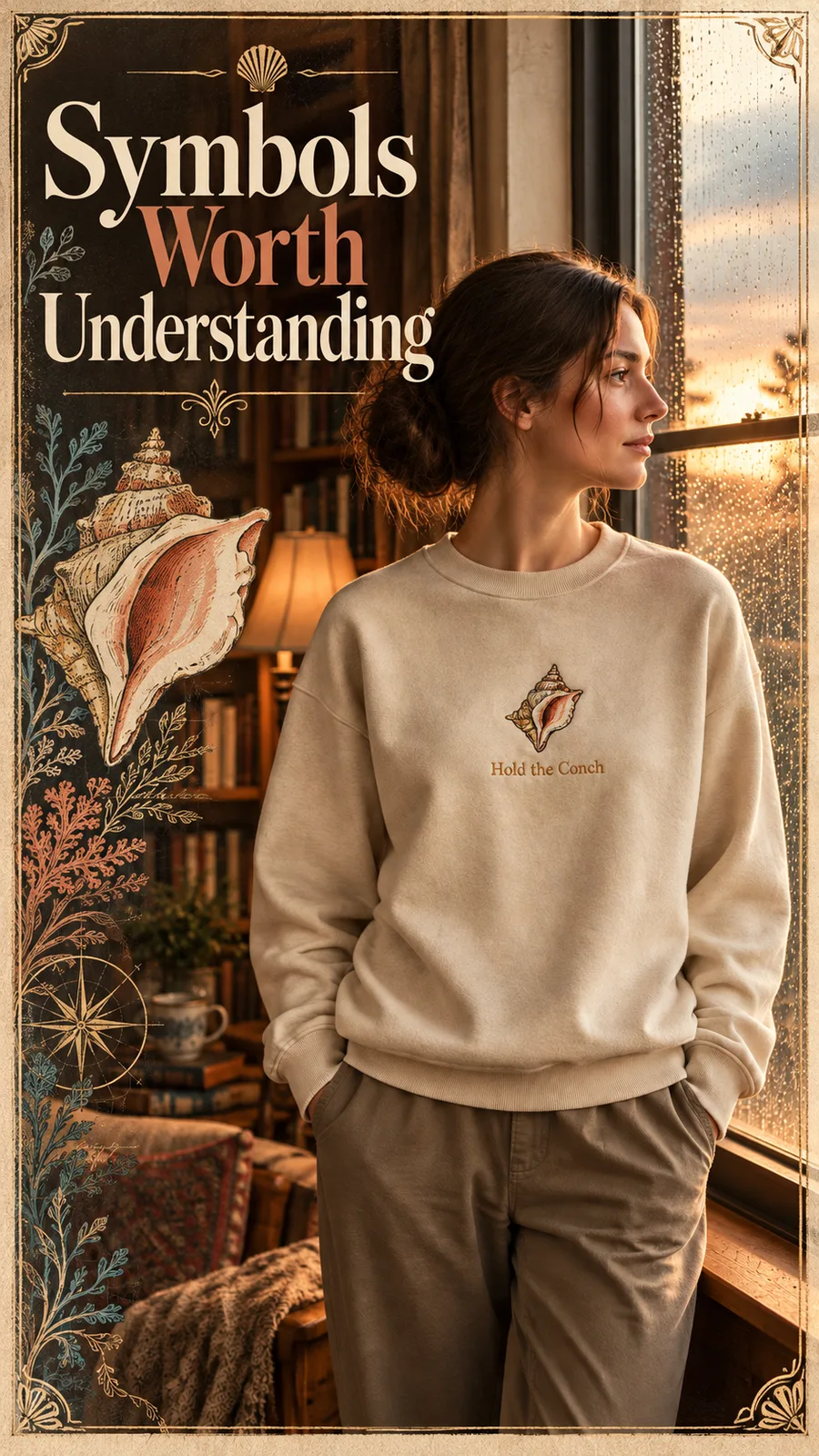
The conch symbolizes shared rules, civilized order, and the right to speak. Ralph uses it to summon meetings, and holding it gives a boy his turn to speak; its authority depends on the boys continuing to respect that agreement.
At first, the shell is almost magically practical: it gathers scattered boys and establishes who may speak. The rule is simple enough for everyone to understand, which is part of its strength. It does not make the holder wise or moral; it creates a temporary order that lets disagreement occur without immediate force. The William Golding official website (2025) describes the conch as the vessel of shared rules and the right to speak.
- Before dissent: the conch turns a group of frightened boys into a meeting rather than a crowd.
- During dissent: Jack and others begin interrupting or challenging its use, revealing that a convention has no power unless people keep choosing it.
- After collapse: Roger’s boulder kills Piggy and shatters the shell in the same incident, linking the destruction of rational discussion with the triumph of violence.
The final event is not decorative. Piggy is still trying to argue for the value of the conch when he is killed, so the loss of the speaker and the loss of the speaking rule happen together. SparkNotes identifies the shattered shell as the collapse of shared authority: SparkNotes (2025).
The conch's destruction marks the collapse of shared authority, joining the end of rational discussion to the triumph of violence.— SparkNotes
Piggy's glasses: knowledge becomes a tool
Piggy’s glasses symbolize scientific knowledge and rational intelligence, but also practical power: their lenses start fires. When Jack’s hunters steal them, they gain control of fire-making rather than merely taking Piggy’s personal possession.
The glasses make intelligence physical. Piggy can see clearly and think carefully, but the lenses can also concentrate sunlight into flame. That makes the object a bridge between knowing and doing. The boys need the signal fire, so the glasses are useful long before anyone tries to use them as a symbol. Their later theft shows how technical knowledge can be separated from the person who first understood it and redirected by a different group.
The theft therefore carries more force than ordinary bullying. Jack’s hunters acquire the means of fire-making and can decide when, where, and why it is used. In that shift, practical intelligence becomes an instrument of the hunters’ power. SparkNotes connects the stolen lenses with control over fire-making: SparkNotes (2025).
| Moment | What the glasses provide | What it shows |
|---|---|---|
| Piggy keeps them | Clear sight and a way to make fire for rescue | Knowledge supports the group's civilized purpose |
| The hunters steal them | Direct control of fire-making | Practical power can be seized and redirected |
| The lenses break | Diminished access to rational means | Vulnerability increases as restraint declines |
How the same object changes hands
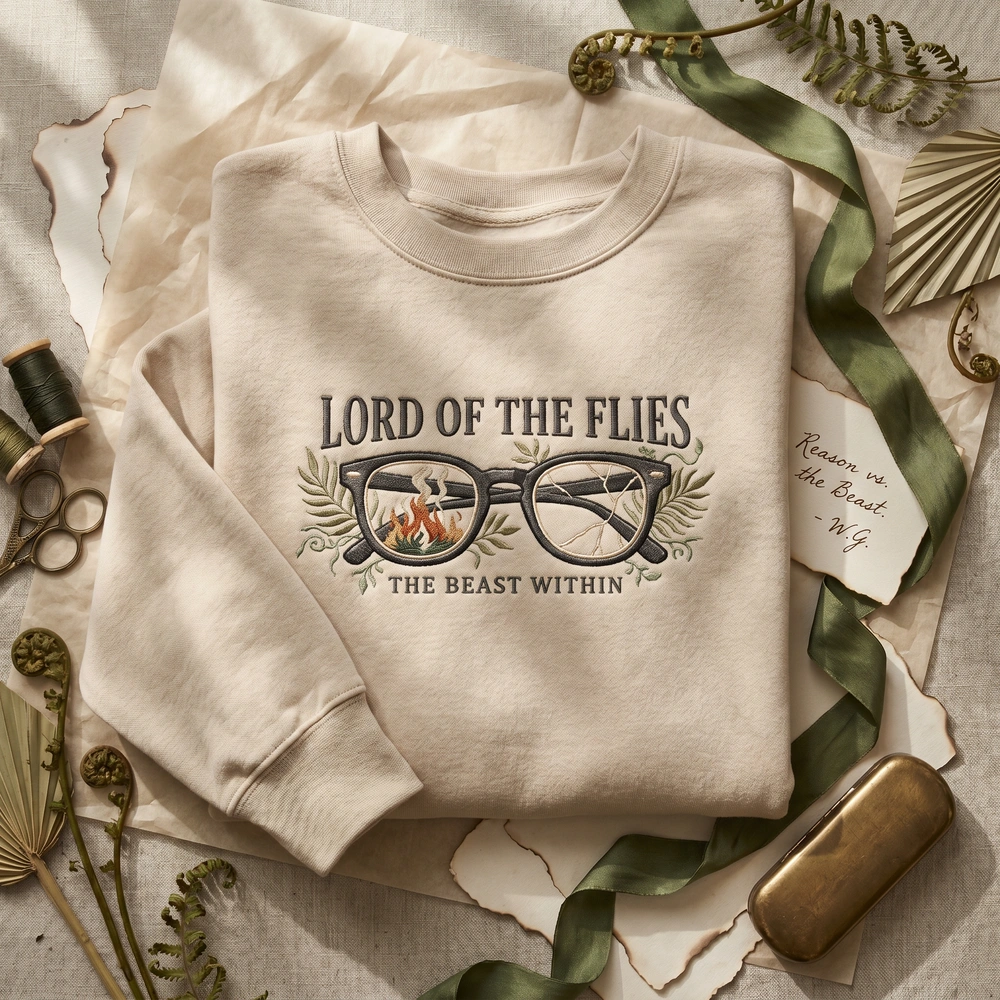
A subdued literary sweatshirt for a reader who is drawn to Piggy's intelligence, the fragility of rational order, and a symbol that rewards close reading.
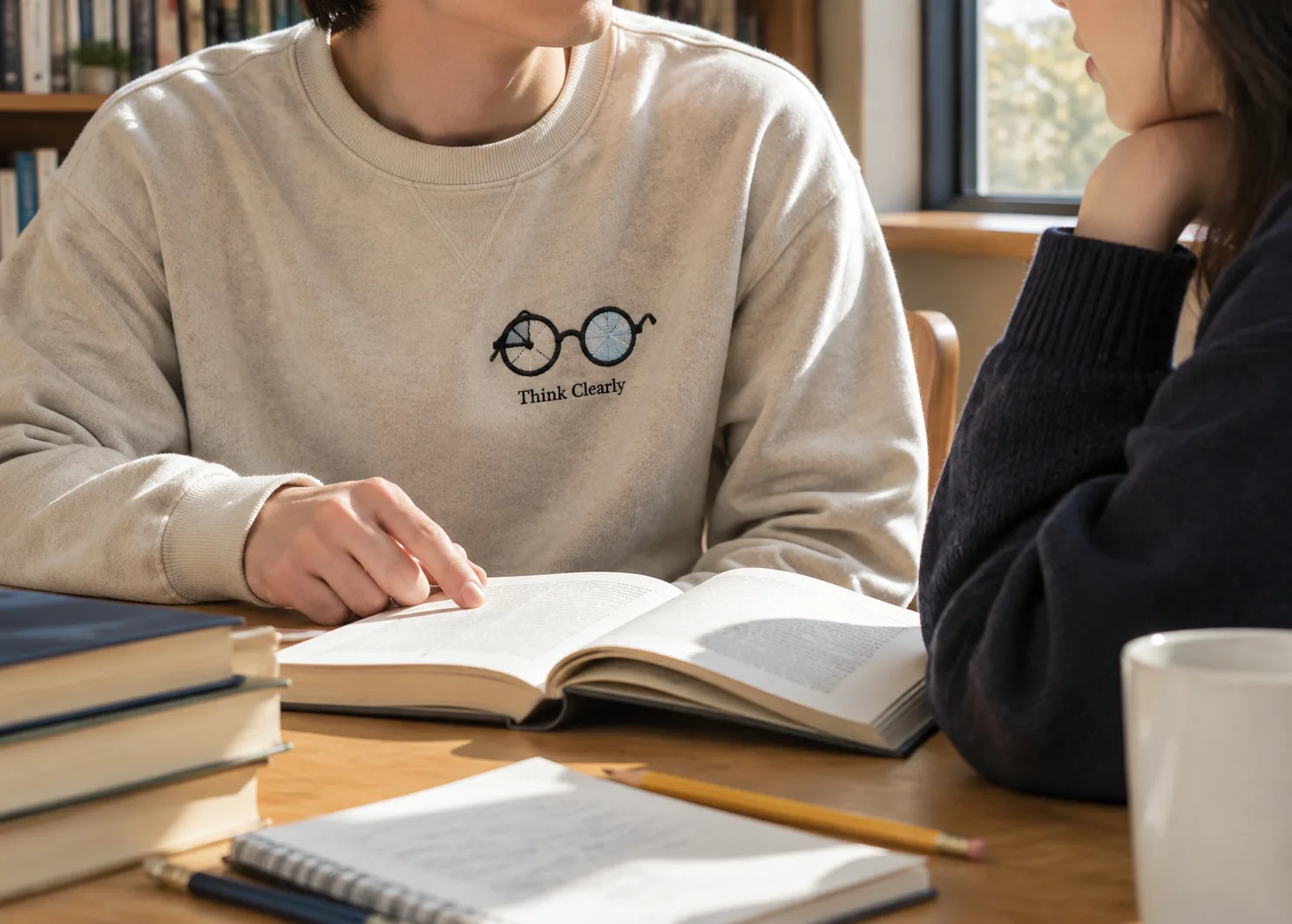
Fire and rescue: hope with a changing address
The signal fire represents the boys’ commitment to rescue and their connection to civilization. Its neglect shows their changing priorities; ironically, the fire that ultimately attracts rescue is the destructive blaze set to hunt Ralph, not their maintained signal fire.
From the start, fire is both immediate and distant. It can cook food and warm bodies now, but it can also summon a ship later. Maintaining the signal requires patience and a shared purpose that no one can see being fulfilled. When the blaze burns out or wanders out of control, the lapse is a plot event and a moral one: the boys are choosing nearer rewards over the less visible hope of return.
- Fire for rescue: a maintained flame is an outward signal that the boys still expect the civilized world to find them.
- Fire for food and warmth: immediate needs begin to compete with the distant promise of rescue.
- Fire for violence: the final blaze is aimed at Ralph and becomes the very thing that draws rescuers.
That reversal makes the ending especially bitter. The group fails to keep a purposeful signal alive, yet its destructive pursuit of Ralph creates the smoke that saves him. SparkNotes emphasizes this irony and the fire’s link to the boys’ connection with civilization: SparkNotes (2025).
Be precise about which fire you mean. The signal fire and the hunters’ blaze both matter, and confusing them erases the novel’s irony.
The beast: the danger inside the fear
The beast is not simply an island monster: it represents the violence and evil the boys fear without recognizing their own capacity for it. Simon’s suggestion that the beast may be the boys themselves is central to this interpretation.
The boys describe the beast in changing forms, but none of those descriptions proves that an animal or spirit has appeared on the island. The fear is real because it changes their behavior: rumors narrow their choices, courage becomes performance, and violence is presented as protection. The William Golding official website (2025) frames the beast as a projection of violence and evil that the boys do not recognize in themselves.
Simon’s observation is crucial because it redirects the question. Instead of asking what is hiding beyond the rocks, it asks what happens when fear is given an outside shape. Externalizing the danger can make the boys feel temporarily united, but it also allows them to avoid examining their own cruelty. The more firmly the beast is believed to be out there, the less accountable the boys feel for what they do to one another.
The beast becomes most convincing when it lets the boys treat their own capacity for violence as something separate from themselves.— William Golding official website
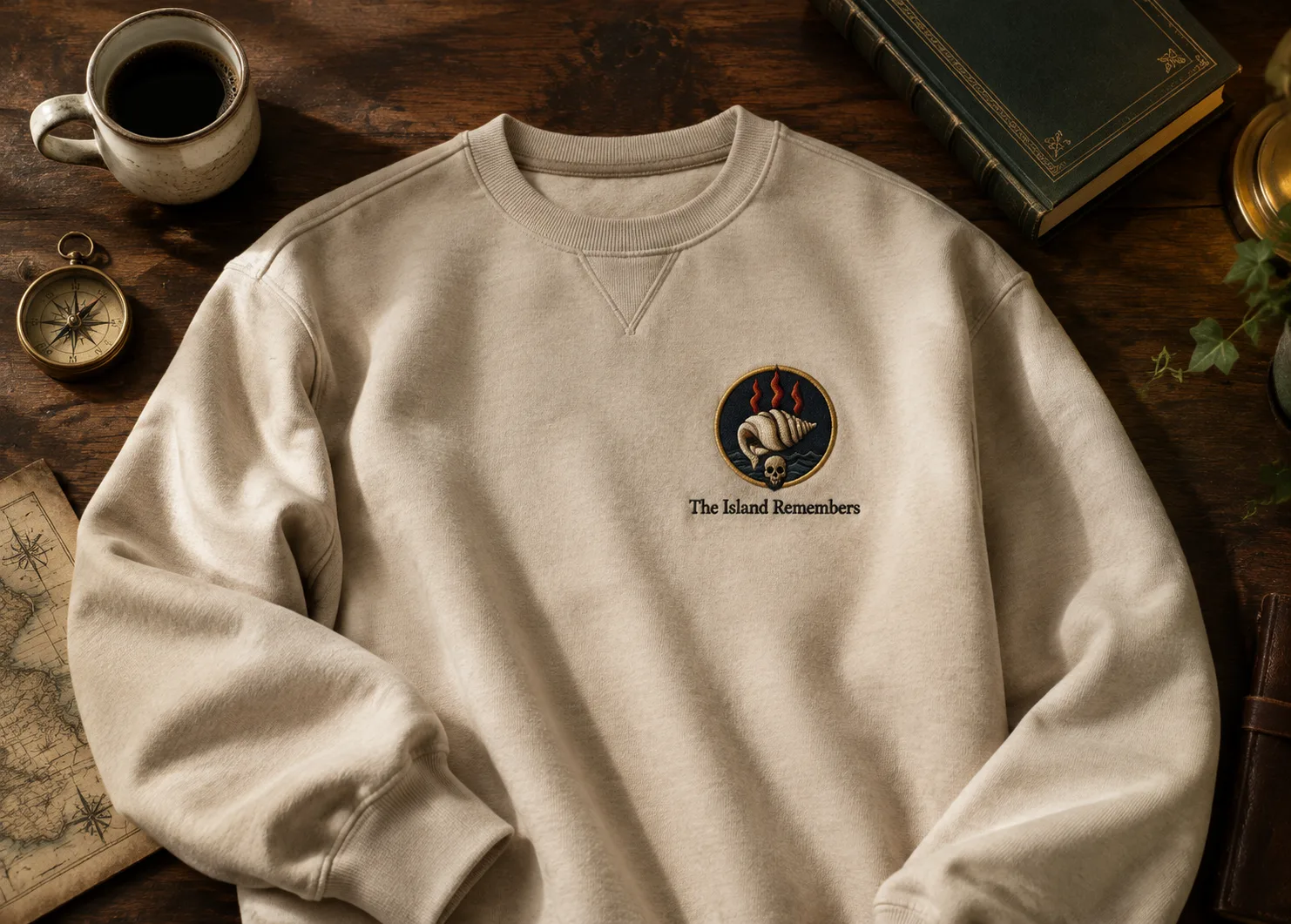
The Lord of the Flies: the head on the stake
The Lord of the Flies is the severed sow’s head placed on a stake as an offering to the beast. During Simon’s visionary encounter, it gives physical form to the novel’s idea of evil within humanity; it should not be presented as proof that a literal supernatural monster inhabits the island.
The title image is grotesque because it is not abstract. The boys have killed an animal, offered part of it, and then allowed the remains to speak in Simon’s imagination. The head does not introduce a new theory of evil; it concentrates the ideas already gathering around the beast, the hunting, and the fear of being watched. Its meaning is tied to Simon’s encounter, where the novel gives its darkest idea a voice and a physical object.
Interpret it carefully. Saying that a supernatural pig demon speaks does not explain the novel’s interest in rules, knowledge, rescue, or self-deception. The more precise reading is that the offering embodies humanity’s evil from within—the same danger Simon tries to name. SparkNotes treats the head as the physical form of that inward evil rather than evidence of a literal monster: SparkNotes (2025).
- What it is in the story: a severed sow’s head fixed on a stake as an offering.
- What it does for Simon: it gives the fear and violence surrounding the beast a voice.
- What it means for the novel: evil is presented as something within human beings, not merely as an island creature.
How to choose a symbol-first gift
Choose the symbol the reader already cares about: the conch for rules and voice, broken glasses for Piggy and rational thought, or a broader island emblem for an overall reading of the novel. A symbol-first gift feels personal because it rewards recognition instead of simply announcing the title.
The best literary gifts work like a good marginal note: the person who made them understood why the object mattered. For a teacher, a student preparing for discussion, or a lifelong reader, the conch and the glasses carry different associations. If you are comparing designs, look for restrained placement, clearly legible stitch work, and a motif that remains recognizable without a long explanation. That is the standard we use when curating our lord of the flies merch guide.
| Symbol focus | Best for | Recommended piece |
|---|---|---|
| Conch and civilized order | Readers who value voice, debate, and the novel's central rule | Lord Of The Flies Embroidered Sweatshirt – Conch Shell Gift |
| Piggy and rational knowledge | Science-minded readers and students drawn to the glasses | Lord Of The Flies Broken Glasses Embroidered Sweatshirt |
| The novel as a whole | A versatile gift for a teacher, book club member, or general fan | Lord Of The Flies Embroidered Sweatshirt – Classic Novel Gift |
| A different literary fantasy | A reader who enjoys symbolic apparel beyond Golding | Lord Of The Rings Embroidered Sweatshirt – Fellowship Weapons |
A quick symbol-to-gift match
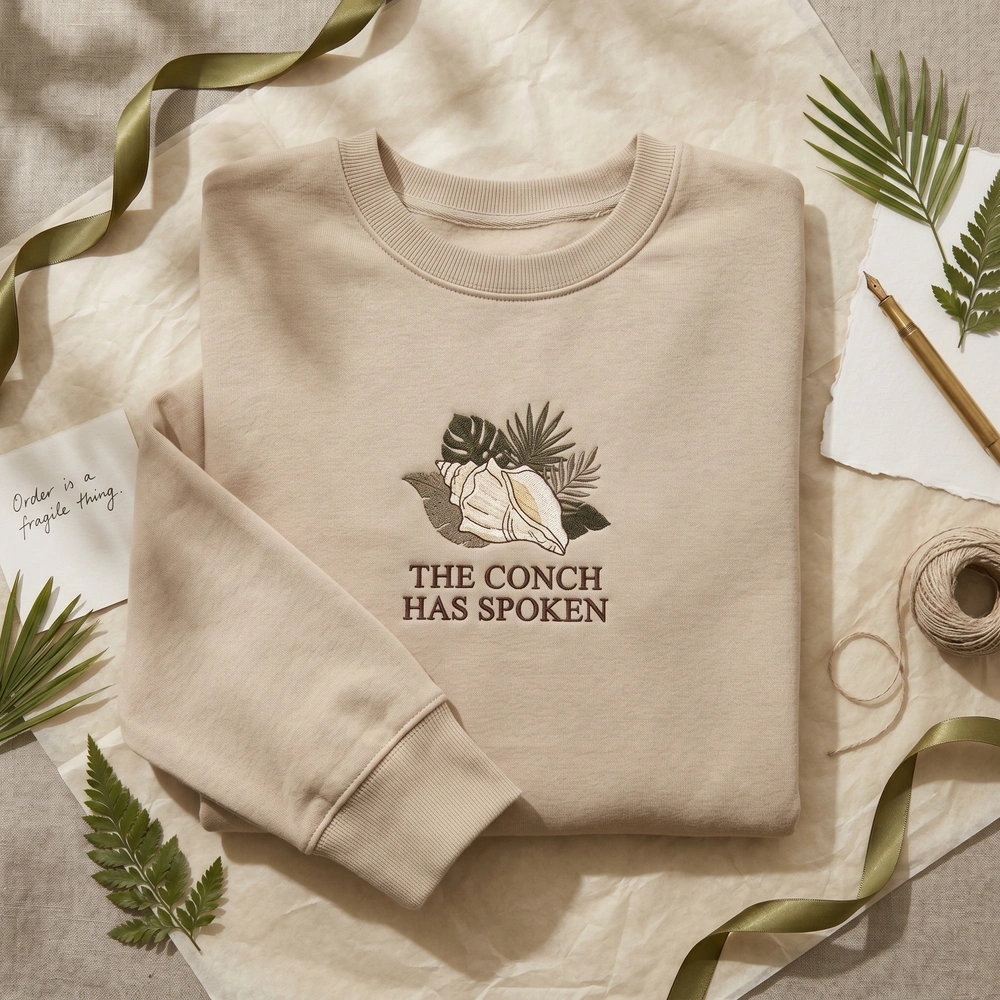
A focused choice for anyone whose reading of the novel begins with the conch, shared rules, and the hard-won right to speak.
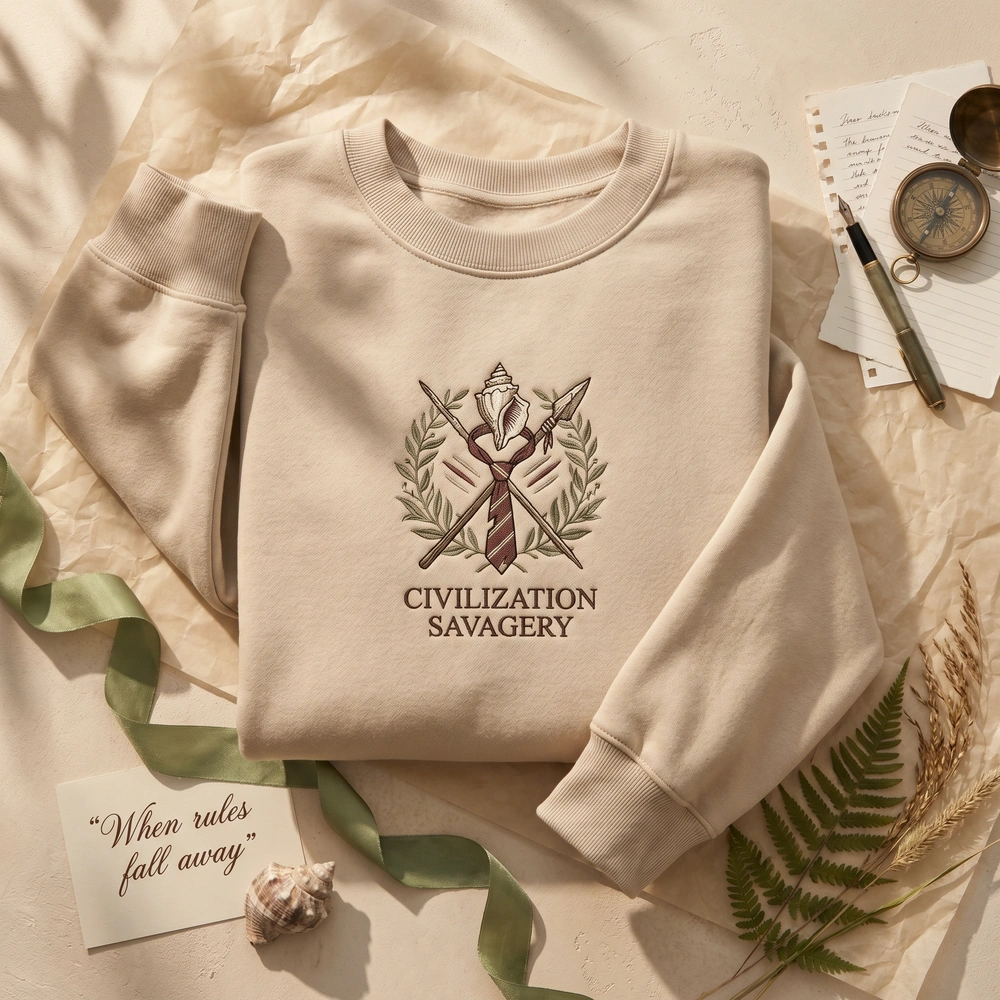
The safest all-purpose option when you want the novel's atmosphere without choosing one symbol over the others.
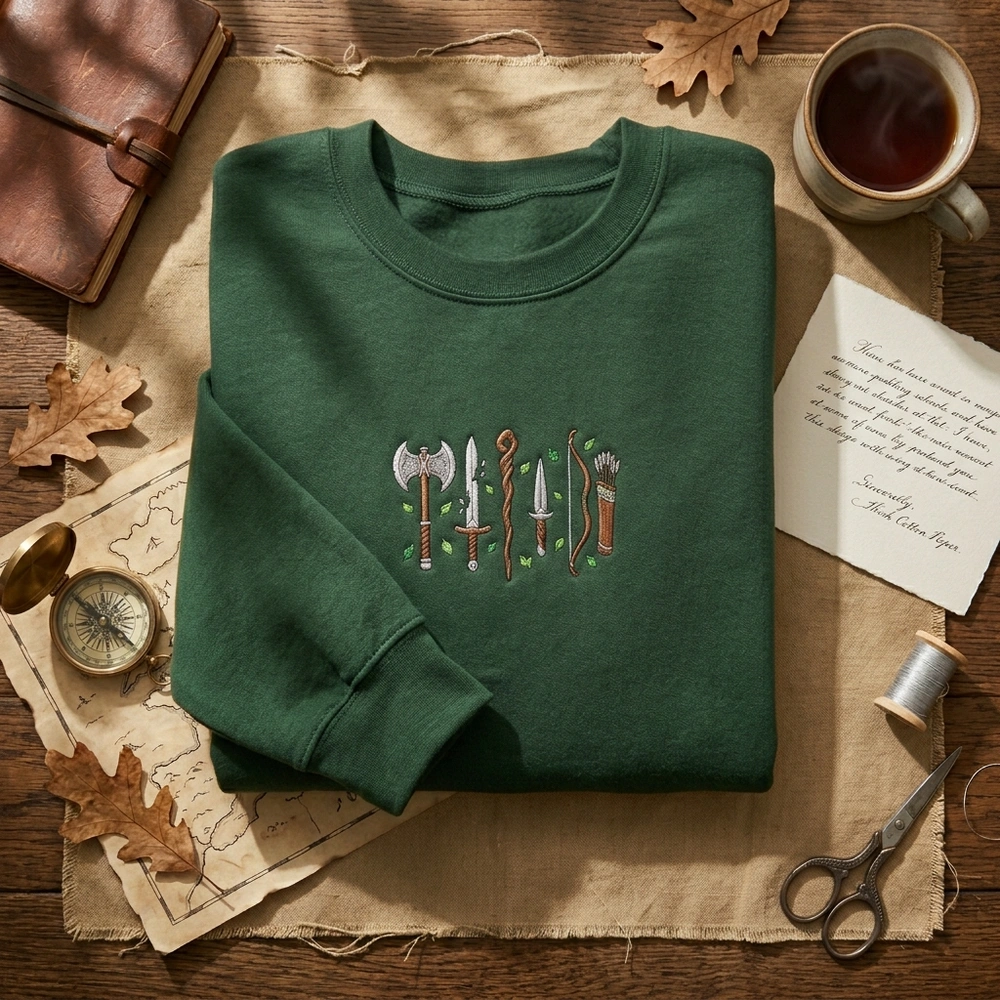
A useful alternative for fantasy readers who respond to objects carrying fellowship, loyalty, and shared purpose.

Common questions
What is the main symbol in Lord of the Flies?
The conch is the novel's clearest symbol of shared rules, civilized order, and the right to speak. Its authority lasts only while the boys continue to respect that agreement, so its use and eventual destruction trace the collapse of their social order.
Do Piggy's glasses symbolize intelligence or power?
They do both. The glasses represent scientific knowledge and rational intelligence, but because their lenses start fires, they also represent practical power. The hunters' theft shows knowledge being separated from Piggy and redirected toward another group's purposes.
Is the beast meant to be literal?
The symbol is more persuasive if the beast is read as the violence and evil the boys fail to recognize in themselves. Simon's suggestion that the beast may be the boys themselves is central to that interpretation, and the Lord of the Flies gives the inward evil a physical form rather than proving a literal monster.
Why does the final fire matter more than the signal fire?
The maintained signal fire represents rescue and the boys' connection to civilization. Ironically, the blaze that ultimately attracts rescue is the destructive fire set to hunt Ralph, so the ending turns their violence into the accidental means of salvation.