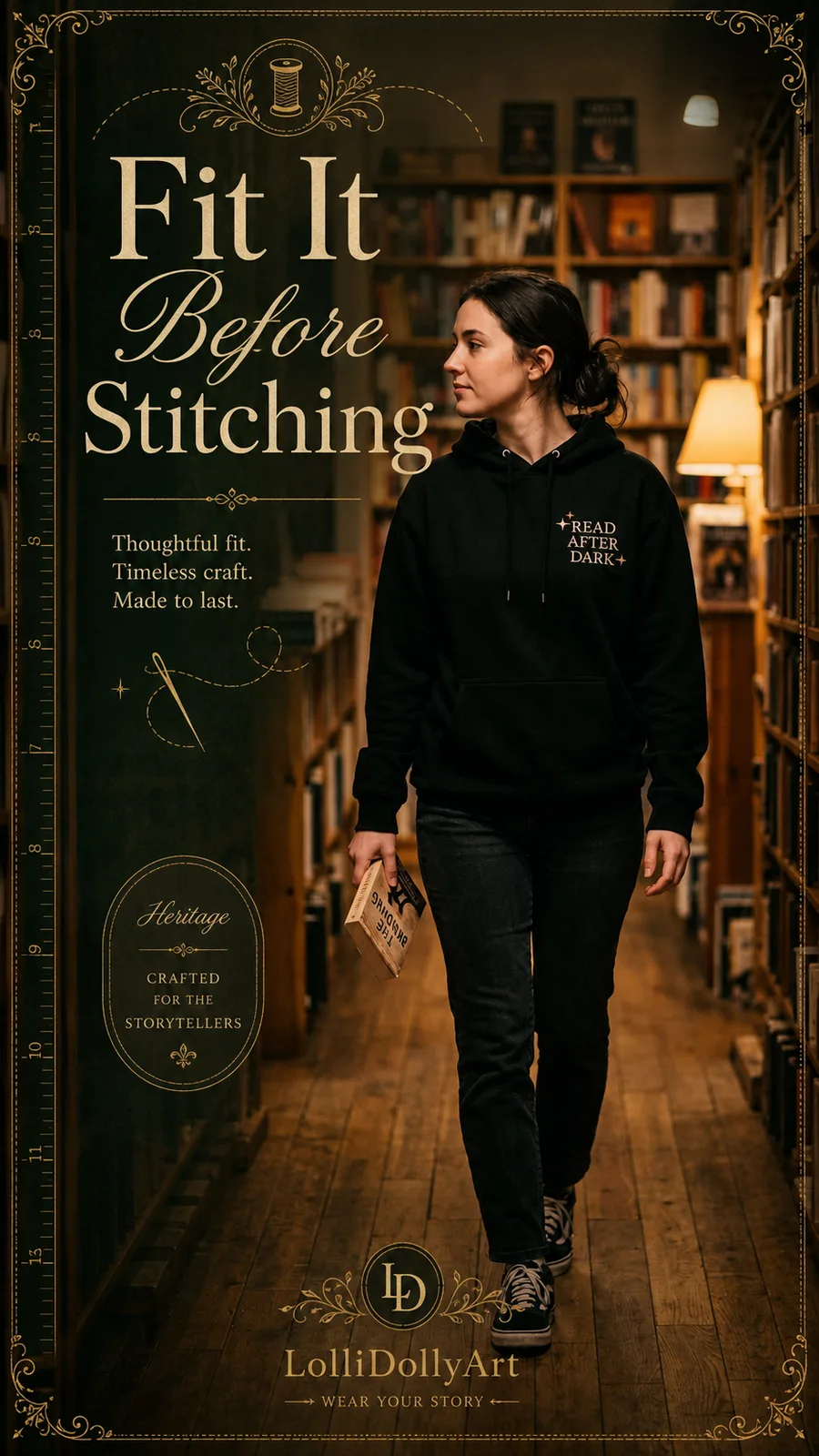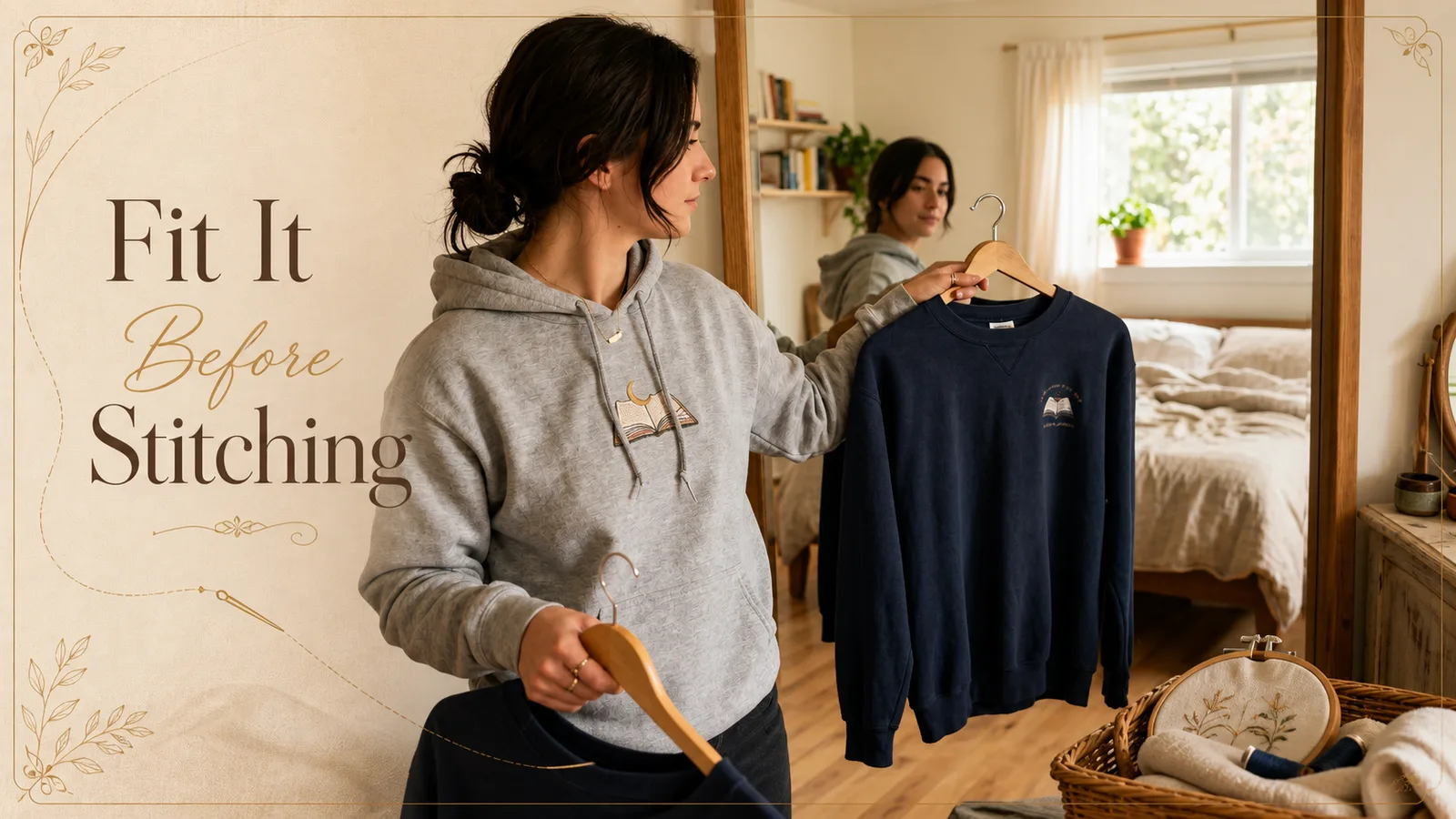
You are about to order a hoodie for someone you know well, then hit the familiar problem: they wear a medium in one brand, a large in another, and oversized in the sweatshirt they borrow every weekend. For embroidered apparel, guessing from S, M, or L alone is especially risky. Fleece weight, dropped shoulders, ribbed hems, a kangaroo pocket, and the stitched design all change how the finished piece wears. This embroidered hoodie size guide shows you which measurements actually matter, how to compare a relaxed versus closer fit, and how embroidery placement should affect the size you choose for yourself or a gift.
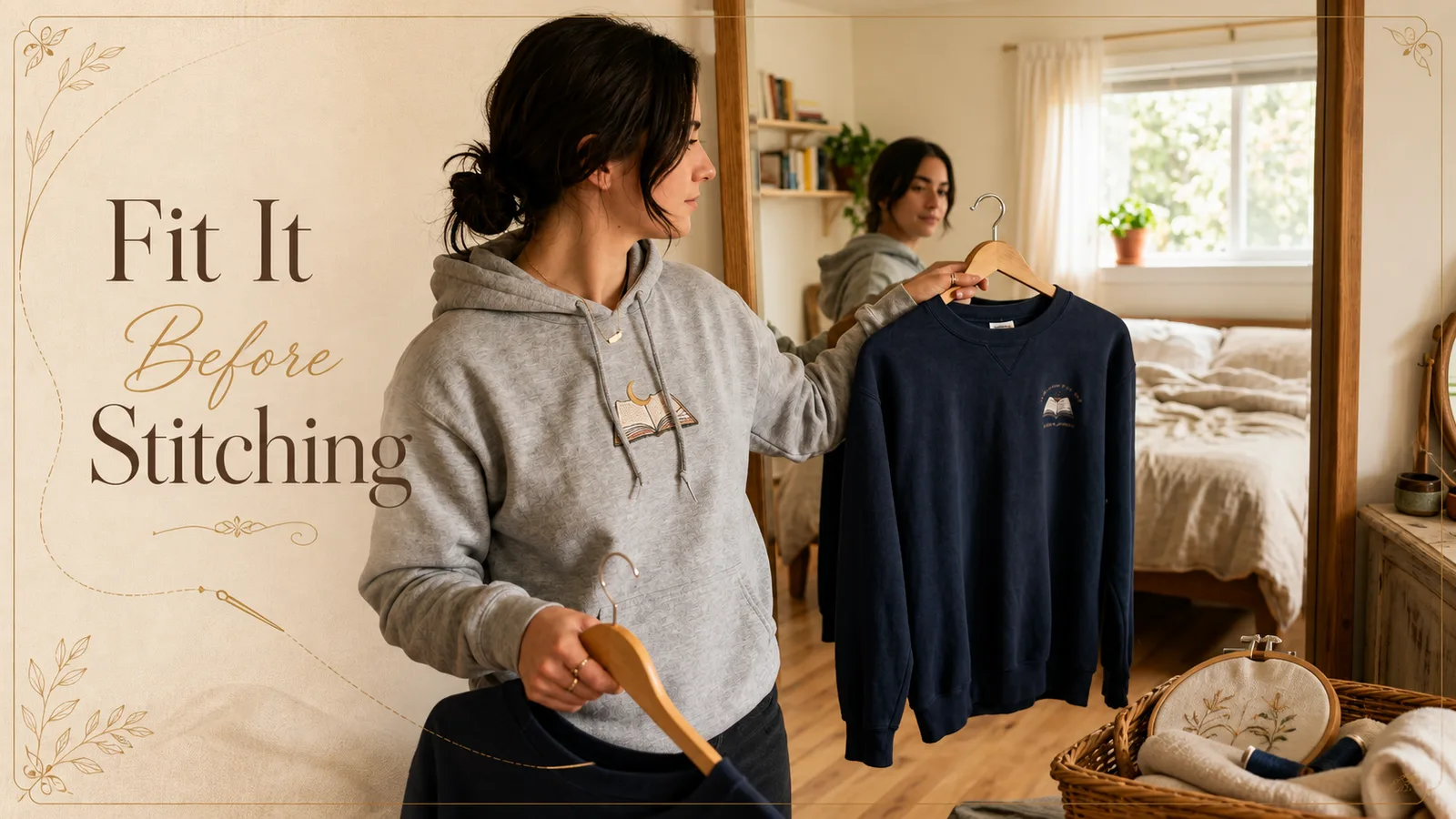
- Choose an embroidered hoodie from body measurements first, then confirm the finished garment measurements for the intended fit.
- Chest width, body length, sleeves, shoulders, and hem width tell you more than a standalone S, M, or L label.
- For a gift, compare the recipient's favorite hoodie laid flat with the product's finished measurements whenever possible.
- Center-front embroidery needs room above pockets and around zippers, so design placement can affect which hoodie style is the better choice.
- Follow the garment's care label after purchase instead of assuming every embroidered fleece can take the same wash or dryer settings.
Start with measurements, not the size label
The best embroidered hoodie size starts with the wearer’s body measurements, then uses the hoodie’s finished measurements to choose the desired amount of room. A size label is only a shorthand: it cannot tell you how much ease, length, shoulder drop, or fleece bulk a particular hoodie includes.
There is a useful distinction to make before comparing any chart. Body measurements describe the person. Finished garment measurements describe the actual hoodie. ASTM’s adult male chest table spans chest sizes 34–52 and specifically treats its measurements as a baseline rather than finished garment dimensions, which is exactly why a label alone is not enough for a purchase decision. See ASTM D6240/D6240M-24 (2024).
The same principle applies to women’s and unisex shopping. Separate body-measurement standards exist for different figure types; for example, ASTM D5585 covers adult female misses sizing from 00–20. That does not mean every shopper must identify with a category before buying a hoodie. It means the chart should begin with a real measurement, not an assumption that a familiar numeric or letter size transfers cleanly between garments.
| Measurement type | What it answers | How to use it |
|---|---|---|
| Body chest | Which size range is likely to fit the wearer | Measure around the fullest chest area and compare with the product chart. |
| Finished chest width | How roomy the hoodie will feel | Compare it with a favorite hoodie laid flat, then double the width if the chart uses circumference. |
| Finished body length | Where the hem will land | Check a hoodie the recipient already likes, especially for tall, cropped, or tunic-like preferences. |
| Finished sleeve and shoulder shape | Whether the arms and upper body will feel fitted or relaxed | Look for drop shoulders, roomy sleeves, and ribbed cuffs in addition to the sleeve number. |
Use both types of information before placing an order.
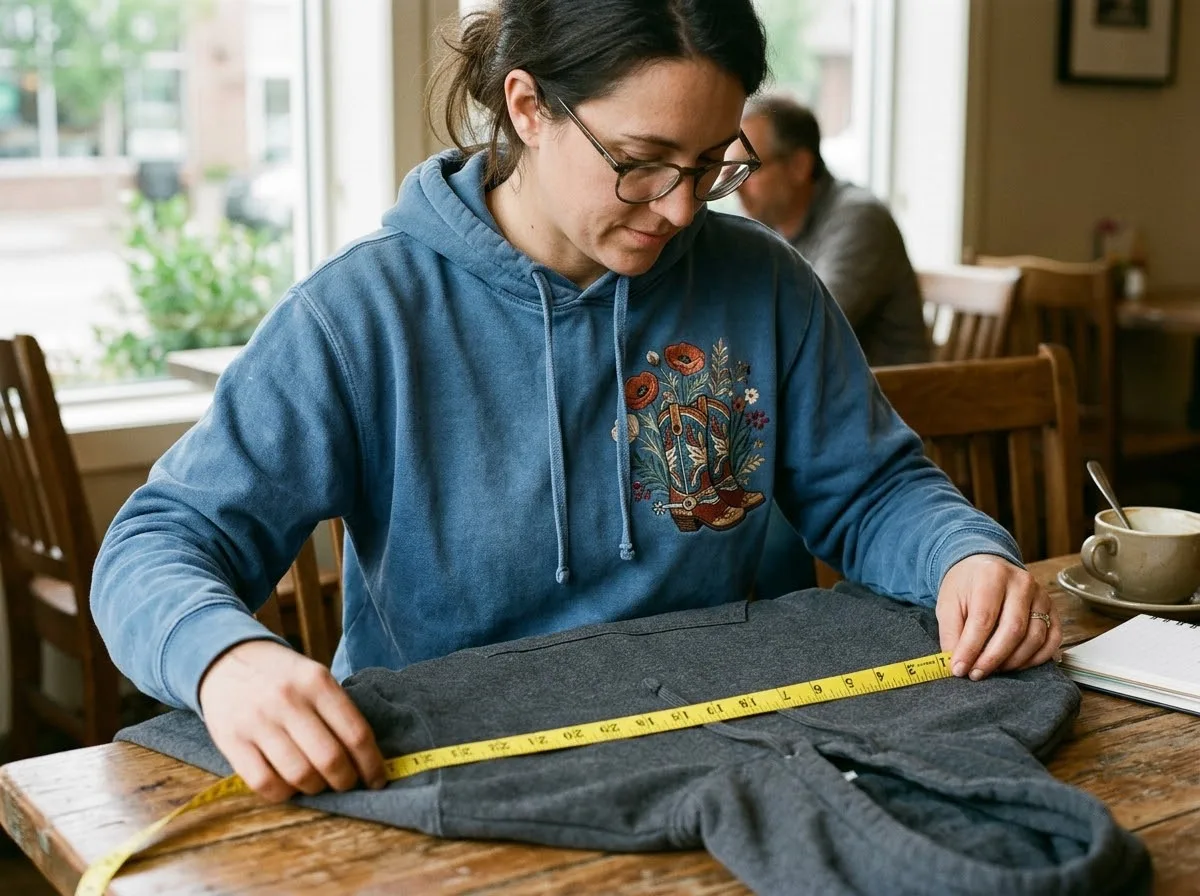
Borrow a hoodie they already reach for, lay it flat without stretching it, and note the chest width from underarm to underarm plus the back length from the high shoulder to hem. Those two comparisons are often more useful than asking for their usual size.
The five hoodie measurements worth checking
Check chest, body length, sleeve length, shoulder or arm fit, and hem width before ordering an embroidered hoodie. Together, these measurements reveal whether the piece will feel close-fitting, standard, relaxed, or intentionally oversized.
A non-stretch tape measure and an accurate written note are the right starting tools. Sewing.org recommends a non-stretch tape and emphasizes both wearing ease and design ease. That last point matters for hoodies: the fit you need to move comfortably in may be different from the silhouette you want when you are layering over a tee, styling with leggings, or wearing the piece under a coat.
- Chest: The first measurement to compare. For a finished hoodie, it is the clearest clue to ease through the torso and underarms.
- Body length: Measure from the high shoulder area to the hem on a favorite piece. Do not assume a relaxed chest automatically means enough length.
- Sleeve length: This affects whether cuffs sit at the wrist or ride higher, especially when a hoodie has a dropped shoulder.
- Shoulder and arm fit: A drop shoulder can create a deliberately roomy look even when the chest measurement is not dramatically larger.
- Hem width: Ribbing can draw the bottom inward. A generous chest does not always mean the hem will sit loosely over hips or layers.
Why ISO separates bodies from garments
ISO 8559-1:2017 defines anthropometric body measurements used to create clothing size and shape profiles across garment types. In contrast, ISO 8559-3:2018 notes that garment dimensions are not included. For shoppers, the practical takeaway is simple: a body chart tells you where to start, while the hoodie’s own product measurements tell you what will arrive.
Body measurements establish the starting point; finished hoodie measurements determine the actual fit and styling room.— ISO 8559-1:2017 and ISO 8559-3:2018
Before you order: choose the fit on purpose
Choose a closer, standard, relaxed, or oversized embroidered hoodie fit based on how it will be worn, not on what size sounds safest. When buying a gift, a relaxed fit is often the more forgiving choice only if the recipient already prefers extra room and you have confirmed the garment measurements.
Embroidery has presence. A compact left-chest detail can suit a neat everyday fit, while a larger center-front motif often reads best on a hoodie with enough visual space through the chest. The fabric itself also matters. Bulky fleece, a kangaroo pocket, drawstrings, ribbed cuffs, drop shoulders, and hoods all influence both movement and the way a stitched design sits when the garment is worn.
| Fit direction | Look and feel | Best buying check |
|---|---|---|
| Closer fit | Less extra volume through the body and arms | Confirm chest and hem carefully; ribbing and fleece can make the silhouette feel more contained. |
| Standard fit | Everyday room for a tee or light layer | Compare body length and chest against a hoodie they already wear often. |
| Relaxed fit | More room through shoulders and body | Check that extra width is paired with a length they will like. |
| Oversized fit | Deliberate volume and a dropped, casual silhouette | Size only with measurements and preference evidence; do not assume one size up creates the intended proportions. |
Match the fit decision to the recipient's real wardrobe habits.
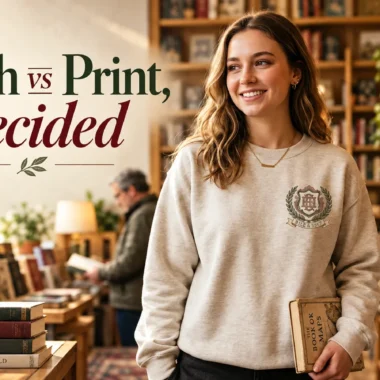
For an easy, cozy bookish gift, the Camp Cando Embroidered Sweatshirt – Bookish Summer Camp Inspired Light Blue Hoodie is a strong choice when you want the design to feel playful but still wearable beyond one season. Someone who layers sweatshirts through cool-weather plans may also appreciate the styling ideas in Fall Embroidered Sweatshirts to Layer Into the Coziest Stretch of the Year.
Going up a size can add chest room, but it can also make sleeves, shoulders, and body length feel unlike the relaxed fit the recipient enjoys. Compare the whole garment, not one number.
Embroidery placement changes the buying decision
Choose embroidery placement with the hoodie’s size and construction in mind. Left-chest designs are versatile across sizes, while center-front embroidery needs clear space above the pocket and away from a zipper, drawstrings, and the neckline.
On a hoodie, the design is not floating on a flat shirt front. It has to work around the hood, cords, pocket, seams, and the way fleece gathers as the wearer moves. Brother’s placement guide lists left-chest hoodie embroidery at roughly 7–9 inches down from the high point shoulder and 3–5 inches in from center front; it places center-front hoodie designs about 2–4 inches below the neckline. See the Brother Embroidery Placement Guide.
- Left chest: A practical choice for names, small icons, compact bookish motifs, and gifts where the design should stay subtle.
- Center front: Best when the artwork needs a clear focal point. Check the distance from neckline to pocket before choosing a larger motif.
- Zip-front hoodie: The zipper interrupts the center, so a smaller layout or an offset placement is usually more appropriate.
- Smaller sizes: A design should be scaled and positioned for the available chest area instead of simply using the same large layout across every garment.
Zip hoodies deserve special caution. Brother’s monogrammed zip-front hoodie project says that the zipper can require a smaller design layout and uses a 4 by 4 inch hoop example. See Brother’s Monogrammed Hoodie Project. That is why a full center-front concept that works on a pullover may not translate cleanly to a zip-front version.
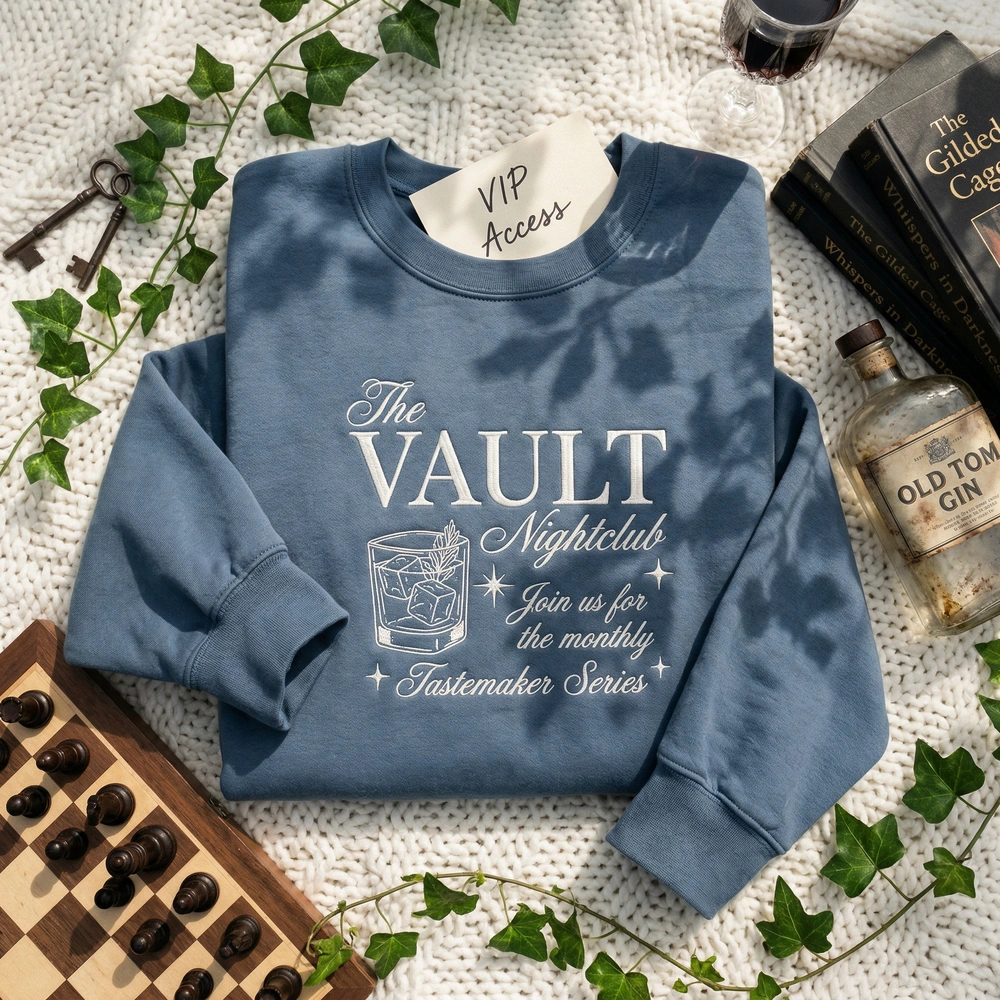
Choose this dark romance bookish design for a recipient who prefers an expressive embroidered statement with a polished, wearable silhouette.
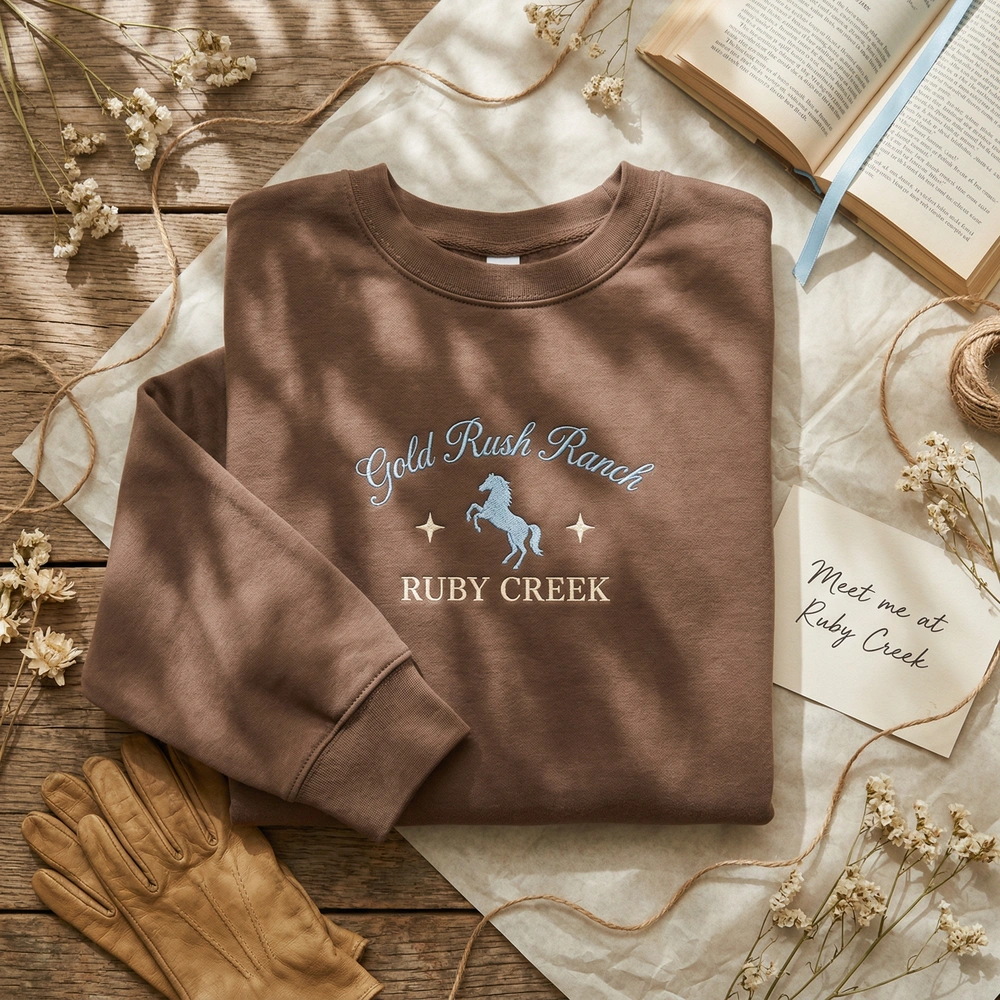
This western romance-inspired option suits a reader whose everyday layers lean casual, cozy, and specific to their favorite genre.
A gift-size decision you can make with confidence
For an embroidered hoodie gift, use a favorite existing hoodie as your reference, choose a fit that reflects the recipient’s normal style, and keep the receipt or exchange details available when possible. The goal is not to predict a universal size; it is to select a garment whose finished proportions match what they already love wearing.
Start quietly. Look at the hoodie or sweatshirt they wear on errands, reach for after work, or pack for a trip. Note whether the shoulders sit at the seam or drop lower, whether the hem hits at the hip or longer, and whether the sleeves bunch at the cuffs. Those small preferences are more revealing than the letter on a neck label.
- Measure their reference piece: Record flat chest width, back length, and sleeve feel or length.
- Read the product details: Identify whether the hoodie is described or shown as more fitted, standard, relaxed, or oversized.
- Think about the design location: Choose a compact chest design for subtle gifting, or confirm enough clear front space for a more visible motif.
- Plan for care: Read the sewn-in garment label before washing or drying. The FTC requires textile wearing apparel care labels to provide the regular care needed, including washing or dry-cleaning instructions where applicable; see the FTC Care Labeling Rule.
- Make the gift personal, not generic: A genre, place, pet, or family in-joke can matter more than choosing the largest possible design.
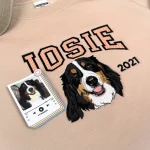
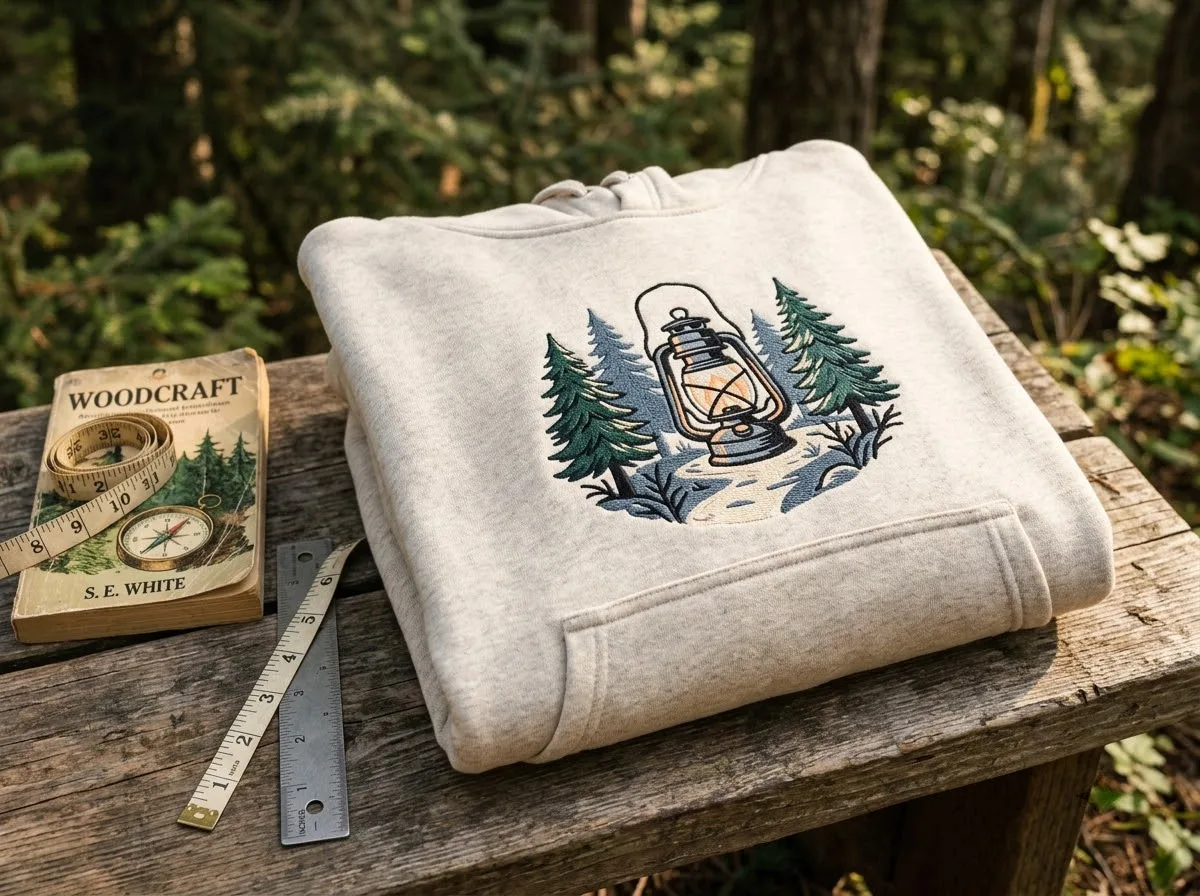
For a nature-minded reader, the Camp Calloway Embroidered Sweatshirt – Fictional Wilderness Nature Bookish Hoodie makes sense when their existing wardrobe favors easy layers and outdoorsy references. For a more personal direction, a photo-based keepsake benefits from the same careful fit check before you choose a base garment; see Custom Hoodies With Pet Pictures That Turn a Favorite Pet Photo Into a Wearable Keepsake.
When the gift is built around a family phrase or a familiar online reference, the design should still fit the wearer’s real life: school pickup, coffee runs, reading nights, travel days, and all the ordinary places a favorite hoodie earns its place. For the broader buying context behind that kind of present, read what does the mama" meme.
Common questions
Should I size up for an embroidered hoodie?
Not automatically. Start with body measurements and compare the finished chest, length, sleeves, and hem to a hoodie the wearer likes. Size up only when the garment measurements and their style preference support a roomier fit.
What is the most important measurement for a hoodie gift?
Finished chest width is usually the best first comparison, but pair it with body length. A hoodie can be wide enough and still feel wrong if it is much shorter or longer than the recipient prefers.
Does embroidery make a hoodie fit smaller?
Embroidery placement and fleece construction can change how the garment feels and drapes, especially across the front, but the purchase decision should be based on the finished garment measurements and intended ease.
Where should embroidery go on a hoodie?
Left chest is a versatile placement for compact designs. Center-front designs need enough open space below the neckline and above the pocket, while zip-front hoodies usually need smaller or offset layouts because of the zipper.