The first time someone asks me, “Can I just throw this embroidered sweatshirt in the wash?” I know what they’re really asking: Am I about to ruin the thing I bought because it felt personal? The good news is embroidered clothing is made to be worn, not hidden in a drawer. But stitched designs have a few enemies—harsh detergent, aggressive spin cycles, wet folding, direct ironing and ignoring the care label. Here’s how to care for embroidered clothing in a way that protects both parts of the garment: the base fabric you live in and the raised thread design that makes it special.
- Always read the garment care label first because it gives at least one safe cleaning method for the whole item, not just the embroidery.
- Wash embroidered clothing inside out on a gentle cycle with mild detergent, and avoid bleach, peroxide, chlorine and optical brighteners.
- Do not leave embroidered garments wet, folded, soaking, pressed together or wrung out; reshape them promptly and dry them gently.
- Iron embroidered designs from the reverse side or with a cloth barrier so the iron does not flatten or shine the stitches.
- For gifts, choose embroidered sweatshirts and hoodies that match the recipient’s real laundry habits—not only their style.
Start with the care label, not the prettiest part
The safest way to care for embroidered clothing is to follow the garment’s care label first, then add extra protection for the stitched design. In the U.S., apparel care labels must provide at least one safe cleaning method, and the minimum washing instructions include both a washing method and a drying method.
It is tempting to look only at the embroidery thread—especially when the design is the reason you bought the piece—but the label is there because the whole garment matters. A cotton sweatshirt, a fleece hoodie, a structured hat, a ribbed cuff, a patch, metallic thread or an appliqué detail can all change what “safe” means in the laundry room. The FTC explains that apparel care labels must provide at least one safe cleaning method, and minimum washing instructions include both washing and drying directions in its Clothes Captioning: Complying with the Care Labeling Rule.
Care symbols are also worth reading before you wash. The Office of Consumer Affairs guide notes that apparel and textile care symbols cover five treatment categories: washing, bleaching, drying, ironing and professional cleaning in its Guide to Apparel and Textile Care Symbols. For embroidered clothing, that means the question is not only “Can I wash it?” but also “Can I bleach it, tumble it, iron it or dry clean it?”
If the label and the embroidery care advice seem to conflict, choose the gentler option. For example, if the sweatshirt label allows machine washing but the stitched design is dense, textured or detailed, turn it inside out and use a delicate cycle instead of a normal cycle.
| Care area | Why it matters for embroidery | Safer default |
|---|---|---|
| Washing | Agitation can rub raised stitches and make them look fuzzy over time. | Cold or cool water, inside out, gentle cycle. |
| Bleaching | Whitening chemistry can discolor thread or affect the base fabric differently. | Skip bleach unless the care label clearly allows it and the design can tolerate it. |
| Drying | Heat and tumbling can stress fabric, thread and any appliqué elements. | Air dry flat or tumble low only if the label permits. |
| Ironing | Direct pressure can flatten satin stitches and create shine. | Iron from the reverse side or use a pressing cloth. |
| Professional cleaning | Some garments need dry cleaning because of fabric, trim or construction. | Follow the symbol or written label instructions. |
What to check before laundering embroidered apparel
This is especially important when you are buying a gift. A sweatshirt that looks perfect online should also fit the recipient’s actual routine. If they are a “laundry on Sunday, everything goes in together” person, choose a durable embroidered sweatshirt over something with delicate trims. If they baby their favorite pieces, you can confidently go more detailed.
The best wash routine for embroidered sweatshirts, hoodies and tees
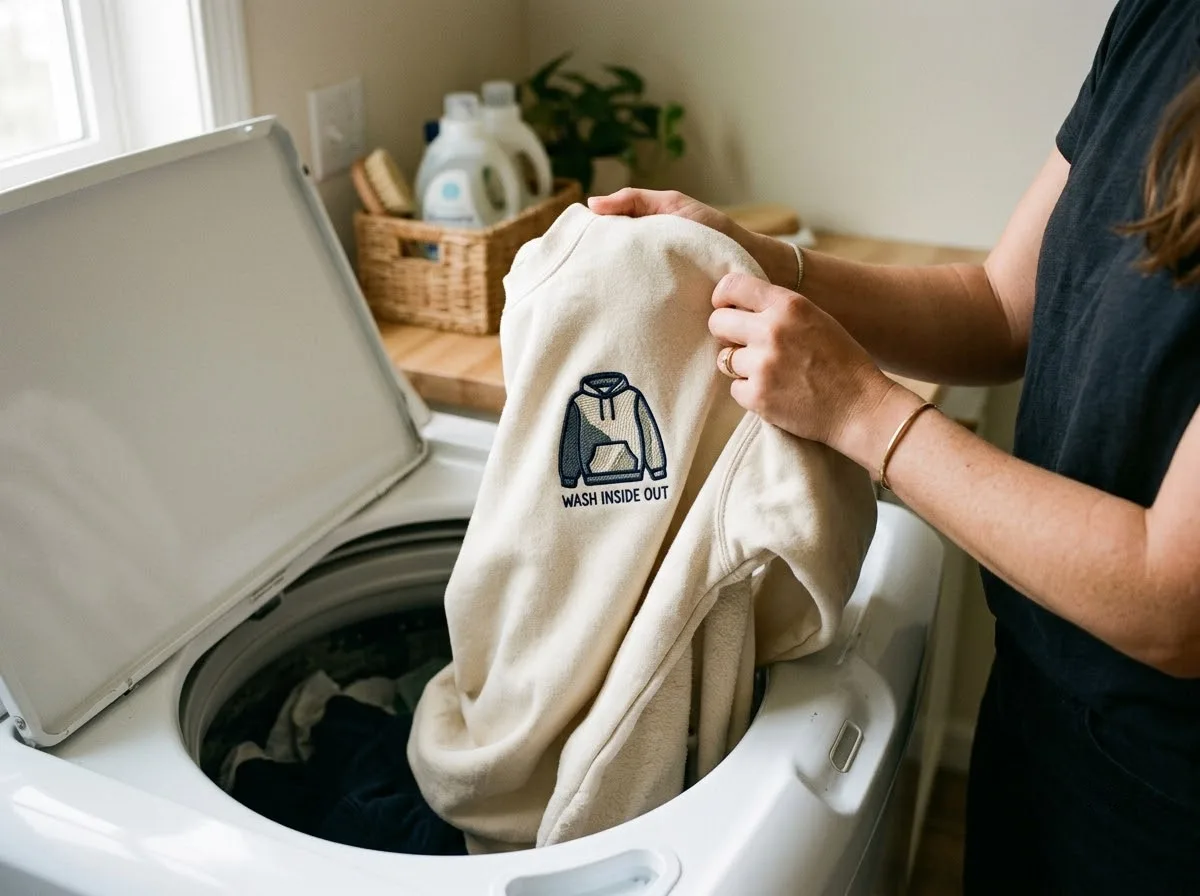
Turn embroidered clothing inside out, use a mild detergent, choose a gentle or delicate cycle, and wash with similar colors and textures. The goal is to reduce friction, avoid harsh chemistry and keep the thread and base fabric from working against each other.
Embroidery is sturdy, but it is not invincible. The most common wear I see on stitched apparel comes from friction: a raised chest design rubbing against zippers, denim, towels, backpack straps or the drum of the washer. The American Cleaning Institute describes the delicates or gentle cycle as using gentler wash and spin action to help protect clothes from damage in its Laundry Basics, which is exactly the kind of treatment embroidered clothing benefits from.
Thread and fabric can also have different limits. DMC notes that embroidered clothing and homewares can be washed, but care should account for the fabric, appliqué patches, embellishments and thread—not the thread alone—in How to Clean and Wash Finished Needlework. That is the heart of good embroidered garment care: protect the weakest part of the whole piece, not the strongest.
- Close zippers and fasteners. Keep anything scratchy from catching on the embroidery.
- Turn the garment inside out. This shields the raised stitches from direct rubbing.
- Wash with similar colors. This is especially helpful for first washes and dark garments.
- Use mild detergent. Avoid aggressive whitening formulas around embroidery.
- Select gentle or delicate. Lower agitation is kinder to stitched designs.
- Skip overcrowding. A packed washer creates more rubbing, twisting and creasing.
Detergent choice matters more than people think. Madeira’s care guidance warns against detergents containing bleaching agents, peroxide, chlorine or optical brighteners because they can discolor embroidery in its Product Catalogue EN. In plain language: if the detergent’s selling point is making whites aggressively brighter, I would not use it on a sweatshirt with colored stitching.
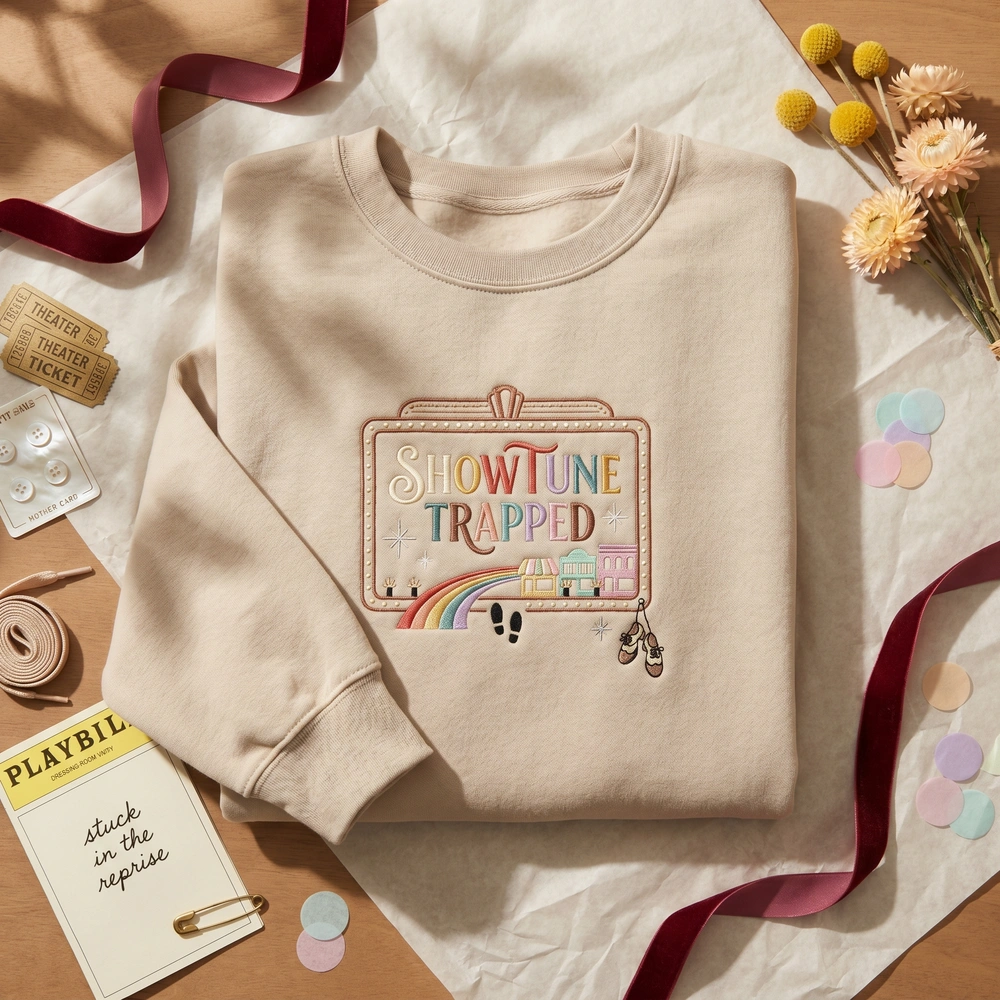
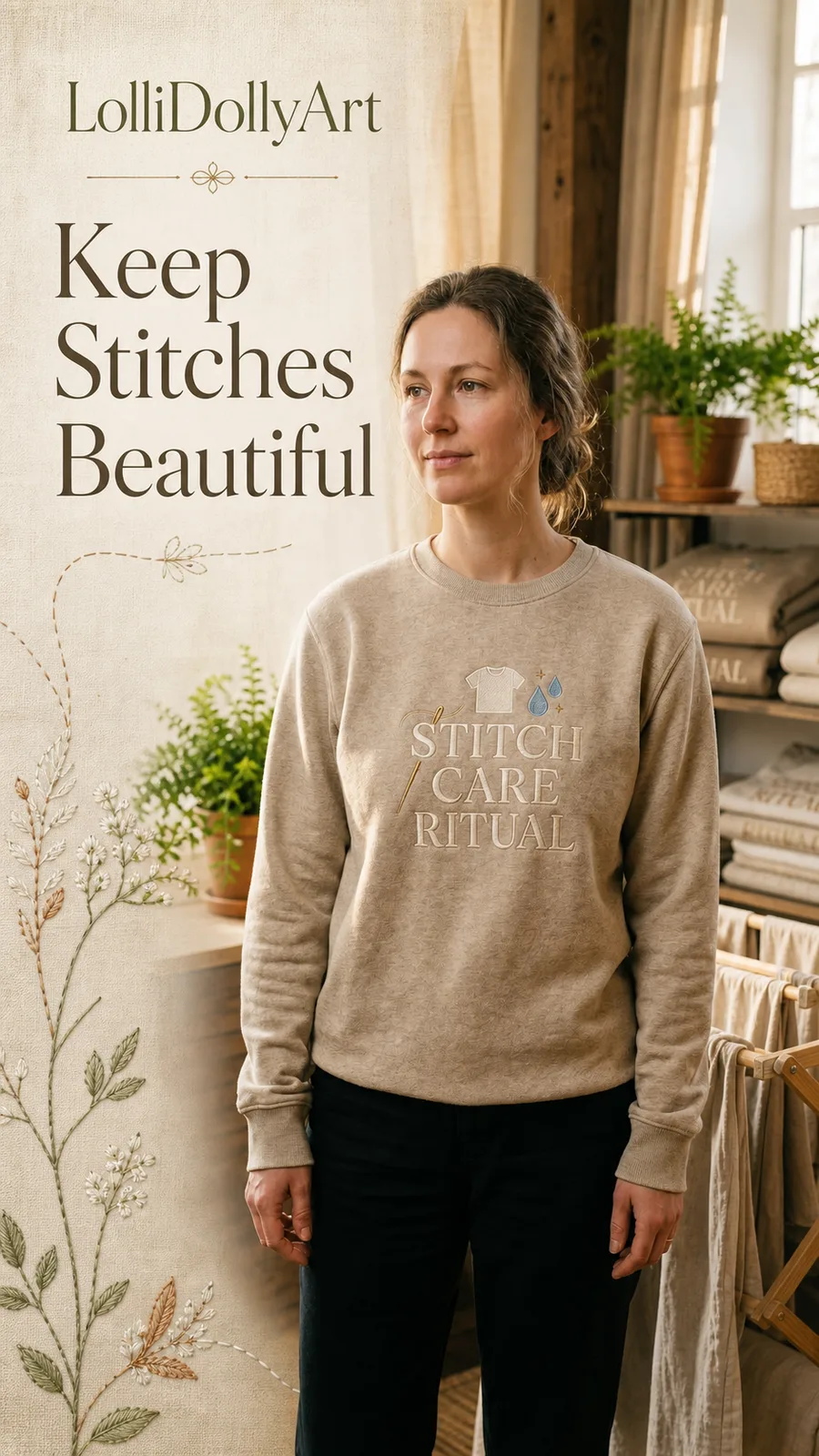
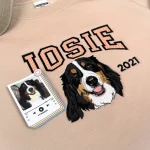
A great example of a giftable embroidered sweatshirt where turning it inside out and washing gently helps preserve the crisp, raised stitched lettering and motif.
Quality embroidery threads are often tested for colorfastness and fade resistance, as DMC notes in its finished needlework care guidance, but I still treat the first wash as a test run: cool water, similar colors, gentle cycle and prompt removal from the washer.
Drying is where many embroidered pieces get damaged
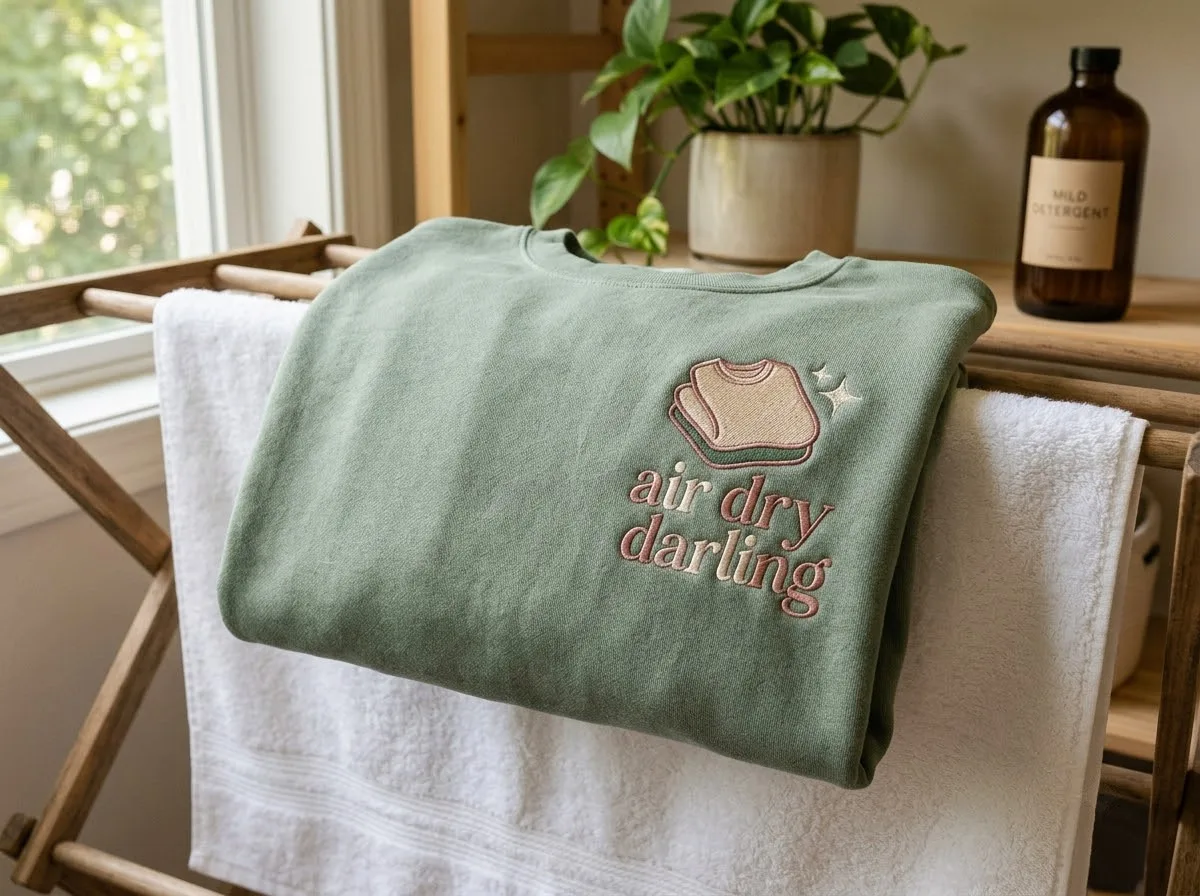
After washing, remove embroidered clothing promptly, reshape it, and avoid leaving it wet, folded, soaking, pressed together or wrung out. Air drying is usually the safest choice unless the garment label specifically allows a machine-dry method.
The wash cycle gets all the attention, but drying is often where the real damage happens. Damp embroidery pressed against itself can transfer dye, flatten texture or create stubborn creases in the stitched area. Madeira specifically advises against leaving damp embroidered items folded or pressed together and says never to wring embroidered items in its Washing embroidered garments guidance.
For sweatshirts and hoodies, I like to gently shake the garment open, smooth the embroidered area with my hands from the back of the fabric and lay it flat or hang it in a way that does not stretch the shoulders. For tees, a flat drying rack is often easiest. For hats, reshape the crown and let air move around it; do not crush it under other laundry.
| Drying method | Use it when | Watch out for |
|---|---|---|
| Flat air dry | You want the gentlest option for sweatshirts, hoodies and tees. | Make sure the embroidered area is not folded under itself. |
| Hang dry | The garment is not too heavy when wet and the label allows it. | Avoid hanger bumps or stretching on heavy fleece. |
| Tumble low | The care label allows machine drying and the item is not highly detailed. | Use low heat and remove promptly; do not overdry. |
| No-heat fluff | You need to soften a nearly dry sweatshirt. | Do not use it as an excuse to leave damp embroidery tumbling for too long. |
Drying choices for embroidered clothing
- Do not wring it. Twisting can distort the fabric and stress the stitched area.
- Do not leave it in the washer overnight. Damp pressure is not friendly to embroidery.
- Do not dry it folded. Let the stitched design breathe while it dries.
- Do not stack damp embroidered pieces together. Give each garment its own space.
If you are shopping for someone who wears sweatshirts constantly in fall and winter, care habits matter. Our guide to fall embroidered sweatshirts is a helpful next stop if you want pieces that can rotate through real outfits, not just sit in a closet waiting for a perfect occasion.
Color, stains and the first wash: be careful before you get brave
For the first wash, use cool water, mild detergent and similar colors, then check the water and garment before drying. If dye releases into the water, Madeira advises continuing to rinse until the water runs clear.
Most modern embroidery threads used in quality apparel are designed to hold color well. DMC says its embroidery threads are tested for colorfastness and fade resistance in How to Clean and Wash Finished Needlework. Still, “colorfast” does not mean “treat it recklessly,” especially when a garment combines dark fabric, bright thread and the unknowns of a first wash.
Madeira gives a very practical clue for what to do if dye appears in the wash water: continue rinsing until the water runs clear, according to its Product Catalogue EN. That advice is simple, but it can save a light-colored sweatshirt from drying with a faint dye cast you did not notice while it was wet.
For small stains, avoid the scrub reflex
When a drop of coffee or sauce lands near embroidery, the instinct is to scrub. Don’t. Scrubbing across raised stitches can fuzz the thread or push the stain into the texture. Instead, work gently from the fabric side when possible, use mild detergent, and avoid bleach-heavy spot treatments unless the care label and the embroidery can both tolerate them.
- Blot first. Lift what you can without rubbing the stitched surface.
- Test gently. Use a small amount of mild detergent on an inconspicuous area if you are unsure.
- Rinse carefully. Do not let cleaning product sit in the thread.
- Wash promptly. Do not leave the item damp, folded or soaking.
- Air dry until you know the stain is gone. Heat can make some marks harder to remove.
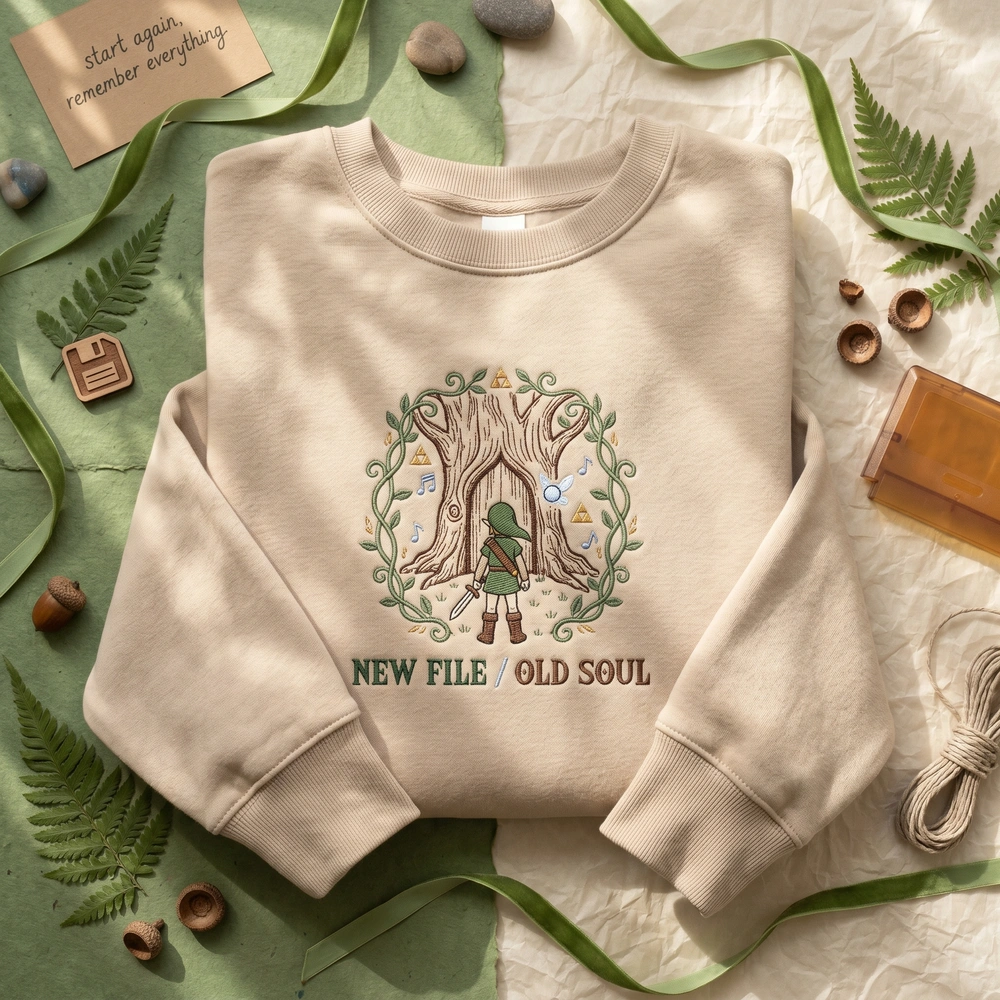
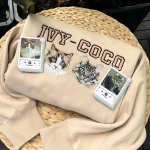
For a detailed nostalgia-inspired design like this, a cool first wash and low-friction routine are the best way to keep the stitched colors looking intentional.
If you are buying embroidered apparel as a gift, especially something with a personal in-joke or fandom reference, include a tiny care note. It feels thoughtful, and it saves the recipient from guessing. The same logic applies when you are shopping around a theme—if you are comparing sentimental embroidered gifts, our pillar guide on “what does the mama” meme can help you think through meaning, style and gift fit before you order.
Ironing and steaming without flattening the stitches
Iron embroidered clothing from the reverse side or use a barrier cloth, and avoid pressing directly onto the raised stitches. Madeira recommends ironing embroidered items on the reverse side between two cloths.
Embroidery has dimension. That little raised texture is the point, so the last thing you want is a hot iron smashing the stitches flat. Madeira recommends ironing embroidered items on the reverse side between two cloths in its Product Catalogue EN. I follow that advice even when I’m only touching up the area around the design.
- Turn the garment inside out. This keeps the iron away from the face of the embroidery.
- Use a towel or pressing cloth. A soft barrier helps protect the stitch texture.
- Press around the design, not through it. Let the embroidery keep its raised shape.
- Use the label’s heat setting. The base fabric may have stricter limits than the thread.
- Let it cool flat. Moving the garment while warm can set creases in the wrong places.
Steam can be helpful for relaxing wrinkles, but do not hold a steamer so close that the embroidery becomes soaked. A little distance and patience are better than blasting one small area until it is damp. After steaming, let the garment dry fully before folding or stacking it.
Place the embroidered side face down on a clean, fluffy towel, then press from the back with another cloth between the iron and garment. The towel gives the stitches somewhere to sink instead of being crushed flat.
Buying embroidered gifts? Choose for care habits, not just taste
The best embroidered clothing gift is one the recipient will actually wear and maintain, so match the item to their lifestyle and laundry habits. Sweatshirts and hoodies are usually easier everyday gifts than highly delicate pieces because they feel familiar and wearable.
Commercially, this is where I see people make the wrong call: they choose the most intricate design for the person who has the least patience for laundry. A better embroidered gift balances meaning, garment type, color and care level. If the recipient wears dark hoodies three days a week, a machine-embroidered hoodie or sweatshirt in their favorite color will get more love than a fragile piece they are afraid to wash.
| Gift type | Best for | Care difficulty | My take |
|---|---|---|---|
| Embroidered sweatshirt | Everyday wear, cozy gifts, fandom or phrase designs. | Low to moderate. | The safest all-around choice for most recipients. |
| Embroidered hoodie | People who live in layers and casual outfits. | Moderate. | Great if they already wear hoodies often; watch drawstrings and heavy fleece when drying. |
| Embroidered t-shirt | Warmer climates, layering, concert or casual looks. | Low to moderate. | Easy to wear, but thinner fabric may show wrinkles faster. |
| Embroidered hat | Low-maintenance style, sports, travel and outdoor wear. | Moderate. | Great gift, but washing and reshaping require more care than a sweatshirt. |
Which embroidered apparel gift is easiest to care for?
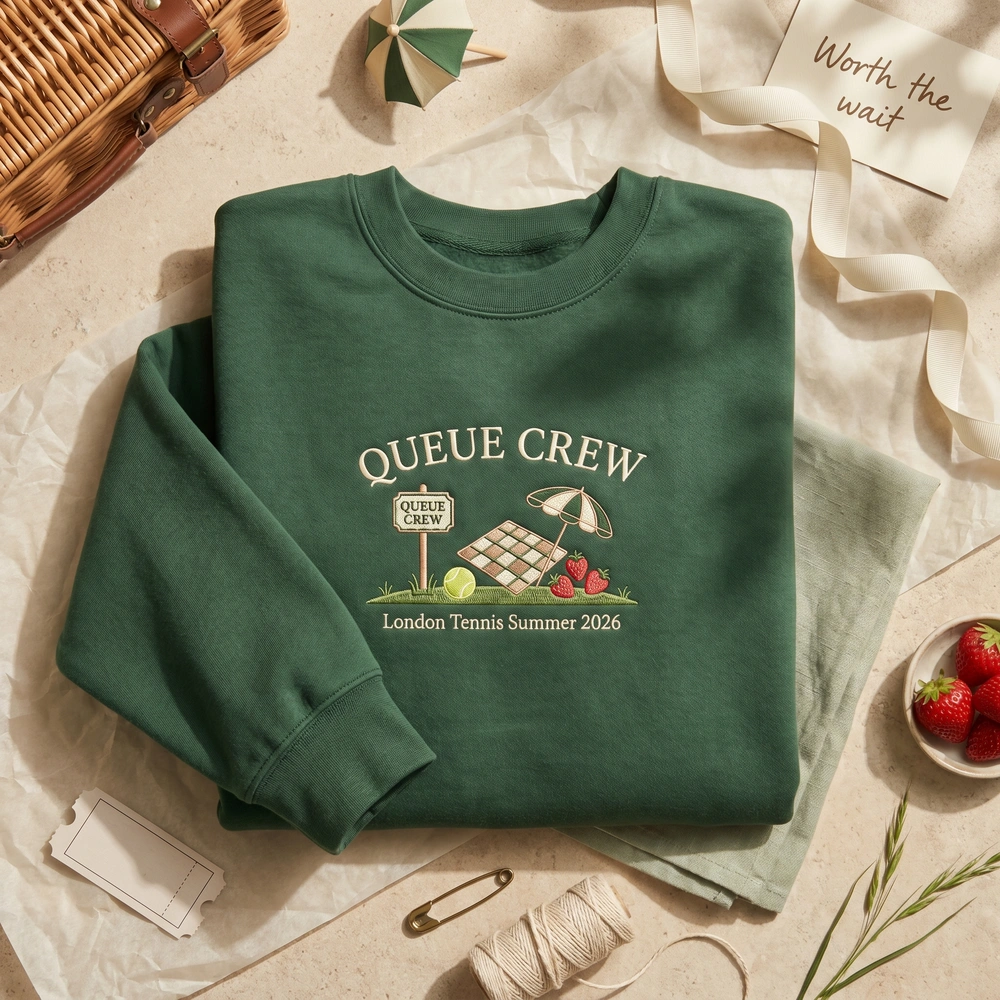
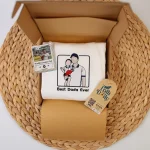
A strong pick for a tennis fan who wants something wearable beyond match day; the sweatshirt format makes care simpler than many delicate novelty gifts.
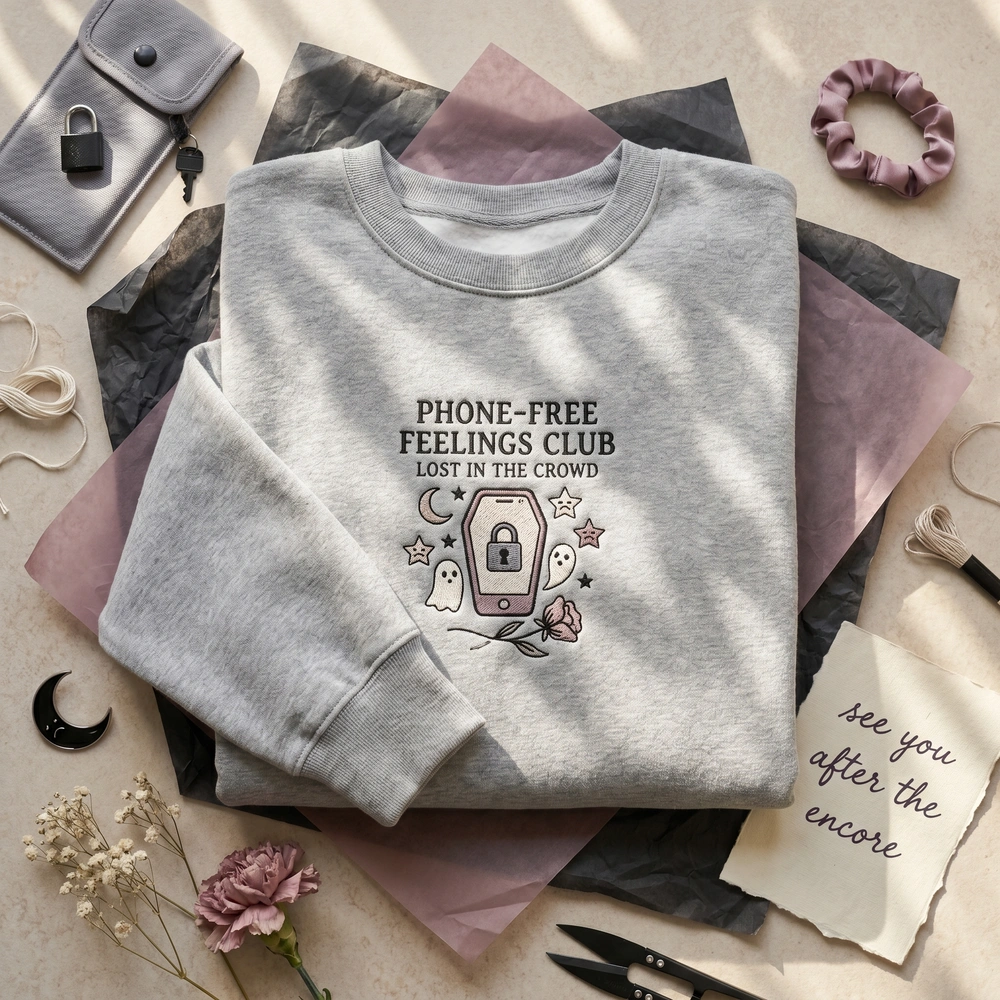
A smart choice for an indie concert outfit gift because the embroidered design feels personal while still being practical enough for repeat wear.
For mom gifts, the same rule applies: make it personal, but don’t make it fussy. If you are narrowing down sentimental options, our guide to embroidered gifts for mom walks through how to choose something that feels considered without overcomplicating the decision.
The care label protects the whole garment; your laundry routine protects the embroidery’s texture.— LolliDollyArt care advice based on FTC, DMC, ACI and Madeira guidance
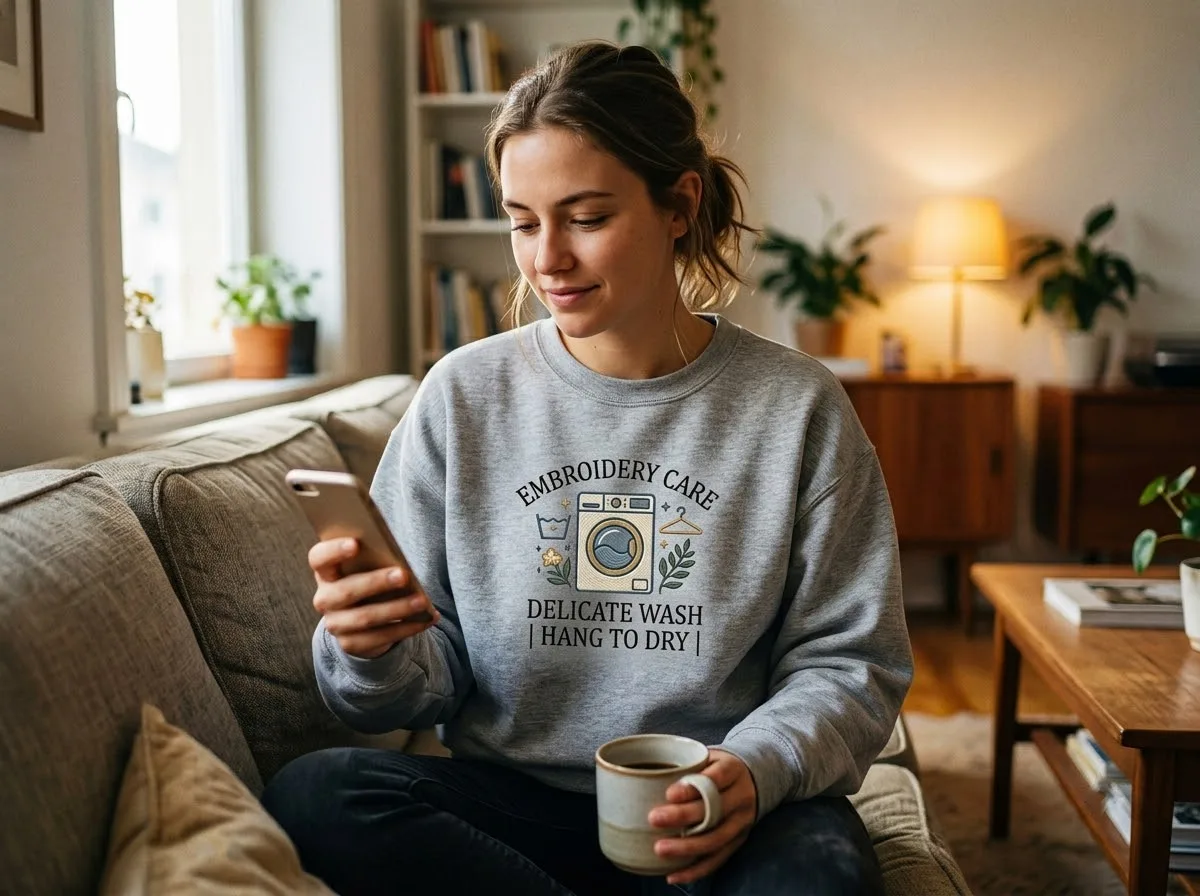
Quick questions
Can embroidered clothing go in the washing machine?
Usually yes, if the garment care label allows machine washing. Turn it inside out, use mild detergent, wash with similar colors and choose a gentle or delicate cycle to reduce friction on the stitches.
Should I wash embroidered sweatshirts inside out?
Yes. Washing inside out helps protect the raised embroidery from rubbing against other garments, zippers, towels and the washer drum.
Can I put an embroidered hoodie in the dryer?
Only if the care label allows machine drying. Even then, low heat and prompt removal are safer; air drying is usually gentler for embroidery.
Can I iron directly over embroidery?
No. Iron from the reverse side or use a barrier cloth so the iron does not flatten, shine or distort the stitches.
What detergent is best for embroidered clothing?
Use a mild detergent. Avoid detergents with bleaching agents, peroxide, chlorine or optical brighteners because those can discolor embroidery.