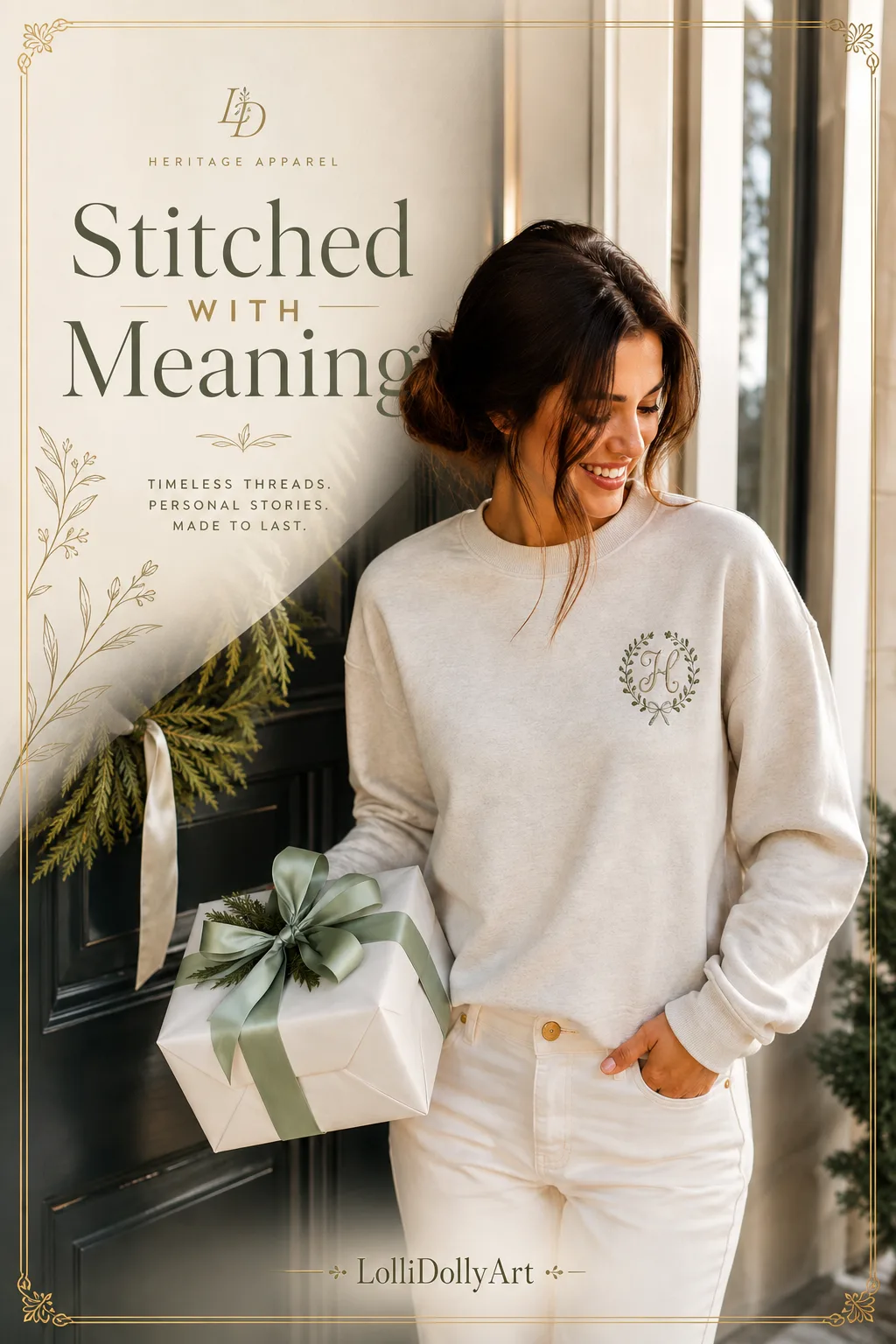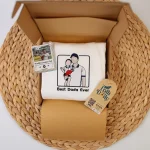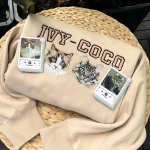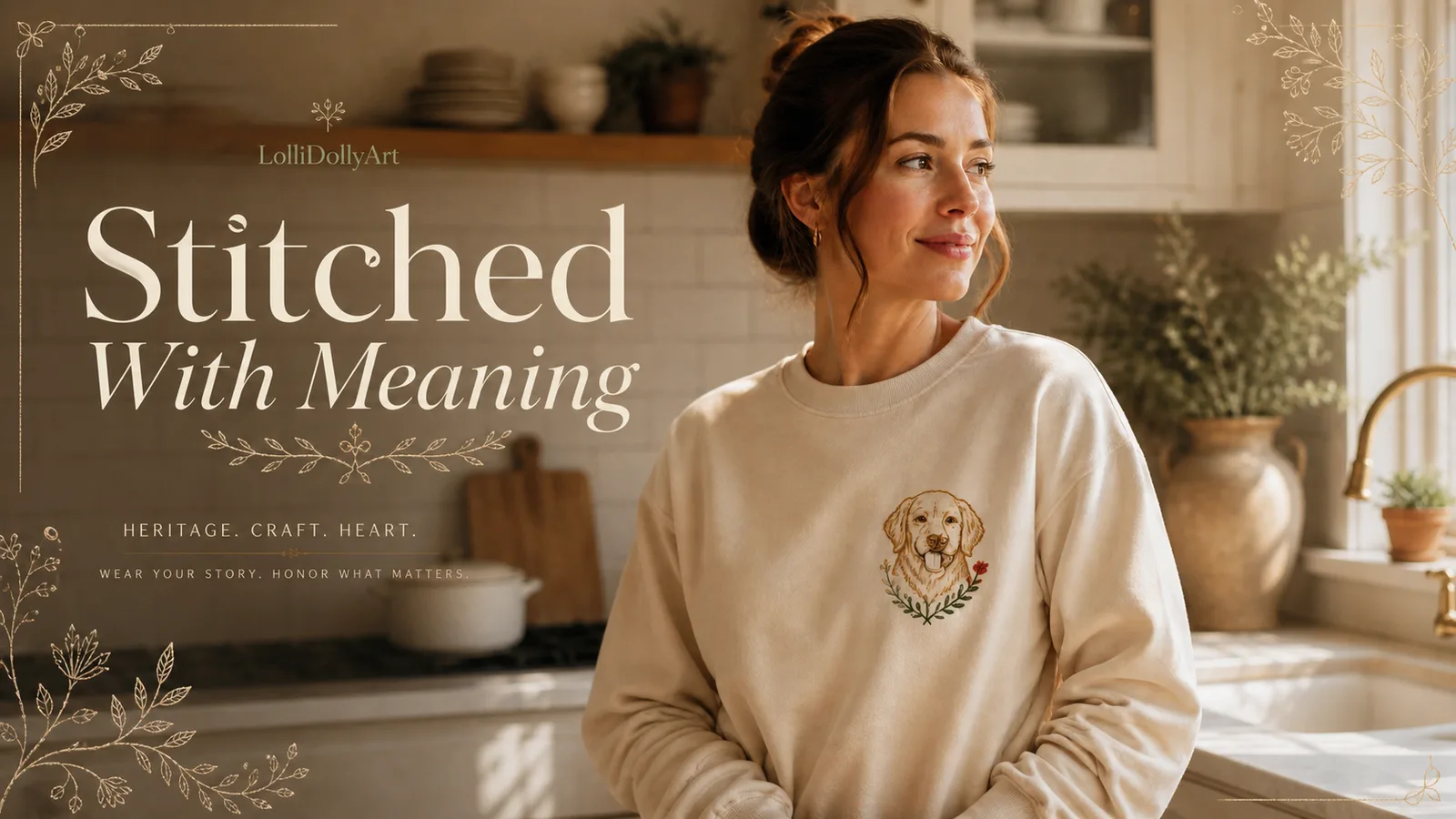
You do not have to know every embroidery term to buy the right gift, but you do need to know what the design should feel like. A tiny satin-stitch monogram reads polished, chenille feels nostalgic, and whitework lands quiet and formal; the same sweatshirt can look completely different depending on the stitch family and thread density. That is why I start with the mood first, then the garment, then the stitch. It is also why embroidered apparel keeps showing up in gift shopping: in NRF 2025 holiday survey, clothing and accessories were the second-most desired gift category at 46%. If you are shopping from an inside joke or a phrase that turned into a favorite, the broader gift logic behind the “what does the mama” meme still applies.
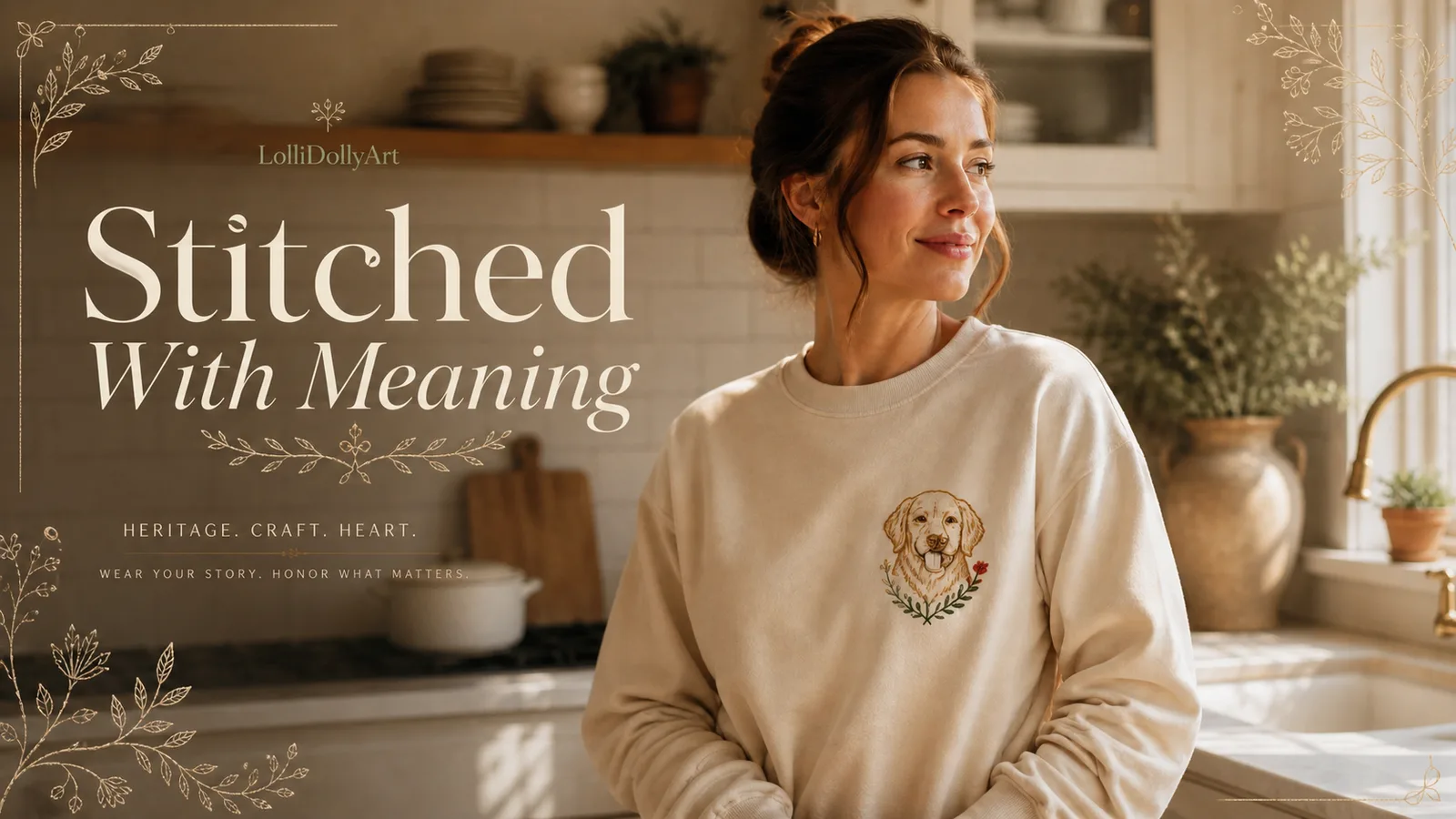
- Match the embroidery family to the mood: counted-thread for geometric and monogram looks, freestyle for illustrative gifts, and whitework for restrained or heirloom-leaning pieces (<a href='https://www.vam.ac.uk/articles/embroidery-styles-an-illustrated-guide'>V&A</a>).
- For machine-made apparel, running stitch, satin stitch, and tatami fill each solve different problems on tees, hoodies, and hats, especially around readability and texture (<a href='https://en.wikipedia.org/wiki/Machine_embroidery'>Machine embroidery</a>).
- Chenille, silk shading, stumpwork, whitework, and appliqué each point to a different kind of gift: varsity, portrait, keepsake, wedding, or patch-style apparel (<a href='https://royal-needlework.org.uk/courses/embroidery-techniques/'>Royal School of Needlework</a>; <a href='https://www.vam.ac.uk/articles/a-z-opus-anglicanum'>V&A</a>).
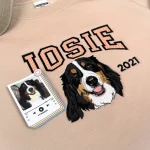
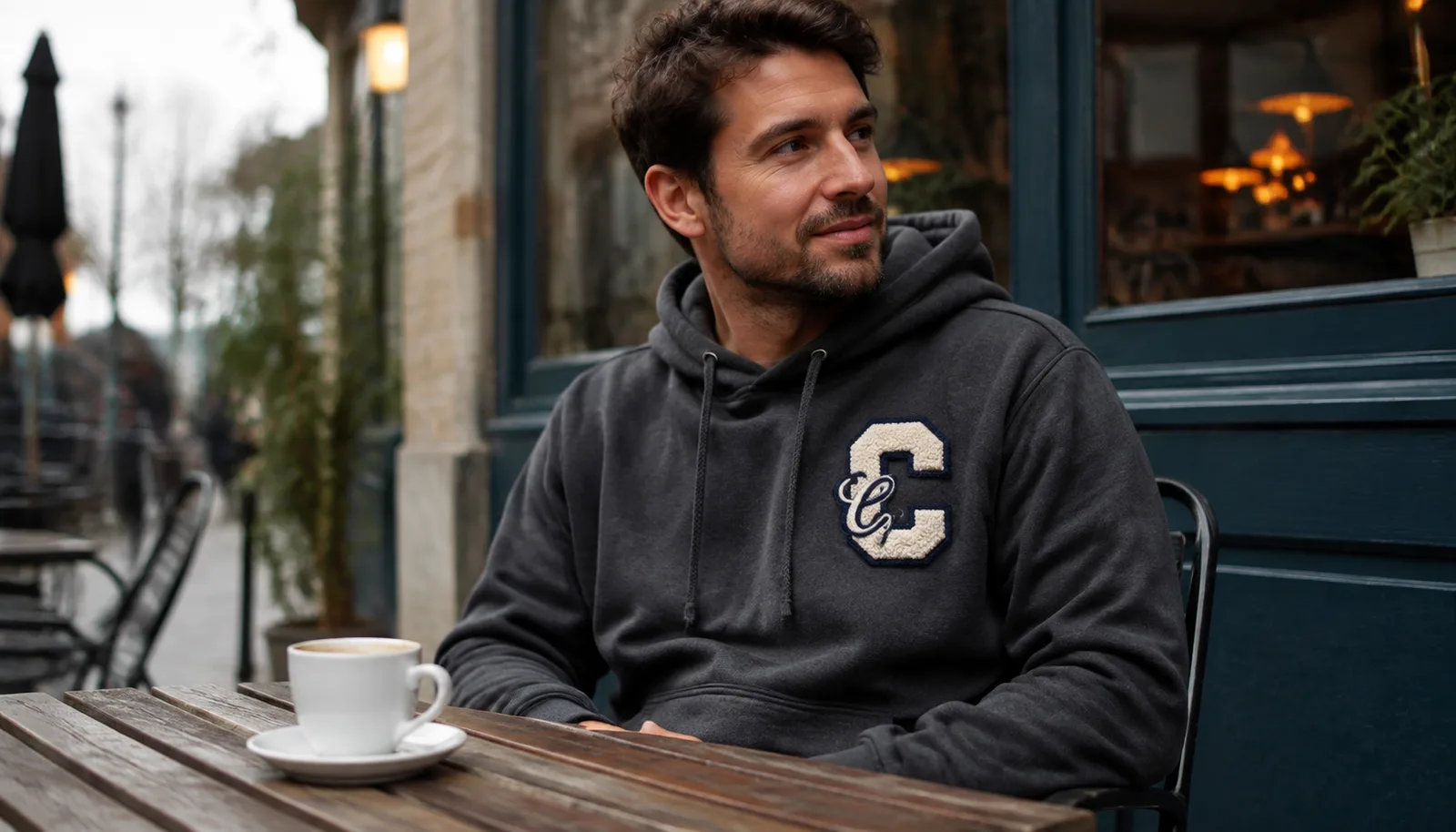
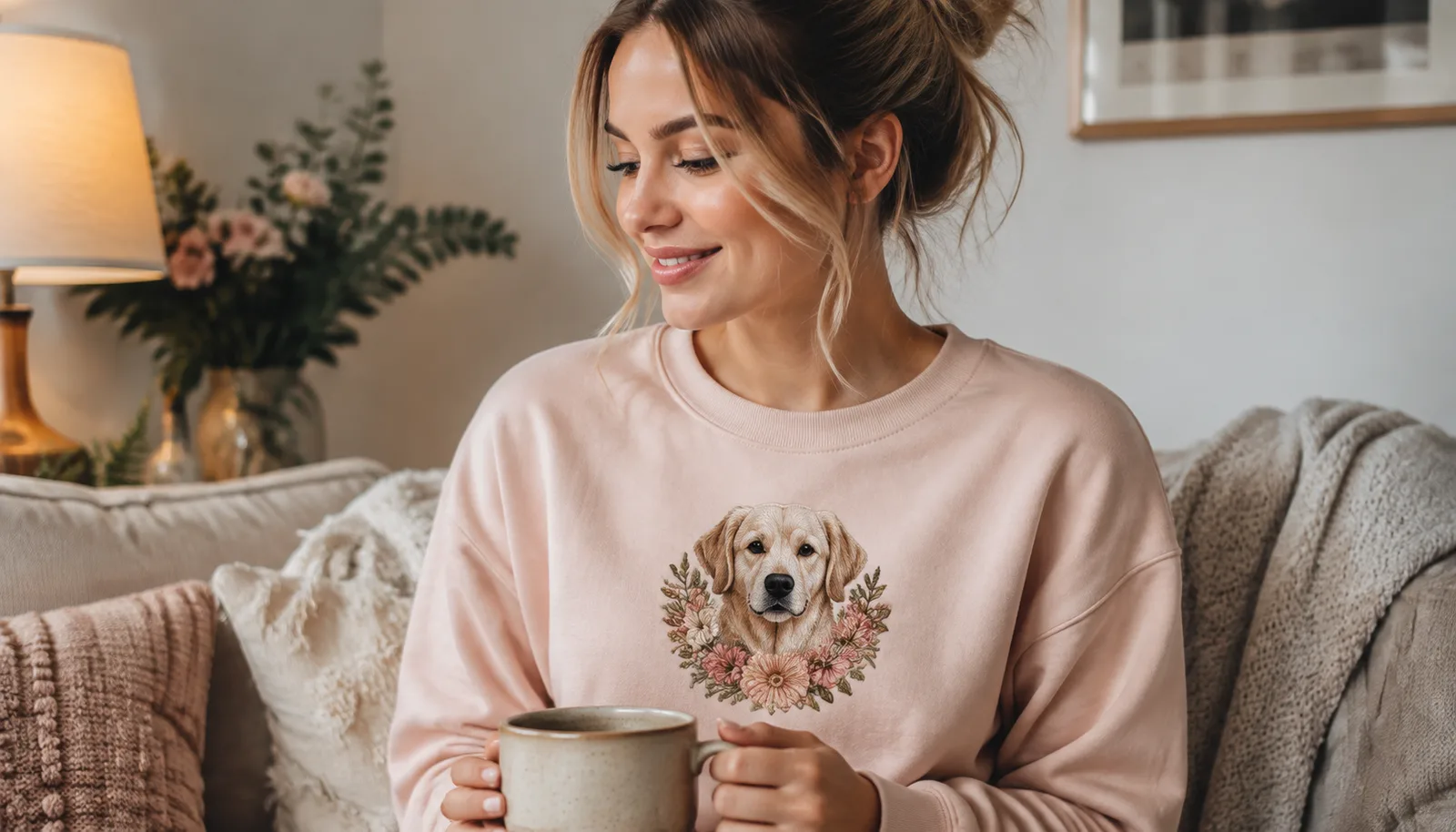
- For pet portraits, photo-led sweatshirts usually beat plain initials because the face or outline carries the emotional weight of the gift.
Pick the embroidery family that matches the gift's mood
The cleanest way to choose embroidery styles for gifts is to match the visual family to the person: counted-thread for structured geometry, freestyle for drawn-looking art, and whitework for restrained or heirloom-leaning pieces. The V&A uses those three families as a practical way to explain the field, and they map neatly onto modern custom apparel choices (V&A).
That matters because gift buyers are not really shopping for a stitch; they are shopping for a reaction. A geometric monogram on a hoodie, a loose pet portrait on a sweatshirt, and a tonal white-on-cream design all say something different before anyone reads the motif. Once you see embroidery that way, the choice gets easier and the result looks more intentional.
| Family | Visual read | Best gift fit | Apparel sweet spot |
|---|---|---|---|
| Counted-thread | Structured, geometric, measured | Monograms, initials, clean symbols | Tees and hats |
| Freestyle | Illustrative, organic, hand-drawn | Pets, flowers, portraits, in-jokes | Sweatshirts and hoodies |
| Whitework | Tonal, restrained, heirloom-like | Weddings, babies, anniversaries | Light-colored sweaters and tees |
How the main embroidery families read as gifts
If the recipient wears mostly neutrals, choose the least busy option. A small tonal design often looks more expensive on the garment than a crowded full-color motif.
On apparel, stitch choice changes the whole read
For machine-made custom apparel, the stitch usually decides whether the gift looks crisp, plush, or too crowded. Running stitch is best for outlines and fine paths, satin stitch suits narrow dense details and lettering, and tatami or fill stitch is the right choice for larger solid areas on hoodies, sweatshirts, tees, and hats (Machine embroidery).
- Running stitch works for outlines, delicate paths, and light-touch illustration when you want the art to breathe.
- Satin stitch gives letters, initials, and narrow shapes a cleaner edge and a denser, more polished finish.
- Tatami or fill stitch handles larger filled areas and helps the design hold together visually on thicker garments.
For gifts, that choice is not cosmetic. Running stitch can keep a small pet outline readable without overbuilding it, satin stitch makes a name feel sharp and gift-worthy, and tatami fill gives larger shapes enough presence on fleece or heavier cotton. On a hoodie or sweatshirt, a small chest motif usually reads best when the stitch structure is simple enough to stay legible from a normal viewing distance.
For names and short phrases, satin stitch is often the safest pick because the edges stay clear at smaller sizes. If the design is growing larger, fill stitch can add coverage without making the piece look flimsy.
The premium looks worth paying for
When you want a gift to feel premium instead of merely personalized, the strongest styles are chenille, silk shading, stumpwork, whitework, and appliqué. They each create a different kind of presence: soft and sporty, painterly, dimensional, tonal, or patch-like (Royal School of Needlework; V&A).
Chenille brings a looped, tufted, velvety texture that is especially strong for varsity letters, school names, team gifts, and nostalgic sweatshirt looks. Silk shading, which the Royal School of Needlework describes as painting with a needle, blends thread colors so flowers, fruit, plants, pets, or birds look more lifelike than a simple outline. Stumpwork adds raised, three-dimensional elements for keepsake energy, while whitework is traditionally white thread on white fabric and carries bridal, christening, and ecclesiastical associations that also make it work beautifully for understated luxury. Appliqué is different again: it places pieces of one fabric onto another, and the V&A notes its historical use for personalized heraldic designs, which is why it still suits oversized names, initials, numbers, and patch-like hoodies so well.
| Style | Texture or effect | Best gift use | Why it wins |
|---|---|---|---|
| Chenille | Soft, plush, tufted | Varsity letters, school gifts, nostalgic sweatshirts | Feels bold and instantly readable |
| Silk shading | Painterly, blended, detailed | Portraits, birth flowers, pets, botanicals | Adds realism without losing the handmade feel |
| Stumpwork | Raised, tactile, dimensional | Keepsakes and premium one-off gifts | Turns the design into a physical object |
| Whitework | Tonal, quiet, refined | Wedding, baby, and anniversary gifts | Looks formal without being fussy |
| Appliqué | Patch-like, graphic, bold | Initials, numbers, oversized names | Gives a larger gift presence on fleece |
Premium embroidery styles and the gifts they suit best
For pet people, photo-based gifts usually win
Photo-led gifts are where embroidery becomes emotional fast. A clean pet outline, a cat portrait with flowers, or a dog face rendered in thread gives you the specificity of a custom gift without making the garment feel overdesigned, and that same logic works for photo gifts for dad or boyfriend too (Personalised Photo Gifts for Dad That Turn One Good Picture Into a Gift He’ll Use; Personalized Photo Gifts for Boyfriend That Won’t End Up in a Drawer).
If you want the most wearable result, keep the design compact and let the face, outline, or floral frame do the work. That is why pet portraits are such a strong category for custom apparel gifts: they are personal without needing a long explanation, and they age better than an inside joke that only makes sense this week.
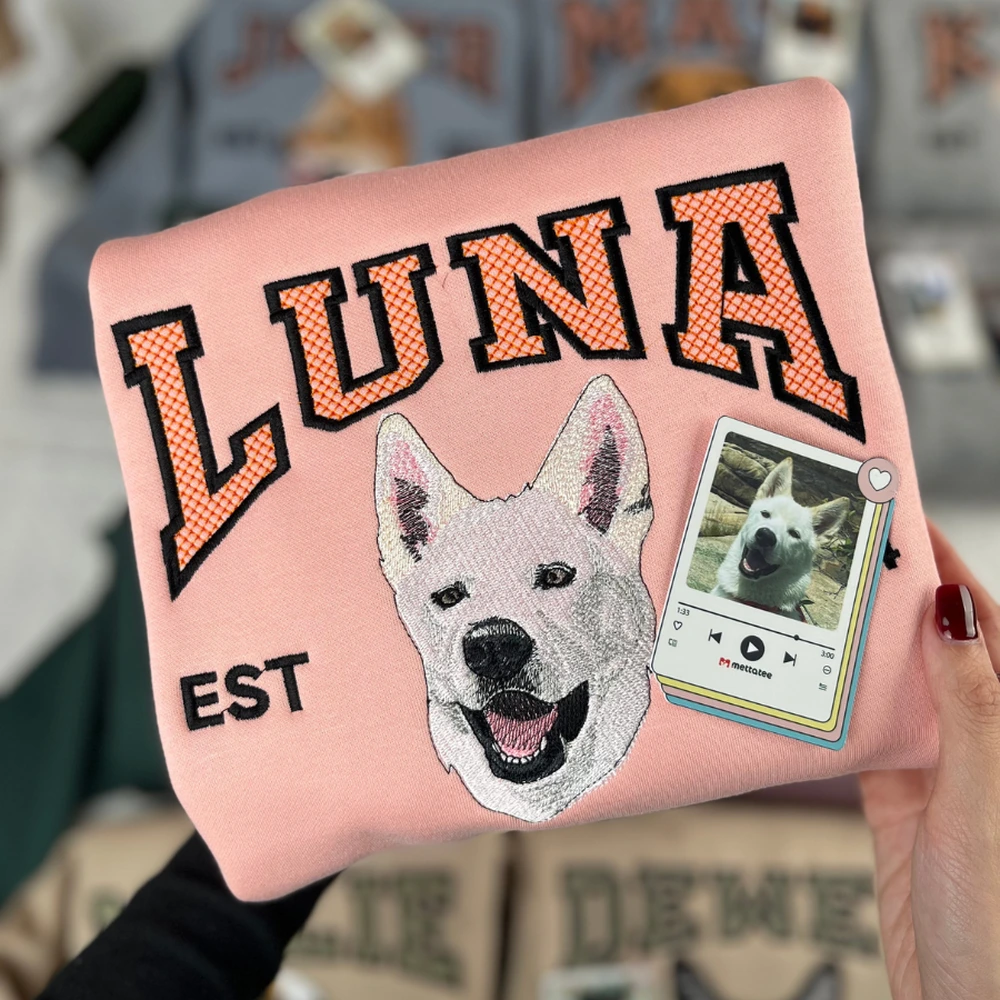
Best for a clean pet-outline look that stays wearable every day and still feels unmistakably personal.
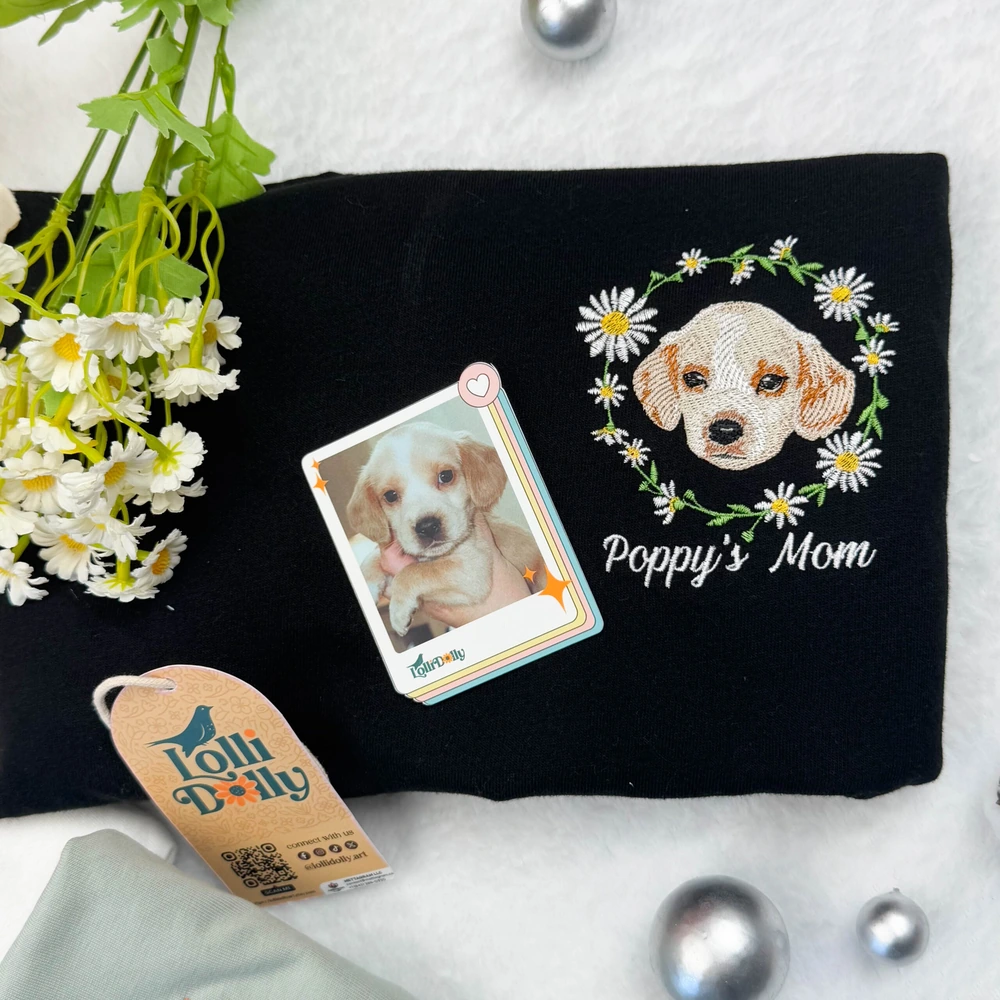
A stronger choice when you want the portrait to feel decorative and gift-like, with flowers adding a softer finish.
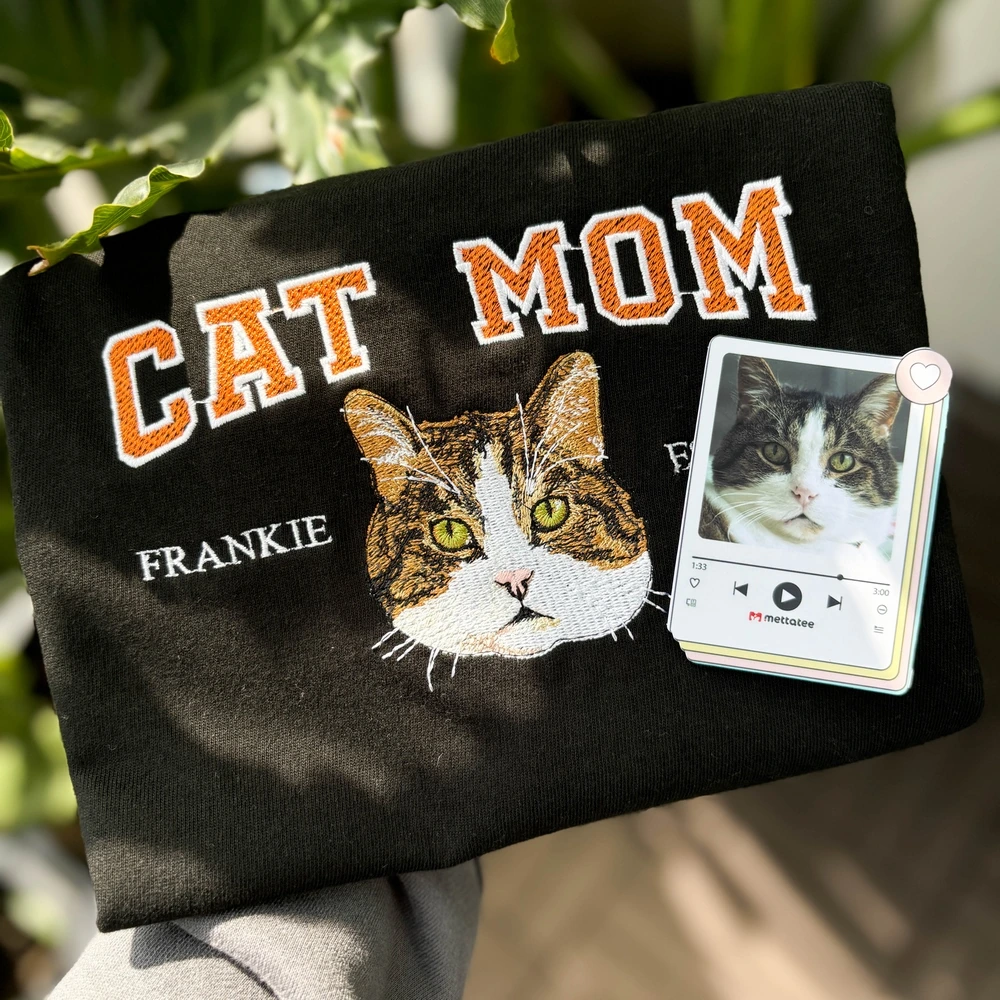
A smart pick for cat moms who want the pet to be the focal point without losing the comfort of an everyday sweatshirt.
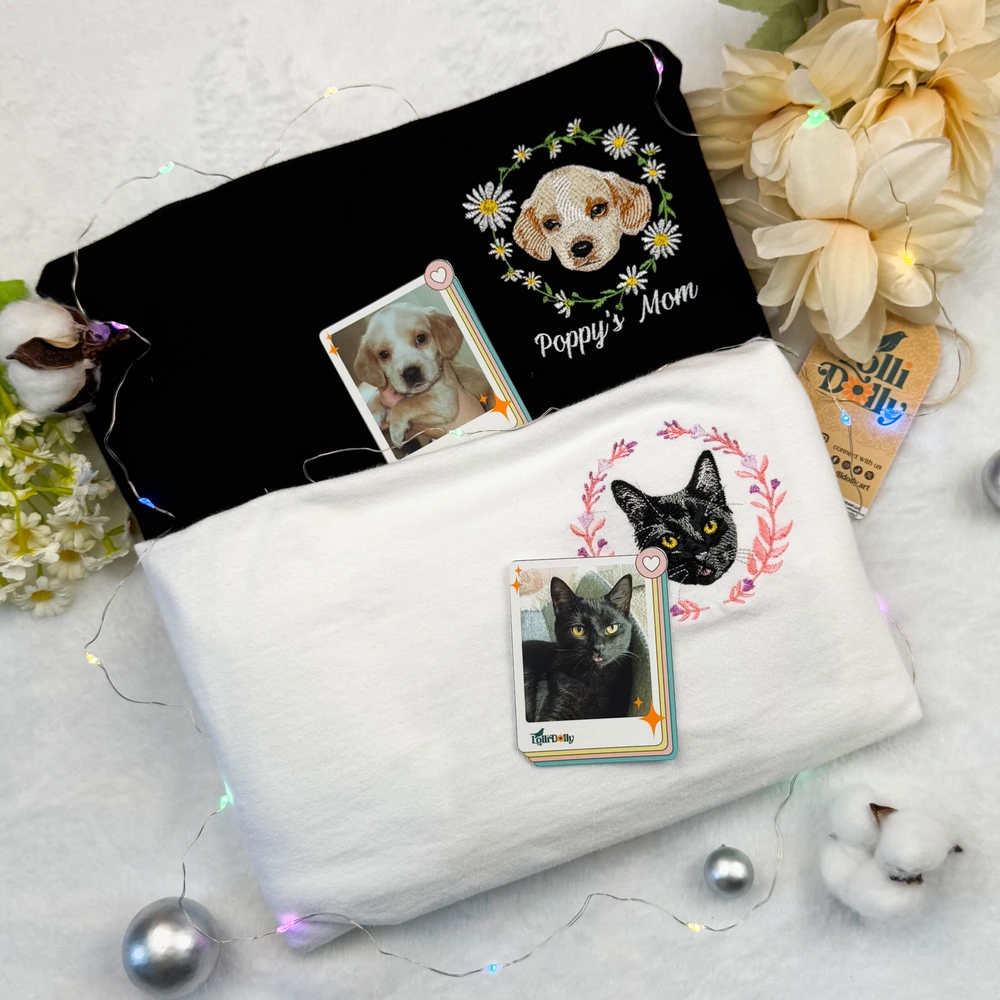
The most romantic-feeling cat option here, thanks to the floral framing and portrait-style emphasis.
My quick pick before you order
If you need a fast rule, buy the simplest design that still tells the story: satin-stitch names and small motifs for most everyday gifts, chenille or appliqué for varsity energy, whitework for weddings and babies, and silk shading or pet portraits when the relationship is the point. That keeps the piece wearable after the occasion is over, which is usually what separates a keepsake from a drawer gift.
In NRF's 2025 holiday survey, U.S. consumers planned to spend $627.93 on gifts for family and friends, and clothing and accessories ranked as the second-most desired gift category at 46%.— NRF 2025 holiday survey
That stat is exactly why embroidered apparel keeps working as a present: people already want clothing, and embroidery gives the clothing a story. The best buy is rarely the loudest one; it is the one that matches the recipient’s taste, the garment’s weight, and the amount of visual attention the occasion deserves.
Choose the smallest design that still feels complete. If the gift needs more emotion, add texture or portrait detail; if it needs more polish, reduce the palette and keep the silhouette clean.
Quick questions
What embroidery style is best for a gift?
The best style is the one that matches the recipient's taste: counted-thread for clean geometry, freestyle for illustrated or pet-led gifts, and whitework for quiet, formal, or heirloom-feeling pieces.
Which stitch should I choose for a name or monogram?
Satin stitch is usually the best choice for names and monograms because it gives letters a crisp, dense edge that reads well on apparel.
Are pet portrait sweatshirts a better gift than initials?
Often yes, especially for dog and cat people, because the pet image carries the emotion of the gift more directly than initials alone.